Mastering Generative AI: A Complete Guide to Understanding and Application

Introduction: Unlocking the Power of Generative AI
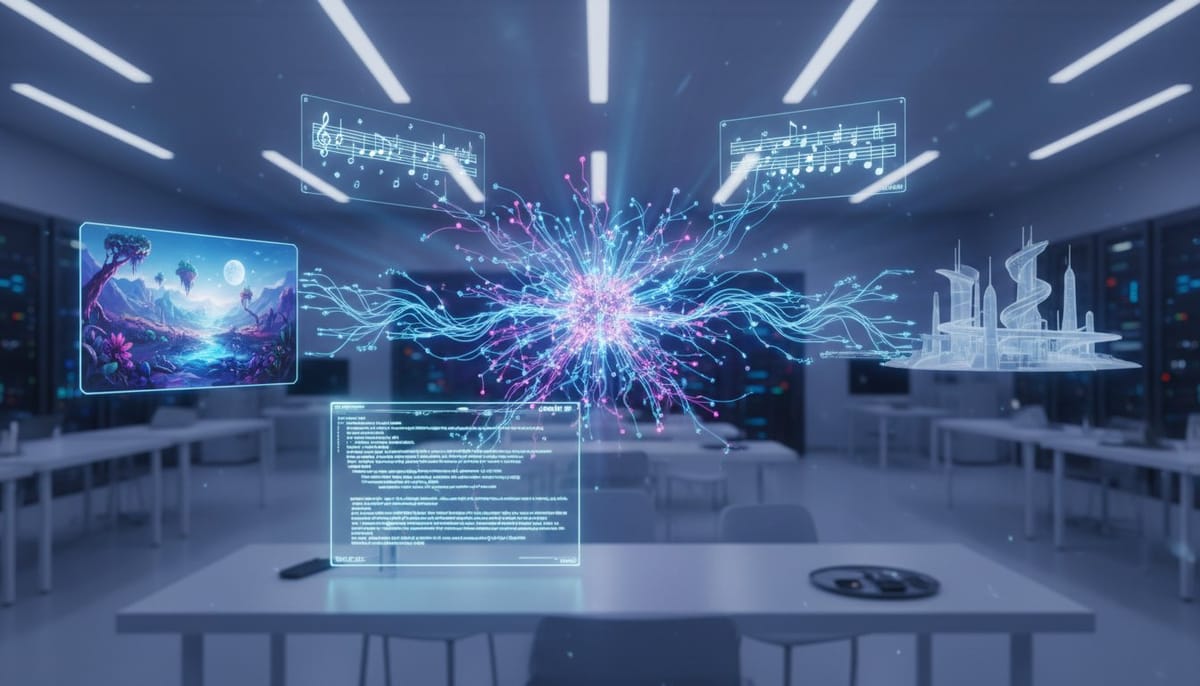
In an era defined by rapid technological advancement, Generative AI stands out as a groundbreaking force, reshaping industries and igniting unprecedented creative possibilities. For businesses looking to leverage this power effectively, expert AI Strategy is crucial. Far from being a mere buzzword, Generative AI represents a paradigm shift in how we interact with technology, moving beyond analysis and prediction to actual creation. Imagine algorithms that can write compelling stories, a capability often powered by advanced NLP Solutions, compose original music, design breathtaking visuals, or even generate functional code – all from a simple prompt. This isn't science fiction; it's the present reality, also impacting areas like the development of sophisticated tools, from content generators to advanced AI Chatbots Integration: What You Need to Know for Business and Personal Use.
This comprehensive guide, Mastering Generative AI: A Complete Guide to Understanding and Application, is designed to be your practical roadmap into this transformative field. Whether you're a creative professional, a developer, a business leader, or simply an enthusiast eager to harness its power, this guide will demystify Generative AI, explain its core mechanics, and provide actionable steps to integrate it into your projects and workflows. We'll move beyond theoretical concepts to hands-on application, equipping you with the knowledge and tools to not just understand Generative AI, but to truly master its immense potential.
What is Generative AI? Unpacking the Core Concept
At its heart, Generative AI refers to a category of artificial intelligence models capable of producing novel, original content rather than merely analyzing or classifying existing data. These advanced Machine Learning models learn the underlying patterns and structures of data to generate entirely new instances that resemble the training data but are not direct copies. It's about teaching a machine to understand the 'essence' of a dataset and then use that understanding to create something new.
Think of it like this: a discriminative AI might learn to identify a specific artist's style by looking at thousands of their paintings. A generative AI, on the other hand, would learn that style and then be able to create a brand-new painting in that artist's style, even though the artist never painted that specific piece. This capacity for creation is what makes Generative AI so profoundly impactful across a multitude of domains.
The Engines of Creation: How Generative AI Works
The magic of Generative AI lies in sophisticated neural network architectures trained on vast datasets. These models learn complex representations of data, enabling them to synthesize new outputs. While many architectures exist, a few have become foundational to the Generative AI revolution, including those developed by companies like OpenAI: Full Features Guide to Their Models and Ecosystem.
Neural Networks: The Foundation
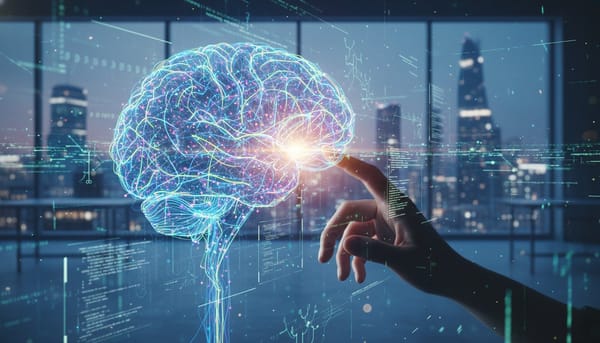
At the base of almost all Generative AI models are neural networks, inspired by the human brain. These networks consist of interconnected nodes (neurons) organized in layers. They learn by adjusting the strength of connections (weights) between these neurons as they process data, gradually identifying patterns and relationships. For generative tasks, these networks are trained to predict the next element in a sequence, fill in missing parts of data, or transform one type of data into another.
Key Architectures Explained
Understanding the core architectures provides insight into the diverse capabilities of Generative AI:
- Generative Adversarial Networks (GANs): Invented by Ian Goodfellow, GANs are perhaps one of the most intuitive generative models. They consist of two competing neural networks:The two networks are trained simultaneously in a zero-sum game. The Generator tries to fool the Discriminator, while the Discriminator tries to get better at spotting fakes. This adversarial process drives both networks to improve, resulting in a Generator capable of producing incredibly realistic outputs.
- The Generator: This network takes random noise as input and tries to generate new data (e.g., an image) that looks realistic.
- The Discriminator: This network acts as a critic, trying to distinguish between real data from the training set and fake data produced by the Generator.
- Practical Application: GANs have been instrumental in generating photorealistic faces of non-existent people, creating art, style transfer (making an image look like it was painted by a specific artist), and even generating synthetic data for training other AI models.
- Variational Autoencoders (VAEs): VAEs take a different approach. They are a type of autoencoder, meaning they learn to encode input data into a lower-dimensional representation (a