Google's AI Strategy: Innovation, Competition, and the Future of Search and Beyond

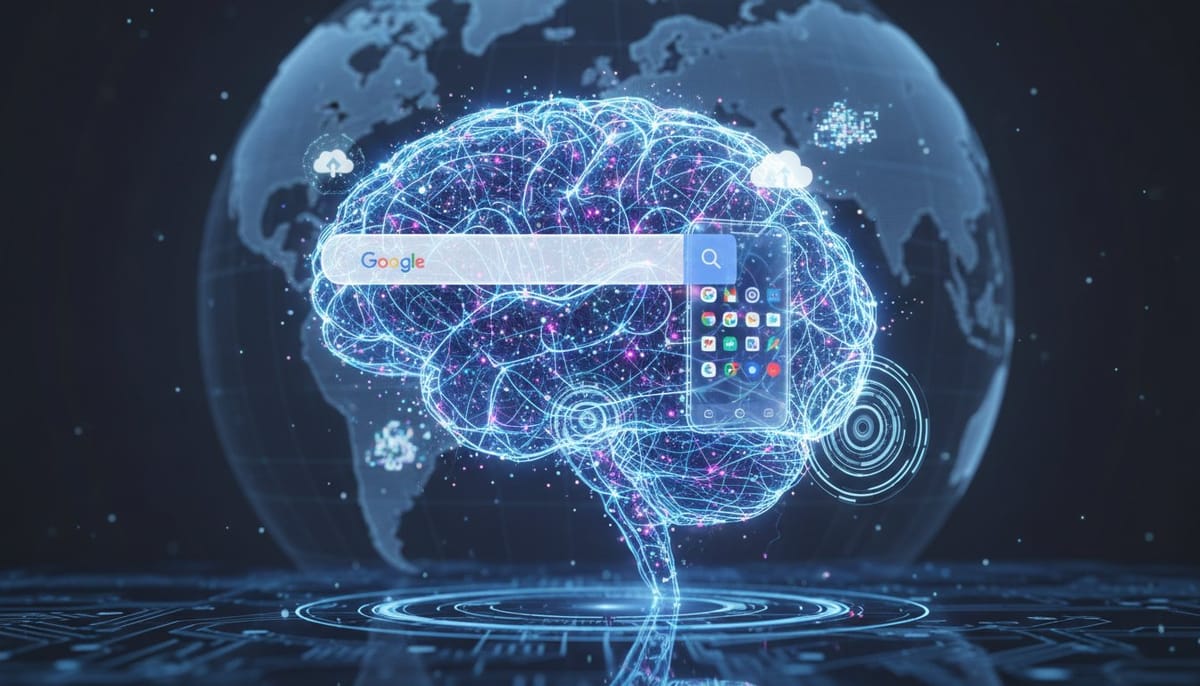
Google AI: Driving Innovation Across Search and Beyond
Google AI stands at the forefront of artificial intelligence, not merely as a division within a tech giant, but as the pulsating heart of Google's strategic vision. Understanding Google's multifaceted AI Strategy is crucial for anyone keen on the future of technology, competitive landscapes, and the ethical considerations that come with such powerful advancements. For a comprehensive overview, refer to our ultimate guide on AI.
Google's journey into AI began decades ago, evolving from basic machine learning algorithms to sophisticated neural networks capable of complex reasoning and creative tasks. This evolution has been fueled by massive investments in research, talent acquisition (like DeepMind), and an unparalleled data infrastructure. To understand the foundational components, delve into The Core of AI: Understanding AI Chips and Nvidia's Dominance in Hardware. The overarching goal remains consistent: to organize the world's information and make it universally accessible and useful, a mission now inextricably linked with the capabilities of artificial intelligence.
Innovation at the Core: Pioneering AI Research
At the heart of Google's AI strategy is a relentless pursuit of foundational research. Divisions like Google DeepMind and Google Brain (now unified as Google AI) have consistently pushed the boundaries of what's possible. Their breakthroughs aren't just academic curiosities; they form the bedrock for practical applications that touch billions of users daily.
- Transformer Architecture: A landmark innovation from Google, the Transformer model (introduced in 2017) became the basis for virtually all modern large language models (LLMs). Its ability to process entire sequences of data simultaneously, rather than word by word, unlocked unprecedented capabilities in natural language processing (NLP). For a comprehensive understanding, refer to Large Language Models (LLMs) Explained: The Power Behind Generative AI.
- LaMDA, PaLM, and Gemini: Building on the Transformer, Google developed conversational AI models like LaMDA (Language Model for Dialogue Applications), demonstrating remarkable fluency and understanding. PaLM (Pathways Language Model) scaled these capabilities, and most recently, Gemini represents Google's most ambitious and capable multimodal AI model yet, designed to understand and operate across text, code, audio, image, and video.
- Deep Learning and Neural Networks: Google's extensive work in deep learning has led to advancements in image recognition, speech synthesis, and predictive analytics, powering features across its product ecosystem.
These innovations aren't developed in isolation; they are deeply integrated into Google's vast portfolio, ensuring that cutting-edge research quickly translates into tangible user benefits.
Reshaping Search: The AI-Powered Google Search Experience
Perhaps the most visible manifestation of Google AI is its profound impact on Google Search. What once relied heavily on keywords and backlinks now leverages sophisticated AI models to understand context, intent, and nuance, providing more relevant and helpful results than ever before.
- BERT (Bidirectional Encoder Representations from Transformers): Launched in 2019, BERT was a significant leap in understanding search queries, especially complex or conversational ones. It allowed Google Search to grasp the full context of words in a sentence, drastically improving relevance.
- MUM (Multitask Unified Model): A successor to BERT, MUM is a multimodal AI that can understand information across different formats (text, images) and languages. It's designed to answer complex questions that might require multiple searches, synthesizing information more effectively.
- Search Generative Experience (SGE): Google's latest frontier in search, SGE integrates generative AI directly into the search results page. It provides AI-powered overviews, conversational follow-ups, and new ways to interact with information, fundamentally transforming how users explore and understand topics. This move signals a significant shift towards a more proactive, AI-assisted search experience.
These advancements ensure that Google Search remains the gold standard, continuously adapting to evolving user behaviors and information needs, driven entirely by sophisticated AI.
Beyond Search: AI's Ubiquitous Presence in Google Products
While Search is a prominent example, Google AI permeates virtually every corner of the company's offerings:
- Google Cloud AI: Offering a suite of AI and machine learning services to businesses, Google Cloud enables organizations to leverage Google's foundational models, custom AI solutions, and vast computing power for their own needs, from data analytics to custom natural language processing and computer vision.
- Google Workspace: AI assists in drafting emails (Smart Compose), summarizing documents, suggesting relevant files, and enhancing collaboration in products like Gmail, Docs, and Meet.
- Android and Devices: AI powers features like Google Assistant, intelligent battery management, personalized recommendations, advanced camera capabilities (e.g., Pixel phones' computational photography), and accessibility features. These examples highlight the pervasive impact of Consumer AI: How Artificial Intelligence is Changing Your Daily Life and Products.
- Waymo: Google's self-driving car project, Waymo, is a prime example of AI in the physical world, utilizing advanced machine learning for perception, prediction, and planning to navigate complex road environments, showcasing the power of Automation. For a broader view on how AI is transforming industries through intelligent machines, read Robotics and AI: How Intelligent Machines are Transforming Industries and Daily Life.
- Healthcare and Science: DeepMind's work in areas like protein folding prediction (AlphaFold) has revolutionized biology, while Google Health applies AI to medical imaging and diagnostics, demonstrating transformative potential in Healthcare.
This widespread integration showcases Google's strategy to embed AI as a core utility, enhancing functionality and user experience across its entire ecosystem.
The Competitive Landscape and Ethical Imperatives
Google operates in an intensely competitive AI landscape, with tech giants like Microsoft (with OpenAI), Amazon, and Meta also making significant strides. Google's strategy involves both internal innovation and strategic partnerships, leveraging its scale and diverse product portfolio as key advantages. The race for AI supremacy is not just about technical breakthroughs but also about market adoption and ecosystem dominance. Understanding the financial drivers behind this competition is crucial; learn more about AI Funding: Navigating the Investment Landscape and Trends in Artificial Intelligence.
Crucially, Google has also been a vocal proponent of responsible AI development. Recognizing the profound societal implications of powerful AI, the company has established ethical AI principles focusing on fairness, accountability, and the critical importance of AI Security. This includes developing tools for AI explainability, mitigating bias, and promoting transparency. Google's commitment to ethical AI is not just a moral stance but a strategic necessity to build trust and ensure the sustainable adoption of its technologies.
The Future of Google AI
Looking ahead, the trajectory of Google AI promises even more transformative changes. We can expect continued advancements in multimodal AI, allowing for more natural and intuitive interactions across different forms of data. Personalization will become even more sophisticated, with AI anticipating user needs with greater accuracy. The convergence of AI with augmented reality (AR) and robotics will likely open up new frontiers, blurring the lines between the digital and physical.
Google's AI strategy is a testament to its long-term vision: to leverage artificial intelligence not just to refine existing products but to invent entirely new paradigms for interaction, information access, and problem-solving. As AI continues to evolve at an unprecedented pace, Google remains a pivotal force, shaping not only its own future but the future of technology for billions worldwide.