Understanding Deepfakes: The Ethics, Dangers, and Detection of AI Manipulation

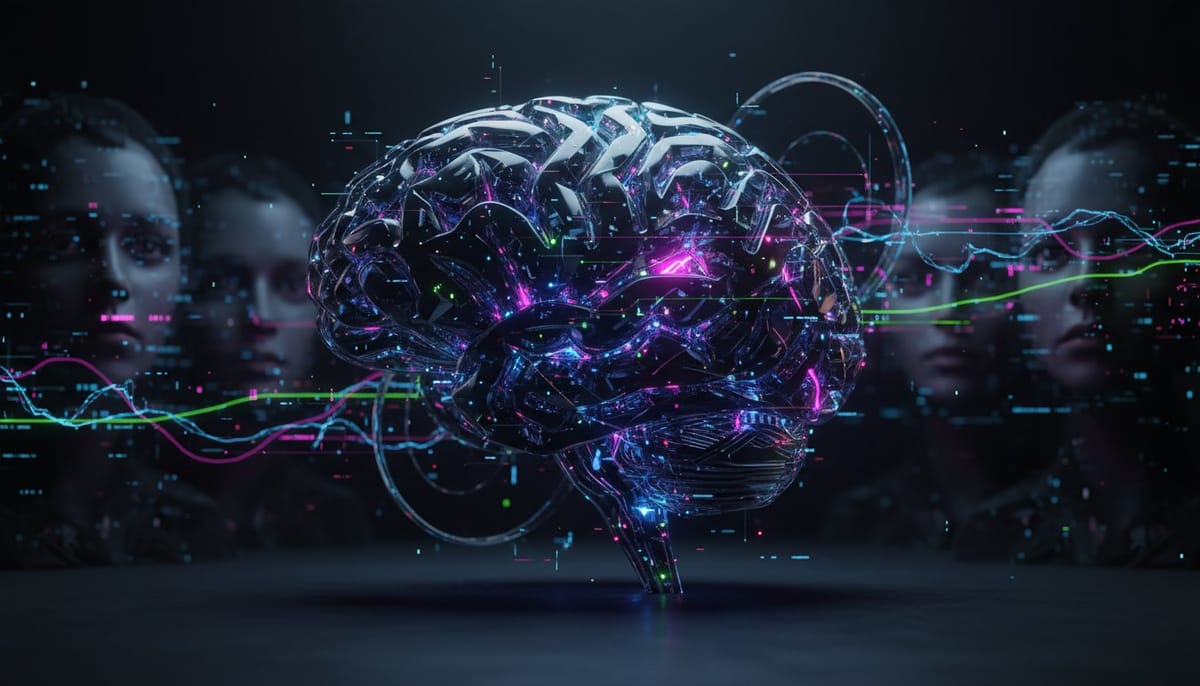
Understanding Deepfakes: The Evolving Landscape of AI Manipulation
In an age increasingly dominated by digital media, the line between reality and fabrication has become astonishingly blurred. At the forefront of this phenomenon are deepfakes, a sophisticated form of artificial intelligence (AI) manipulation that allows for the creation of incredibly realistic, yet entirely fabricated, video, audio, or image content. If you're looking for a comprehensive overview, check out our ultimate guide on AI. Once confined to the realm of science fiction, deepfakes have rapidly evolved from novelty to a significant global concern, impacting everything from individual reputations to national security. This post dives deep into the mechanisms, dangers, ethical considerations, and detection methods surrounding deepfakes, aiming to equip you with the knowledge needed to navigate this complex digital landscape.
How Deepfakes Work: A Glimpse Behind the Curtain
At their core, deepfakes leverage powerful AI techniques, primarily Generative Adversarial Networks (GANs) or autoencoders. For businesses looking to harness such advanced capabilities responsibly, our Machine Learning expertise can guide development and implementation. This generative AI capability also has implications for search engines, as seen in Google's AI Overviews: How Generative AI is Reshaping Search Results. Imagine two neural networks locked in a perpetual game of cat and mouse: one, the 'generator,' creates fake content, while the other, the 'discriminator,' tries to distinguish it from real content. Through this adversarial training, the generator becomes incredibly adept at producing highly convincing fakes that can fool the discriminator, and by extension, human observers. The power required for such computations highlights Nvidia's Dominance in AI: Powering the Next Generation of Machine Learning. To learn more about other key players in AI and generative models, you might be interested in What is OpenAI? Exploring the Company Behind ChatGPT and AI Advancements.
- Video Deepfakes: These often involve swapping a person's face in an existing video with another, or animating a still image. The AI learns the target person's facial expressions, movements, and speech patterns from a vast dataset of their genuine footage, then seamlessly grafts them onto a source video.
- Audio Deepfakes (Voice Cloning): AI models can be trained on a short audio sample of a person's voice to generate new speech in their distinct vocal signature, saying anything the manipulator desires. For other advancements in conversational AI, read about Grok AI Explained: Elon Musk's Vision for Conversational Intelligence.
- Image Deepfakes: Similar to video, images can be altered to place individuals in fabricated scenarios or create entirely synthetic portraits of non-existent people.
The success of a deepfake hinges on the quality and quantity of the training data. The more authentic footage or audio available, the more realistic and difficult to detect the deepfake becomes.
The Dangers and Societal Impact of Deepfakes
The potential applications of deepfakes extend far beyond harmless entertainment, posing grave threats across various sectors.
Misinformation and Disinformation
Perhaps the most insidious danger is the weaponization of deepfakes for misinformation and disinformation campaigns. Fabricated videos of politicians making inflammatory statements, fake news reports designed to sway public opinion, or manipulated footage used to sow discord can erode public trust in media, institutions, and even objective reality. In an election year, a well-timed deepfake could have devastating consequences, altering political outcomes and destabilizing democracies. Recognizing these threats, we offer specialized Government AI solutions to help public sectors navigate complex digital challenges.
Reputational Damage and Personal Harm
Deepfakes can inflict severe personal and professional damage. Non-consensual deepfake pornography, for instance, has become a significant concern, disproportionately targeting women and causing immense psychological distress and reputational ruin. Public figures, executives, and even private citizens can find themselves the subjects of humiliating or incriminating deepfakes, leading to job loss, social ostracization, and legal battles.
Financial Fraud and Cybercrime
The advent of voice cloning technology has opened new avenues for sophisticated financial fraud. Criminals can mimic the voice of a CEO to authorize fraudulent wire transfers, or impersonate a family member to trick individuals into divulging sensitive financial information. These AI-powered scams are increasingly difficult to detect, as they exploit human trust and bypass traditional security measures. For robust protection against emerging threats like these, our AI Security services offer comprehensive solutions. Beyond scams, AI is also transforming industries through automation, as detailed in The Rise of Robotics: How AI is Transforming Automation and Industries.
Ethical Considerations: Navigating a Moral Minefield
The rise of deepfakes has thrown numerous ethical dilemmas into sharp relief.
- Consent and Privacy: The ability to create convincing replicas of individuals without their consent raises fundamental questions about personal privacy and the right to control one's own image and voice.
- Truth Decay: When