Mastering Generative AI: A Complete Guide

Unlocking Creativity and Efficiency: Your Practical Roadmap to Generative AI
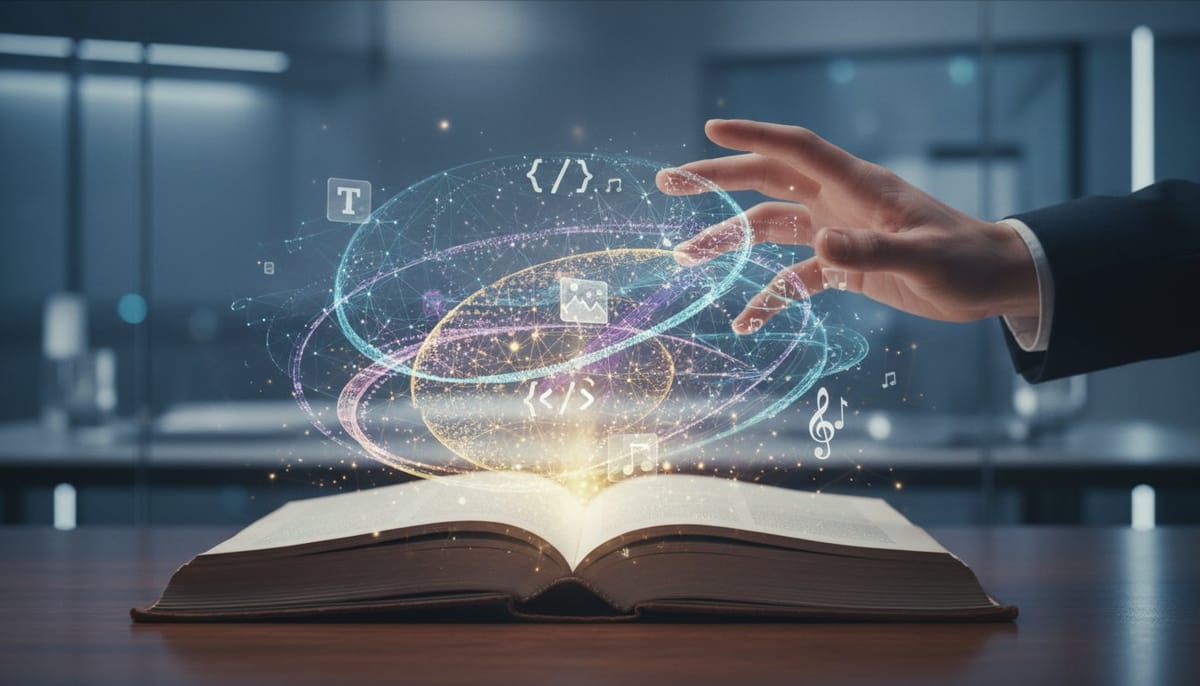
Welcome to the frontier of innovation! Generative AI is no longer a futuristic concept; it's a powerful, accessible tool transforming how we create, work, and interact with technology. From crafting compelling marketing copy and designing stunning visuals to generating functional code and composing original music, Generative AI empowers individuals and businesses to achieve unprecedented levels of creativity and efficiency. This comprehensive guide is your practical roadmap to understanding, utilizing, and ultimately mastering Generative AI. For businesses seeking tailored guidance, our expert AI Strategy services can help integrate these revolutionary tools into your workflow effectively. We'll cut through the hype and provide actionable insights, real-world examples, and step-by-step guidance to help you integrate these revolutionary tools into your workflow.
What Exactly is Generative AI?
At its core, Generative AI refers to artificial intelligence systems capable of producing novel content. Unlike traditional AI that might analyze or classify existing data, generative models learn patterns and structures from vast datasets and then use that understanding to generate entirely new, original outputs. Think of it as teaching an AI to understand the 'rules' of a particular domain – be it language, images, or sound – and then asking it to create something new that adheres to those rules, yet is uniquely its own.
The 'generative' aspect means these models can create text, images, audio, video, 3D models, code, and much more, often indistinguishable from human-created content. Especially for advanced text generation, our NLP Solutions offer specialized capabilities. This capability has profound implications across virtually every industry, democratizing creation and accelerating innovation.
Why Generative AI Matters Now More Than Ever
The current explosion of interest and capability in Generative AI is driven by several converging factors:
- Increased Computational Power: Modern GPUs and cloud computing have made training and running complex generative models feasible. For a deeper understanding of the underlying technology and financial considerations, explore Generative AI Infrastructure and Investment: What You Need to Know.
- Vast Datasets: The internet provides an unprecedented volume of data for models to learn from, enabling them to grasp intricate patterns.
- Algorithmic Breakthroughs: Innovations like the Transformer architecture, Generative Adversarial Networks (GANs), and Diffusion Models have dramatically improved generation quality and versatility.
- Accessibility: User-friendly interfaces and API integrations have made these powerful tools accessible to non-technical users, moving them beyond the realm of specialized researchers.
Understanding and applying Generative AI is no longer optional; it's becoming a fundamental skill for anyone looking to stay competitive and innovative in today's rapidly evolving digital landscape.
The Core Technologies Powering Generative AI
Before diving into practical applications, a foundational understanding of the underlying technologies will empower you to use these tools more effectively. While the math can be complex, the core concepts are surprisingly intuitive.
Foundation Models: The Giants of Generative AI
At the heart of many modern Generative AI applications are 'Foundation Models.' These are massive AI models trained on broad data at scale, designed to be adaptable to a wide range of downstream tasks. Examples include large language models (LLMs) like GPT-3.5/4 and large image models like Stable Diffusion. To dive deeper into various AI Models and Assistants: Full Features Guide, explore our detailed guide. They are