Mastering Artificial Intelligence: A Complete Guide to AI Concepts and Applications

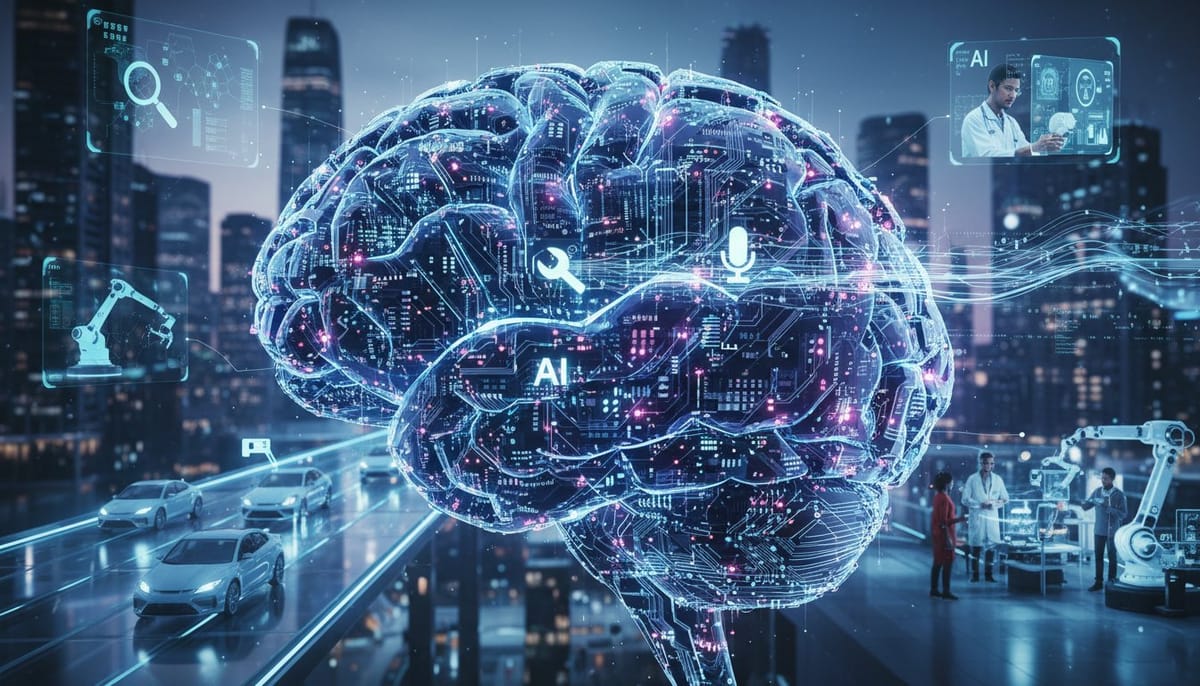
Understanding the Core: What is AI?
Artificial Intelligence (AI) is no longer a concept confined to science fiction; it's a transformative force reshaping industries, economies, and our daily lives. From personalized recommendations on streaming services to advanced medical diagnostics, AI's presence is pervasive. This comprehensive guide will demystify AI, breaking down its core concepts, exploring its myriad applications, and providing you with an actionable roadmap to master this revolutionary field. For businesses, developing a clear AI Strategy is crucial to harness this power effectively. Whether you're a budding data scientist, a business leader, or simply curious about the technology defining our future, this guide offers the practical insights you need to navigate and leverage the power of AI.
Defining Artificial Intelligence
At its heart, Artificial Intelligence (AI) refers to the simulation of human intelligence in machines that are programmed to think and learn like humans. It encompasses a broad range of capabilities, including learning, reasoning, problem-solving, perception, and understanding language. Unlike traditional programming that relies on explicit instructions for every possible scenario, AI systems are designed to adapt and improve their performance over time by analyzing data and identifying patterns, a core aspect of Machine Learning.
Key characteristics of AI systems include:
- Learning: Acquiring information and rules for using the information.
- Reasoning: Using rules to reach approximate or definite conclusions.
- Problem-Solving: Applying learned knowledge to solve specific problems.
- Perception: Interpreting sensory inputs like images, sounds, or text.
- Language Understanding: Processing and generating human language.
The goal isn't necessarily to replicate human consciousness, but rather to create systems that can perform tasks that typically require human cognitive abilities, often with greater speed, accuracy, and scale.
The Evolution of AI: A Brief History
AI's journey is a fascinating tale of ambitious ideas, periods of intense research, and moments of significant breakthroughs. It officially began in 1956 at the Dartmouth Workshop, where the term "Artificial Intelligence" was coined. Early AI research focused on symbolic AI, attempting to encode human knowledge into rules that machines could follow. This led to the development of expert systems, which could mimic the decision-making ability of a human expert within a narrow domain.
The 1980s saw a resurgence of interest, but progress was often limited by computational power and the availability of data. The real turning point came in the 21st century, fueled by three critical factors:
- Vast Data Availability: The internet and digital technologies generated unprecedented amounts of data, essential for training AI models.
- Increased Computational Power: Advances in hardware, particularly Graphics Processing Units (GPUs), provided the processing capabilities needed for complex AI algorithms.
- Algorithmic Innovations: Breakthroughs in machine learning, especially deep learning, unlocked new levels of performance.
Today, we stand at the cusp of a new era, where AI is moving from theoretical research into widespread practical deployment across almost every sector imaginable.
Key AI Paradigms: ANI, AGI, ASI
To understand the scope of AI, it's helpful to categorize it into three primary paradigms:
- Artificial Narrow Intelligence (ANI): Also known as "Weak AI," ANI refers to AI systems designed and trained for a particular task. These systems excel at their specific function but lack broader cognitive abilities. Examples include spam filters, recommendation engines, voice assistants (like Siri or Alexa), and image recognition software. Nearly all the AI we interact with today is ANI. Practical takeaway: When developing AI solutions, you'll almost exclusively be working within the ANI paradigm, focusing on solving specific, well-defined problems.
- Artificial General Intelligence (AGI): Also known as "Strong AI," AGI would possess human-level cognitive abilities across a wide range of tasks. An AGI system could learn, understand, and apply intelligence to any intellectual task that a human being can. This remains a significant research goal and is not yet a reality. Practical takeaway: While AGI is aspirational, understanding its concept helps set long-term research directions and ethical considerations.
- Artificial Super Intelligence (ASI): ASI would surpass human intelligence in virtually every field, including scientific creativity, general wisdom, and social skills. This is a purely hypothetical concept, often discussed in the context of the future impact and potential risks of advanced AI.
Our focus in this guide will be on ANI, providing you with the tools and knowledge to build and implement practical AI solutions that are making a real-world impact today.
The Pillars of AI: Fundamental Concepts Explained
To effectively leverage AI, it's crucial to understand its foundational concepts. These are the building blocks that empower machines to learn, reason, and make decisions.
Machine Learning (ML)
Machine Learning (ML) is a subfield of AI that enables systems to learn from data without being explicitly programmed. Instead of writing code for every possible scenario, you feed a machine learning algorithm a vast amount of data, and it learns to identify patterns, make predictions, or take decisions. Think of it as teaching a child by showing them many examples, rather than giving them a rulebook.
Supervised Learning
Concept: In supervised learning, the algorithm learns from a dataset that contains both input features and corresponding output labels. The goal is to learn a mapping function from the input to the output, so that when new, unseen inputs are presented, the model can accurately predict their labels.
How-To/Practical Application:
- Classification: Predicting a categorical output (e.g., spam/not spam, disease/no disease). To implement, you'd collect a dataset of emails labeled as spam or not spam, train a model (like a Support Vector Machine or Logistic Regression) on this data, and then use it to classify new incoming emails.
- Regression: Predicting a continuous numerical output (e.g., house prices, stock values). You'd gather data on house features (square footage, number of bedrooms) and their corresponding prices, train a regression model (e.g., Linear Regression, Random Forest Regressor), and use it to estimate the price of a new house based on its features.
Actionable Step: Start by identifying problems where you have historical data with clear outcomes. For example, if you want to predict customer churn, collect data on customer behavior and whether they churned. This labeled data is your starting point for supervised learning.
Unsupervised Learning
Concept: Unlike supervised learning, unsupervised learning deals with unlabeled data. The algorithms are tasked with finding inherent structures, patterns, or relationships within the data without any prior knowledge of what these patterns might be. It's like giving a child a box of unlabeled toys and asking them to sort them into groups that make sense.
How-To/Practical Application:
- Clustering: Grouping similar data points together (e.g., customer segmentation). You might use an algorithm like K-Means to identify distinct customer segments based on their purchasing behavior, without knowing those segments beforehand. This helps businesses tailor marketing strategies.
- Dimensionality Reduction: Reducing the number of features in a dataset while retaining most of the important information (e.g., for visualization or to improve model performance). Principal Component Analysis (PCA) is a common technique used to simplify complex datasets.
Actionable Step: When exploring large, complex datasets without clear target variables, consider unsupervised learning. For instance, analyze website visitor data to discover natural groupings of user behavior, even if you don't know what those groups are initially.
Reinforcement Learning (RL)
Concept: Reinforcement Learning involves an agent learning to make decisions by performing actions in an environment to maximize a cumulative reward. The agent receives feedback in the form of rewards or penalties, which guides its learning process. Think of training a dog with treats for good behavior.
How-To/Practical Application:
- Game Playing: AI agents learning to play complex games like Chess or Go (e.g., AlphaGo). The agent experiments with moves, receives rewards for winning, and penalties for losing, gradually optimizing its strategy.
- Robotics: Training robots to perform tasks like grasping objects or navigating complex environments. The robot learns through trial and error, getting rewards for successful actions and penalties for failures.
Actionable Step: While more complex, you can experiment with RL in simulated environments. For example, use OpenAI Gym to train an agent to balance a pole or navigate a simple maze, defining clear reward functions for desired behaviors.
Deep Learning (DL)
Deep Learning is a specialized subfield of Machine Learning that uses artificial neural networks with multiple layers (hence "deep") to learn from data. Inspired by the structure and function of the human brain, deep learning models can automatically discover intricate patterns in raw data, eliminating the need for manual feature engineering that is often required in traditional ML.
Neural Networks Explained
Concept: A neural network consists of interconnected nodes (neurons) organized in layers: an input layer, one or more hidden layers, and an output layer. Each connection has a weight, and each neuron has an activation function. Data passes through the network, weights are adjusted during training, allowing the network to learn complex relationships.
How-To/Practical Application: For simple tasks like binary classification, a basic feedforward neural network can be implemented. You'd define the number of layers, neurons per layer, and activation functions. Training involves feeding data, calculating errors, and using backpropagation to update weights.
Convolutional Neural Networks (CNNs)
Concept: CNNs are specifically designed for processing structured grid-like data, such as images. They use convolutional layers to automatically learn spatial hierarchies of features from input images, making them highly effective for computer vision tasks.
How-To/Practical Application: For image classification, you would build a CNN with convolutional layers (applying filters to detect edges, textures, shapes), pooling layers (reducing dimensionality), and fully connected layers (for classification). Training involves feeding labeled image datasets. Actionable Step: Use a pre-trained CNN model (like VGG, ResNet) and fine-tune it on your specific image dataset for tasks like identifying product defects or medical image analysis.
Recurrent Neural Networks (RNNs)
Concept: RNNs are designed to handle sequential data, where the order of information matters (e.g., time series, natural language). They have 'memory' that allows them to use information from previous steps in the sequence to influence the current output.
How-To/Practical Application: For tasks like predicting the next word in a sentence or analyzing stock market trends, RNNs or their more advanced variants (LSTMs, GRUs) are used. You'd feed sequences of data, and the network learns the temporal dependencies. Actionable Step: Develop a simple RNN to predict the next value in a stock price series or to generate short text sequences based on a learned pattern.
Transformers
Concept: Transformers are a revolutionary deep learning architecture, particularly dominant in Natural Language Processing (NLP). They rely on an "attention mechanism" that allows the model to weigh the importance of different parts of the input sequence when processing a specific element, enabling highly parallel processing and capturing long-range dependencies more effectively than RNNs.
How-To/Practical Application: Models like BERT, GPT, and T5 are built on the Transformer architecture. For tasks like advanced machine translation, text summarization, or complex question answering, transformers are the go-to. Actionable Step: Leverage pre-trained Transformer models (available via libraries like Hugging Face Transformers) for state-of-the-art NLP tasks. Fine-tuning these models on your specific dataset can yield powerful results with less data and computational effort than training from scratch.
Natural Language Processing (NLP)
Natural Language Processing (NLP) is a branch of AI that focuses on enabling computers to understand, interpret, and generate human language. It bridges the gap between human communication and computer understanding.
Text Classification
Concept: Assigning predefined categories or tags to text documents. This is a fundamental NLP task, often solved using supervised learning.
How-To/Practical Application:
- Spam Detection: Classifying emails as spam or not spam.
- Document Categorization: Organizing news articles into topics like 'sports,' 'politics,' 'technology.'
Actionable Step: Collect a dataset of text documents and their corresponding categories. Preprocess the text (tokenization, removing stopwords), convert text into numerical features (e.g., TF-IDF), and train a classification model (e.g., Naive Bayes, SVM, or a deep learning model) to categorize new texts.
Sentiment Analysis
Concept: Determining the emotional tone or sentiment expressed in a piece of text (e.g., positive, negative, neutral).
How-To/Practical Application:
- Customer Feedback Analysis: Understanding customer opinions about products or services from reviews and social media comments.
- Brand Monitoring: Tracking public sentiment towards a brand.
Actionable Step: Use lexicon-based tools (like VADER) for quick sentiment analysis or train a supervised learning model on a dataset of text labeled with sentiment. Deep learning models, especially Transformers, offer highly nuanced sentiment detection.
Machine Translation
Concept: Automatically translating text or speech from one natural language to another.
How-To/Practical Application:
- Global Communication: Enabling cross-language communication in business and personal contexts.
- Content Localization: Translating websites, documents, and software for international audiences.
Actionable Step: While building a machine translation system from scratch is complex, you can leverage powerful pre-trained models from cloud providers (Google Translate API, AWS Translate) or open-source transformer models to integrate translation capabilities into your applications.
Generative AI for Text
Concept: AI models capable of generating human-like text, often in response to a given prompt or context. Large Language Models (LLMs) are at the forefront of this. For a deeper dive into these advanced concepts, refer to our guide on Understanding Core AI Technologies: Generative AI, LLMs, and Inference Explained.
How-To/Practical Application:
- Content Creation: Generating articles, marketing copy, or creative writing.
- Chatbots and Virtual Assistants: Creating more natural and contextually aware conversational agents.
- Code Generation: Assisting developers by writing code snippets.
Actionable Step: Experiment with prompt engineering using publicly available LLMs (like GPT-3.5/4, Llama 2). Learn how to craft effective prompts to guide the AI to generate desired outputs. For more control, explore fine-tuning smaller open-source LLMs on your specific domain data.
Computer Vision (CV)
Computer Vision is an AI field that enables computers to "see," interpret, and understand the visual world from images and videos. It involves tasks like image recognition, object detection, and facial recognition.
Image Recognition
Concept: Identifying and classifying objects or features within an image.
How-To/Practical Application:
- Product Categorization: Automatically sorting products in e-commerce based on their images.
- Medical Image Analysis: Identifying anomalies in X-rays or MRIs.
Actionable Step: Collect a dataset of images with corresponding labels. Train a Convolutional Neural Network (CNN) to classify these images. For robust results, consider using transfer learning with pre-trained CNNs like ResNet or Inception, fine-tuning them on your specific image dataset for tasks like identifying product defects or medical image analysis.
Object Detection
Concept: Not only identifying objects but also locating them within an image by drawing bounding boxes around them.
How-To/Practical Application:
- Autonomous Vehicles: Detecting pedestrians, other vehicles, traffic signs.
- Security Surveillance: Identifying unauthorized objects or activities in video feeds.
- Quality Control in Manufacturing: Detecting defects on assembly lines.
Actionable Step: Implement models like YOLO (You Only Look Once) or Faster R-CNN. These models require annotated datasets where objects are not just labeled but also have their bounding box coordinates specified. Tools like LabelImg can help create such datasets.
Facial Recognition
Concept: Identifying or verifying a person from a digital image or a video frame. A specialized form of object detection and recognition.
How-To/Practical Application:
- Security Systems: Granting access to authorized personnel.
- Biometric Authentication: Unlocking smartphones or devices.
Actionable Step: Utilize pre-built facial recognition APIs from cloud providers (e.g., AWS Rekognition, Azure Face API) or open-source libraries like OpenCV and dlib to build basic facial detection and recognition systems. Be mindful of ethical implications and privacy concerns.
Robotics and AI
Robotics is the engineering field concerned with the design, construction, operation, and use of robots. When combined with AI, robots become intelligent agents capable of perceiving their environment, making decisions, and executing complex tasks autonomously or semi-autonomously, driving significant advancements in Automation.
How-To/Practical Application:
- Industrial Automation: AI-powered robots in manufacturing plants performing assembly, welding, or quality inspection with greater precision and adaptability.
- Service Robots: Robots in healthcare assisting with surgeries or delivering supplies, or in hospitality for customer service.
- Autonomous Navigation: Robots (and autonomous vehicles) using AI for simultaneous localization and mapping (SLAM) to navigate unknown environments, avoid obstacles, and plan optimal paths.
Actionable Step: Begin with robotics simulation environments (e.g., Gazebo, CoppeliaSim) to experiment with robot control and AI algorithms for path planning and object manipulation without needing physical hardware. Learn about sensor integration (LIDAR, cameras) and actuator control.
Expert Systems and Knowledge Representation
Concept: Expert systems are early AI programs designed to mimic the decision-making ability of a human expert. They use a knowledge base of facts and rules, combined with an inference engine, to solve problems within a specific domain.
How-To/Practical Application:
- Medical Diagnosis: Systems that suggest diagnoses based on patient symptoms.
- Financial Planning: AI that provides investment advice based on financial rules.
Actionable Step: While less common for new development compared to ML, understanding expert systems provides a historical context for AI. You can create a simple rule-based system using if-then statements in a programming language to model a decision-making process for a very narrow domain, like a troubleshooting guide for a common technical issue.
Practical Applications of AI: Real-World Impact
AI's theoretical prowess translates into tangible benefits across virtually every industry. For a broader view of the landscape, including key players and startups, dive into Exploring the AI Ecosystem: Key Players, Startups, and Real-World Applications. Here's a look at how AI is being applied and how you can leverage it.
AI in Business and Marketing
AI is revolutionizing how businesses operate, interact with customers, and make strategic decisions.
Personalized Recommendations
Concept: AI algorithms analyze user behavior, preferences, and historical data to suggest products, content, or services tailored to individual users.
How-To/Practical Application: E-commerce sites use collaborative filtering or content-based filtering algorithms to suggest items based on past purchases or browsing history, increasing sales and user engagement.
Actionable Step: For an e-commerce platform, collect user purchase history and item interaction data. Use a recommendation engine library (e.g., Surprise in Python) to build a basic recommender system. For content platforms, track user viewing habits and preferences to suggest relevant articles or videos.
Predictive Analytics
Concept: Using historical data and AI models to forecast future trends, outcomes, or behaviors, a core component of Data Analytics.
How-To/Practical Application: Predicting customer churn, sales forecasts, or equipment failure. Businesses can proactively address potential issues or capitalize on emerging opportunities.
Actionable Step: Identify a business metric you want to predict (e.g., monthly sales). Gather relevant historical data (e.g., past sales, marketing spend, seasonality). Train a time series model (e.g., ARIMA, Prophet) or a regression model to forecast future values.
Automated Customer Service (Chatbots)
Concept: AI-powered virtual assistants that interact with customers, answer queries, and provide support 24/7.
How-To/Practical Application: Chatbots handle routine customer inquiries, triage complex issues to human agents, and provide instant responses, improving customer satisfaction and reducing operational costs.
Actionable Step: Use platforms like Google Dialogflow, IBM Watson Assistant, or open-source frameworks like Rasa to build a simple chatbot. Start by defining common customer questions and their corresponding answers, then design conversation flows.
Fraud Detection
Concept: AI algorithms analyze transaction patterns and user behavior to identify and flag suspicious activities indicative of fraud, a critical application in AI Security.
How-To/Practical Application: Financial institutions use AI to detect credit card fraud, insurance claim fraud, or money laundering by identifying anomalies that human analysts might miss.
Actionable Step: Collect a dataset of historical transactions labeled as legitimate or fraudulent. Train a classification model (e.g., Isolation Forest, SVM) to identify fraudulent transactions. Focus on handling imbalanced datasets, as fraud cases are typically rare.
AI in Healthcare
AI is transforming healthcare delivery, research, and patient outcomes.
Drug Discovery
Concept: AI accelerates the identification of potential drug candidates, predicts their efficacy, and optimizes molecular structures.
How-To/Practical Application: AI analyzes vast chemical databases, simulates molecular interactions, and predicts drug-target binding affinity, significantly speeding up the drug development pipeline.
Actionable Step: While highly specialized, you can explore public datasets of chemical compounds and their properties. Experiment with machine learning models to predict properties like toxicity or solubility based on molecular structure representations.
Diagnosis Assistance
Concept: AI algorithms analyze medical images (X-rays, MRIs, CT scans) or patient data to assist clinicians in making more accurate and earlier diagnoses.
How-To/Practical Application: AI can detect subtle patterns in medical images indicative of diseases like cancer, diabetic retinopathy, or pneumonia, often outperforming human experts in specific tasks.
Actionable Step: Access public medical image datasets (e.g., from Kaggle or NIH). Train a CNN for image classification to detect specific medical conditions. Collaborate with medical professionals to understand data nuances and validation requirements.
Personalized Treatment Plans
Concept: AI analyzes a patient's unique genetic makeup, medical history, and lifestyle to recommend highly individualized treatment strategies.
How-To/Practical Application: In oncology, AI can suggest optimal chemotherapy regimens based on a tumor's genetic profile, leading to more effective and less toxic treatments.
Actionable Step: Explore datasets containing patient demographics, treatment outcomes, and genetic markers. Use clustering algorithms to group patients with similar characteristics and identify patterns in treatment efficacy within those groups.
AI in Finance
The financial sector leverages AI for risk management, trading, and security.
Algorithmic Trading
Concept: AI algorithms execute trades at high speed and volume, exploiting market inefficiencies and reacting to real-time data faster than humans.
How-To/Practical Application: AI systems analyze market data, news sentiment, and economic indicators to make buy/sell decisions, often within milliseconds, optimizing trading strategies.
Actionable Step: Start with historical stock data. Build a time series prediction model (e.g., LSTM, Prophet) to forecast stock prices. Integrate this with a simulated trading environment to test basic trading strategies based on your predictions. Be aware that real-world trading is highly complex and risky.
Risk Assessment
Concept: AI models analyze vast amounts of data to assess credit risk, market risk, or operational risk with greater accuracy.
How-To/Practical Application: Banks use AI to evaluate loan applications, predicting default probabilities based on applicant financial history, credit scores, and other behavioral data.
Actionable Step: Obtain a dataset of loan applications with outcomes (default/no default). Train a classification model (e.g., Logistic Regression, Gradient Boosting) to predict the likelihood of default for new applicants.
Cybersecurity
Concept: AI detects and responds to cyber threats by identifying anomalous network behavior, malware, and phishing attempts.
How-To/Practical Application: AI systems continuously monitor network traffic, flagging unusual patterns that could indicate a cyberattack, and can even automate responses to neutralize threats.
Actionable Step: Access public datasets of network traffic (e.g., NSL-KDD). Train an anomaly detection model (e.g., Isolation Forest, One-Class SVM) to identify unusual network activities that deviate from normal behavior.
AI in Manufacturing and Supply Chain
AI is enhancing efficiency, quality, and resilience in manufacturing and supply chain.
Predictive Maintenance
Concept: AI analyzes sensor data from machinery to predict when equipment is likely to fail, enabling proactive maintenance.
How-To/Practical Application: Factories use AI to monitor vibration, temperature, and other parameters from industrial machines. When anomalies are detected, maintenance can be scheduled before a breakdown occurs, preventing costly downtime.
Actionable Step: Collect time-series sensor data from equipment along with records of failures. Train a time series classification or regression model to predict remaining useful life (RUL) or the probability of failure within a given timeframe.
Quality Control
Concept: AI-powered computer vision systems inspect products for defects at high speed and accuracy.
How-To/Practical Application: Cameras on assembly lines capture images of products, and AI models instantly identify manufacturing flaws, ensuring only high-quality items reach the market.
Actionable Step: Gather images of both flawless and defective products. Train a CNN-based image classification or object detection model to identify specific types of defects on new products.
Supply Chain Optimization
Concept: AI analyzes vast datasets of logistics, demand, and inventory to optimize routes, manage stock, and predict disruptions.
How-To/Practical Application: AI models forecast demand fluctuations, suggest optimal inventory levels, and identify the most efficient delivery routes, reducing costs and improving delivery times.
Actionable Step: Collect historical data on demand, inventory levels, shipping routes, and delivery times. Use predictive models (e.g., regression, time series) to forecast demand and optimization algorithms to suggest efficient inventory management or routing strategies.
AI in Everyday Life
AI is increasingly integrated into our daily routines, often without us even realizing it.
Smart Assistants
Concept: Voice-activated AI systems that perform tasks, answer questions, and control smart devices.
How-To/Practical Application: Siri, Alexa, and Google Assistant use NLP and speech recognition to understand commands and provide information, manage schedules, or control smart home appliances.
Actionable Step: Explore APIs for existing smart assistants (e.g., Alexa Skills Kit, Google Assistant SDK) to build custom voice applications or integrate AI into home automation projects.
Autonomous Vehicles
Concept: Cars, drones, and other vehicles that can perceive their environment and navigate without human intervention.
How-To/Practical Application: Self-driving cars use a combination of computer vision, sensor fusion (LIDAR, radar), and deep learning to understand their surroundings, plan paths, and make real-time driving decisions.
Actionable Step: Experiment with open-source autonomous driving simulators (e.g., CARLA) to develop and test AI algorithms for perception, path planning, and control in a virtual environment.
Content Generation
Concept: AI models that create new text, images, audio, or video content.
How-To/Practical Application: From generating blog posts and marketing copy to creating realistic images and music, generative AI is transforming creative industries and productivity.
Actionable Step: Utilize public generative AI tools (e.g., ChatGPT for text, Midjourney/DALL-E for images) to understand their capabilities. Learn prompt engineering to direct the AI to produce desired creative outputs for your projects.
Getting Started with AI: Your Actionable Roadmap
The world of AI can seem daunting, but with a structured approach, anyone can begin their journey. Here's a practical, step-by-step roadmap.
Step 1: Build Your Foundational Knowledge
A strong foundation in key disciplines is crucial before diving deep into AI algorithms.
- Mathematics:Actionable Step: Enroll in online courses (e.g., Khan Academy, Coursera) specifically focused on these mathematical areas for data science. Practice solving problems relevant to data manipulation and optimization.
- Linear Algebra: Essential for understanding how data is represented and manipulated (vectors, matrices).
- Calculus: Fundamental for optimization algorithms (gradient descent) used to train AI models.
- Probability and Statistics: Crucial for understanding data distributions, model evaluation, and uncertainty.
- Programming (Python & R):Actionable Step: Master Python fundamentals (data structures, control flow, functions, object-oriented programming). Work through coding challenges and build small projects to solidify your skills.
- Python: The undisputed king for AI development due to its rich ecosystem of libraries (NumPy, Pandas, Scikit-learn, TensorFlow, PyTorch).
- R: Popular in statistical analysis and data visualization, particularly in academia and specific industries.
- Data Structures and Algorithms: Understanding how to efficiently store, organize, and process data is vital for building performant AI systems.Actionable Step: Study common data structures (arrays, lists, dictionaries, trees, graphs) and algorithms (sorting, searching). Practice implementing them and analyzing their time/space complexity.
Step 2: Choose Your AI Path and Specialization
AI is a broad field. Identifying a specific area of interest can help focus your learning.
- Machine Learning Engineer: Focuses on building, deploying, and maintaining ML models in production environments. Requires strong programming and MLOps skills.
- Data Scientist: Extracts insights from data, builds predictive models, and communicates findings. Strong in statistics, ML, and business acumen.
- AI Researcher: Explores new AI algorithms, theories, and pushes the boundaries of the field. Requires a deep theoretical understanding.
- Computer Vision Engineer: Specializes in building systems that can interpret and process visual information.
- Natural Language Processing (NLP) Engineer: Focuses on systems that understand and generate human language.
- Robotics Engineer: Combines AI with hardware to design and program intelligent robots.
Actionable Step: Research each role, read job descriptions, and consider your interests and strengths. Start with a generalist approach, then gradually specialize as you gain experience.
Step 3: Master Essential Tools and Frameworks
Once you have the theoretical foundation, hands-on experience with tools is paramount.
- Python Libraries for Data Science:
- NumPy: For numerical computing, especially array manipulation.
- Pandas: For data manipulation and analysis (DataFrames).
- Scikit-learn: A comprehensive library for traditional machine learning algorithms (classification, regression, clustering).
- Deep Learning Frameworks:
- TensorFlow (with Keras): Developed by Google, widely used for deep learning. Keras provides a high-level API for ease of use.
- PyTorch: Developed by Facebook, known for its flexibility and Pythonic interface, popular in research.
- Cloud Platforms:
- AWS (Amazon Web Services), Azure (Microsoft), GCP (Google Cloud Platform): Essential for deploying AI models at scale, accessing powerful GPUs, and utilizing managed AI services.
Actionable Step: Pick one deep learning framework (e.g., TensorFlow/Keras or PyTorch) and work through its official tutorials. Get familiar with the basics of one cloud platform by deploying a simple ML model.
Step 4: Practice with Real-World Projects
Theory without practice is incomplete. Hands-on projects solidify your understanding and build your portfolio.
- Kaggle Competitions: Participate in Kaggle competitions to work on real-world datasets, learn from top practitioners, and benchmark your skills.
- Personal Projects: Identify a problem you care about (e.g., predicting movie ratings, classifying dog breeds from photos) and build an AI solution from scratch.
- Open-Source Contributions: Contribute to open-source AI projects. This is an excellent way to learn from experienced developers and collaborate.
Actionable Step: Start with a beginner-friendly Kaggle competition (e.g., Titanic, House Prices). Dedicate time each week to a personal project, documenting your process and code on GitHub.
Step 5: Stay Updated and Continuously Learn
The field of AI evolves rapidly. Continuous learning is non-negotiable.
- Follow Research: Keep an eye on new papers from conferences like NeurIPS, ICML, CVPR, ACL.
- Read Blogs and News: Follow reputable AI blogs, news outlets, and thought leaders on social media.
- Online Courses and Specializations: Continuously take advanced courses on new topics or deeper dives into specific areas.
- Networking: Attend meetups, conferences, and connect with other AI professionals.
Actionable Step: Subscribe to a few key AI newsletters, set aside dedicated time each week to read research summaries, and join online communities (e.g., Reddit's r/MachineLearning) to stay informed.
Addressing Challenges and Ethical Considerations in AI
As AI becomes more powerful and pervasive, it brings with it significant challenges and ethical dilemmas that must be addressed responsibly.
Bias in AI
Concept: AI models can inadvertently learn and perpetuate biases present in the data they are trained on, leading to unfair or discriminatory outcomes.
How-To/Practical Application: If an AI system for hiring is trained on historical data where certain demographics were underrepresented or discriminated against, the AI might learn to favor specific groups, regardless of qualifications.
Actionable Step:
- Data Auditing: Rigorously audit your training data for demographic representation and potential biases.
- Fairness Metrics: Use fairness metrics (e.g., demographic parity, equalized odds) to evaluate model performance across different sensitive groups.
- Bias Mitigation Techniques: Employ techniques like re-sampling, re-weighting, or adversarial debiasing during training to reduce bias.
Data Privacy and Security
Concept: AI systems often require access to vast amounts of personal and sensitive data, raising concerns about privacy breaches and misuse.
How-To/Practical Application: Facial recognition systems or AI-powered surveillance could infringe on individual privacy if not properly regulated and secured.
Actionable Step:
- Anonymization/Pseudonymization: Implement techniques to remove or mask personally identifiable information (PII) from datasets.
- Homomorphic Encryption/Federated Learning: Explore advanced techniques that allow AI models to be trained on encrypted data or data distributed across multiple devices without centralizing sensitive information.
- Compliance: Ensure your AI systems comply with data protection regulations like GDPR and CCPA.
Job Displacement Concerns
Concept: The automation capabilities of AI raise fears of widespread job displacement as machines take over tasks traditionally performed by humans.
How-To/Practical Application: AI-powered robots in manufacturing, autonomous vehicles for logistics, or generative AI for content creation could reduce the need for human labor in certain sectors.
Actionable Step:
- Focus on Augmentation: Design AI systems to augment human capabilities rather than replace them entirely.
- Upskilling/Reskilling: Advocate for and participate in initiatives that help workers acquire new skills relevant to an AI-driven economy.
- Ethical Deployment: Consider the societal impact of AI deployment and plan for transitions.
The Need for Ethical AI Frameworks
Concept: Establishing guidelines and principles to ensure AI is developed and used in a responsible, fair, and transparent manner.
How-To/Practical Application: Creating AI systems that are explainable (XAI), allowing humans to understand their decision-making process, is crucial for trust and accountability, especially in critical domains like healthcare or legal systems.
Actionable Step:
- Transparency and Explainability: Prioritize building models that offer some level of interpretability. Use tools like SHAP or LIME to explain model predictions.
- Human Oversight: Design AI systems with human-in-the-loop mechanisms for critical decisions.
- Accountability: Clearly define who is responsible when an AI system makes an error or causes harm.
The Future of AI: What's Next?
The trajectory of AI is one of rapid innovation and expanding horizons. Understanding future trends is key to staying ahead.
Towards AGI and Beyond
The pursuit of Artificial General Intelligence (AGI) remains a long-term goal for many researchers. While current AI excels at narrow tasks, the ability for machines to reason, learn, and adapt across a broad spectrum of intellectual challenges, similar to humans, is the next frontier. This would unlock unprecedented capabilities and profound societal changes.
Human-AI Collaboration
Rather than AI replacing humans, the future increasingly points towards symbiotic relationships where humans and AI collaborate. AI will augment human intelligence, handling repetitive tasks, processing vast datasets, and providing insights, allowing humans to focus on creativity, critical thinking, and complex problem-solving. This human-in-the-loop approach will drive productivity and innovation across all sectors.
Democratization of AI
The trend of making AI tools and resources more accessible will continue. Open-source frameworks, cloud-based AI services, and intuitive AI development platforms will lower the barrier to entry, allowing a wider range of individuals and organizations to leverage AI without needing deep expertise or massive computational resources. This democratization will fuel innovation and enable bespoke AI solutions for niche problems.
Conclusion
Mastering Artificial Intelligence is not about becoming a robotics engineer or a deep learning guru overnight; it's about understanding the core concepts, recognizing its vast potential, and equipping yourself with the knowledge to apply it practically. We've journeyed through the foundational concepts of Machine Learning, Deep Learning, NLP, and Computer Vision, explored AI's transformative impact across industries, and laid out a clear roadmap for you to embark on your AI learning journey. Remember, AI is a tool, and like any powerful tool, its impact depends on how we wield it. By focusing on practical application, continuous learning, and ethical considerations, you can not only navigate the AI landscape but actively shape its future. The journey to mastering AI is a continuous one, filled with discovery and innovation. Start today, stay curious, and embrace the intelligence that is redefining our world.