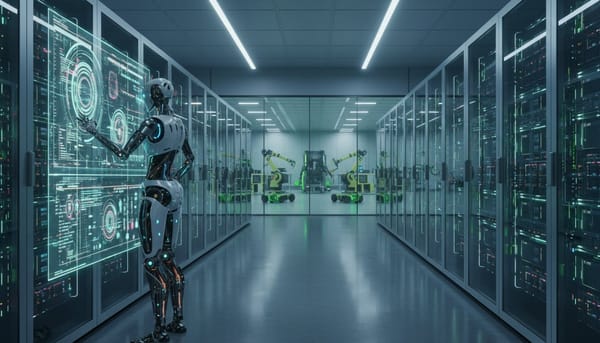
Mastering AI in Defense: A Complete Guide to National Security Applications


Understanding the Landscape of AI in Defense
The integration of Artificial Intelligence (AI) into national security and defense operations is no longer a futuristic concept but a present imperative. As global geopolitical landscapes evolve, the ability to process vast amounts of data, make rapid decisions, and deploy advanced capabilities becomes paramount. Mastering AI in Defense is about leveraging cutting-edge technology to enhance situational awareness, optimize resource allocation, protect critical infrastructure, and ensure strategic superiority. This guide provides a practical roadmap for understanding, implementing, and navigating the complexities of AI in the defense sector, offering insights relevant to Government and public sector AI solutions.
What is AI in Defense?
At its core, AI in Defense refers to the application of intelligent machines and systems to tasks traditionally requiring human intelligence within military and national security contexts. This encompasses everything from sophisticated algorithms analyzing satellite imagery to autonomous robots performing dangerous reconnaissance missions. It's not just about automating existing processes; it's about fundamentally transforming how defense organizations operate, enabling capabilities previously unimaginable. The goal is to augment human decision-making, increase operational efficiency, reduce risks to personnel, and provide a decisive edge in complex environments.
Key AI Technologies Relevant to Defense
To effectively master AI in defense, it's crucial to understand the foundational technologies driving this transformation:
- Machine Learning (ML): Algorithms that allow systems to learn from data without explicit programming. This is the backbone for predictive analytics, pattern recognition, and adaptive systems.
- Computer Vision (CV): Enables machines to interpret and understand visual information from the world, crucial for surveillance, target recognition, and autonomous navigation.
- Natural Language Processing (NLP): Allows AI to understand, interpret, and generate human language, vital for intelligence analysis, communication, and information warfare.
- Robotics and Autonomous Systems: The physical manifestation of AI, including drones, unmanned ground vehicles (UGVs), and underwater vehicles (UUVs), capable of operating independently or semi-autonomously.
- Reinforcement Learning (RL): Algorithms that learn optimal behaviors by interacting with an environment, ideal for complex strategic decision-making and control of autonomous agents.
- Predictive Analytics: Using statistical algorithms and machine learning techniques to identify the likelihood of future outcomes based on historical data.
- Edge AI: Deploying AI models directly on devices (e.g., sensors, drones) at the 'edge' of a network, enabling real-time processing and reducing latency, critical for tactical operations.
Why AI is a Game-Changer for National Security
The strategic advantages offered by AI in Defense are profound:
- Enhanced Speed and Efficiency: AI can process and analyze data at speeds far beyond human capability, enabling faster decision cycles and more efficient operations.
- Increased Precision and Accuracy: AI-powered systems can identify subtle patterns, predict outcomes with higher accuracy, and execute tasks with greater precision, minimizing collateral damage and maximizing mission effectiveness.
- Reduced Risk to Personnel: Autonomous systems can perform dangerous missions in hazardous environments, protecting human lives.
- Resource Optimization: AI can optimize logistics, predictive maintenance, and resource allocation, leading to significant cost savings and improved readiness.
- Adaptive Capabilities: AI systems can learn and adapt to new threats and changing conditions, providing continuous improvement and resilience.
Core Applications of AI in Defense
The practical application of AI in Defense spans virtually every aspect of national security. Understanding these core areas is vital for any organization looking to leverage AI effectively.
Intelligence, Surveillance, and Reconnaissance (ISR)
AI is revolutionizing how defense forces gather, process, and analyze intelligence, providing unparalleled situational awareness.
Automated Data Analysis and Fusion
- How to Leverage AI: Implement AI algorithms to automatically sift through vast quantities of raw data – satellite imagery, SIGINT (Signals Intelligence), OSINT (Open-Source Intelligence), HUMINT (Human Intelligence) reports – identifying relevant information, correlating disparate data points, and fusing them into a coherent intelligence picture. This process heavily relies on advanced Data Analytics capabilities.
- Practical Steps: Deploy machine learning models trained on historical intelligence data to identify key entities, activities, and relationships. Utilize natural language processing to extract insights from unstructured text data, and computer vision for image and video analysis.
- Example: An AI system automatically scans thousands of hours of drone footage, identifying specific vehicle types, troop movements, or changes in infrastructure that a human analyst might miss, flagging them for immediate review.
Predictive Intelligence
- How to Leverage AI: Apply predictive analytics to anticipate adversary actions, identify emerging threats, and forecast geopolitical instability.
- Practical Steps: Train AI models on historical conflict data, economic indicators, social media trends, and diplomatic communications to predict the likelihood of specific events (e.g., cyberattacks, border incursions, civil unrest) within a defined timeframe.
- Example: An AI model predicts a surge in cyber activity targeting critical infrastructure based on observed patterns of adversary communications and previous attack vectors, allowing for preemptive defensive measures.
Pattern Recognition and Anomaly Detection
- How to Leverage AI: Use AI to identify subtle patterns in data that deviate from normal behavior, indicating potential threats or anomalies.
- Practical Steps: Implement unsupervised learning algorithms to establish baselines of normal activity across various domains (network traffic, sensor readings, logistical movements). Any significant deviation from these baselines triggers alerts for human investigation.
- Example: An AI system monitoring maritime traffic detects a vessel performing unusual maneuvers in a restricted zone, flagging it as a potential threat despite its transponder indicating a benign identity.
Autonomous Systems and Robotics
Autonomous systems, powered by AI, are transforming operational capabilities, enabling missions in dangerous or inaccessible environments.
Unmanned Aerial Vehicles (UAVs) and Ground Vehicles (UGVs)
- How to Leverage AI: Deploy AI-powered UAVs and UGVs for autonomous reconnaissance, surveillance, logistics, and even combat roles, reducing human exposure to risk.
- Practical Steps: Integrate advanced computer vision for navigation and obstacle avoidance, reinforcement learning for dynamic mission planning, and edge AI for real-time data processing on board the platforms. Ensure robust human-in-the-loop oversight for ethical and operational control.
- Example: A fleet of autonomous UGVs traverses a hazardous, mined area, using AI to detect and map explosives, clearing a safe path for human forces without direct human intervention in the danger zone.
Swarm Intelligence and Collaborative Autonomy
- How to Leverage AI: Coordinate multiple autonomous agents (e.g., drones, robots) to operate as a cohesive unit, achieving complex objectives beyond the capability of a single agent.
- Practical Steps: Develop decentralized AI algorithms that enable individual agents to communicate, share information, and adapt their behavior based on the collective goal and local environmental conditions. Focus on resilient communication protocols and self-healing swarm architectures.
- Example: A swarm of small, inexpensive drones uses collaborative AI to search a large area for a missing person or to overwhelm an adversary's air defenses by presenting multiple, coordinated targets simultaneously.
Logistics and Supply Chain Automation
- How to Leverage AI: Automate aspects of the military supply chain, from inventory management and warehousing to autonomous delivery, ensuring timely and efficient resource distribution.
- Practical Steps: Implement AI for demand forecasting, optimizing routes for autonomous delivery vehicles, and managing automated warehouses. Use robotic systems for loading, unloading, and sorting supplies.
- Example: An AI-driven logistics system predicts equipment failure rates and automatically orders replacement parts, then uses autonomous trucks to deliver them to forward operating bases, minimizing downtime.
Cybersecurity and Information Warfare
AI is a double-edged sword in the cyber domain, offering powerful defensive capabilities while also presenting new offensive tools.
Threat Detection and Response Automation
- How to Leverage AI: Employ AI to detect sophisticated cyber threats in real-time, predict attack vectors, and automate defensive responses, dramatically reducing reaction times.
- Practical Steps: Train machine learning models on vast datasets of network traffic, malware signatures, and known attack patterns to identify anomalous behavior. Implement AI-powered Security Orchestration, Automation, and Response (SOAR) platforms to automatically quarantine threats or deploy countermeasures.
- Example: An AI system detects a novel zero-day exploit attempting to penetrate a defense network, identifies its signature, and automatically isolates the affected systems and deploys a patch within seconds, preventing widespread compromise.
Vulnerability Assessment and Penetration Testing
- How to Leverage AI: Use AI to continuously scan defense systems for vulnerabilities and simulate adversarial attacks, proactively identifying weaknesses before they can be exploited.
- Practical Steps: Develop AI agents that act as autonomous penetration testers, exploring network configurations, identifying misconfigurations, and attempting to exploit known vulnerabilities, providing a continuous security audit.
- Example: An AI-powered vulnerability scanner identifies a critical flaw in a newly deployed communication system, recommending immediate remediation steps before the system goes fully operational.
Disinformation Combatting
- How to Leverage AI: Utilize AI and NLP to detect and analyze disinformation campaigns, identify their sources, predict their spread, and develop counter-narratives.
- Practical Steps: Deploy AI models to monitor social media, news outlets, and other information channels for signs of coordinated disinformation efforts. Use NLP to analyze sentiment, identify propaganda, and track narrative propagation, enabling targeted counter-messaging.
- Example: An AI system identifies a foreign-backed disinformation campaign spreading false narratives about a military exercise, allowing defense communicators to rapidly deploy factual counter-information to the affected audiences.
Command, Control, Communications, Computers, and Intelligence (C4I)
AI enhances the speed, accuracy, and resilience of C4I systems, providing commanders with superior decision support.
Enhanced Decision Support Systems
- How to Leverage AI: Integrate AI into command centers to process complex information, simulate various courses of action, and provide commanders with data-driven recommendations.
- Practical Steps: Develop AI algorithms that analyze real-time battlefield data, intelligence reports, logistical constraints, and enemy capabilities to generate optimal strategic and tactical options, complete with predicted outcomes and risks.
- Example: During a rapidly unfolding crisis, an AI decision support system analyzes incoming intelligence, troop dispositions, and logistical capacities, then presents the commander with three optimized courses of action, each with a probability of success and estimated casualties.
Optimized Communication Networks
- How to Leverage AI: Use AI to dynamically manage and optimize military communication networks, ensuring resilience, bandwidth allocation, and secure data transmission in contested environments.
- Practical Steps: Implement AI-powered network management systems that can detect network degradation, reroute traffic through alternative channels, and prioritize critical communications based on mission requirements, even under cyberattack or jamming.
- Example: An AI system automatically reconfigures satellite communication links and ground-based radio networks to maintain connectivity for forward-deployed units when a primary communication hub is compromised.
Human-Machine Teaming
- How to Leverage AI: Design systems where humans and AI collaborate seamlessly, with AI augmenting human cognitive abilities rather than replacing them entirely.
- Practical Steps: Develop intuitive human-AI interfaces that allow operators to understand AI recommendations, provide feedback, and maintain ultimate control. Focus on explainable AI (XAI) to build trust and transparency.
- Example: An AI assistant helps a fighter pilot manage complex sensor data, identify threats, and suggest evasive maneuvers, while the pilot retains ultimate control over flight and weapon systems.
Logistics and Predictive Maintenance
AI significantly improves the efficiency and readiness of defense logistics and equipment maintenance.
Optimizing Supply Chains
- How to Leverage AI: Implement AI to analyze historical consumption data, operational tempo, and geopolitical factors to predict future demand for parts, fuel, and other supplies, optimizing inventory levels and reducing waste.
- Practical Steps: Deploy machine learning models that integrate data from multiple sources (e.g., vehicle sensors, combat reports, weather forecasts) to create highly accurate demand predictions. Use AI for warehouse automation and efficient route planning for deliveries.
- Example: An AI system predicts an increased need for specific spare parts for a particular aircraft type based on upcoming deployment schedules and historical failure rates, ensuring those parts are pre-positioned.
Predictive Failure Analysis
- How to Leverage AI: Utilize AI to monitor the health and performance of military equipment in real-time, predicting potential failures before they occur and enabling proactive maintenance.
- Practical Steps: Install sensors on critical components of vehicles, aircraft, and weapons systems to collect continuous data (vibration, temperature, fluid levels). Train AI models on this data to identify precursors to failure, triggering alerts for maintenance personnel.
- Example: An AI system monitoring an armored vehicle's engine detects subtle changes in vibration patterns and temperature, predicting a critical bearing failure within the next 50 operating hours, allowing for scheduled maintenance instead of an unexpected breakdown in the field.
Autonomous Resupply
- How to Leverage AI: Deploy autonomous vehicles and drones for resupply missions, especially in dangerous or remote areas, reducing the logistical burden and risk to personnel.
- Practical Steps: Integrate AI for autonomous navigation, obstacle avoidance, and dynamic route planning for unmanned ground or aerial vehicles carrying supplies. Ensure robust communication and command capabilities for human oversight.
- Example: Autonomous cargo drones use AI to navigate complex terrain and deliver medical supplies and ammunition to isolated units, adapting their routes in real-time to avoid detected threats.
Training and Simulation
AI enhances the realism, effectiveness, and personalization of military training programs.
AI-Powered Virtual Environments
- How to Leverage AI: Create highly realistic and adaptive virtual training environments where AI-controlled adversaries and non-player characters (NPCs) respond intelligently to trainee actions.
- Practical Steps: Develop AI models that can simulate complex behaviors, tactical decisions, and psychological responses for virtual opponents, providing trainees with dynamic and challenging scenarios. Use generative AI to create varied and realistic virtual landscapes.
- Example: A pilot trains in a flight simulator where AI-controlled enemy aircraft employ adaptive tactics, learning from the pilot's previous actions to present a continuously challenging and realistic combat experience.
Personalized Training Programs
- How to Leverage AI: Use AI to analyze individual trainee performance, identify strengths and weaknesses, and tailor training modules and scenarios to optimize learning outcomes.
- Practical Steps: Implement AI algorithms that track trainee progress, assess skill gaps, and recommend personalized training paths, focusing on areas requiring improvement. Integrate biometric data and cognitive load measurements for deeper insights.
- Example: An AI system evaluates a soldier's performance in marksmanship drills, identifies a consistent error in their stance, and then generates customized virtual reality drills specifically designed to correct that posture.
Performance Analysis
- How to Leverage AI: Employ AI to objectively analyze and provide detailed feedback on trainee performance during simulations and exercises.
- Practical Steps: Develop AI models that can observe and evaluate trainee actions against predefined objectives and best practices, providing immediate, unbiased feedback on decision-making, reaction times, and adherence to protocols.
- Example: After a complex tactical simulation, an AI system provides a detailed breakdown of a unit's performance, highlighting instances of suboptimal communication, missed opportunities, and areas where quick decision-making led to success.
Implementing AI in Defense: A Strategic Roadmap
Successfully integrating AI in Defense requires a structured, strategic approach. This roadmap outlines key steps for defense organizations, a process often aligned with the Pentagon's AI Strategy: Understanding Defense Funding and Development and guided by expert AI Strategy.
Step 1: Defining Strategic Objectives and Use Cases
Before investing in any AI solution, clearly define what problems AI is intended to solve and what strategic advantages it will provide.
- Identifying Pain Points and Opportunities: Conduct a thorough assessment of current operational challenges, inefficiencies, and areas where human capabilities are stretched. Look for opportunities where AI can augment or automate tasks.
- Prioritizing High-Impact Areas: Not all problems are equal. Focus on use cases that promise the greatest strategic impact, offer measurable benefits, and align with overarching national security objectives. Consider areas with abundant, high-quality data.
- Establishing Clear Metrics for Success: Define quantifiable metrics (e.g., reduction in intelligence processing time, increase in mission success rates, decrease in equipment downtime) that will determine the success of AI implementation.
Step 2: Building the Foundation: Data and Infrastructure
AI is only as good as the data it's trained on and the infrastructure it runs on. This foundational step is critical.
- Data Collection, Curation, and Labeling: Identify, collect, and meticulously curate relevant datasets. This often involves aggregating data from disparate sources, cleaning it, and labeling it accurately for supervised learning models. Develop robust data governance policies.
- Secure and Scalable AI Infrastructure (Cloud, Edge): Establish a secure, scalable, and resilient IT infrastructure capable of supporting AI development, training, and deployment. This may involve hybrid cloud solutions, specialized AI hardware (GPUs), and edge computing capabilities for tactical deployments.
- Interoperability and Data Sharing Protocols: Develop standards and protocols for secure data sharing between different systems, agencies, and even international partners. Ensure AI systems can seamlessly integrate with existing defense architectures.
Step 3: Developing and Deploying AI Solutions
This phase involves the actual creation and integration of AI capabilities into operational environments.
- Choosing the Right AI Models and Algorithms: Based on the defined use cases, select appropriate AI techniques (e.g., deep learning for image recognition, reinforcement learning for autonomous control). This often requires expertise in various AI subfields.
- Agile Development and Prototyping: Adopt agile methodologies for AI development, allowing for rapid prototyping, iterative refinement, and continuous integration of user feedback. Start with minimum viable products (MVPs) to demonstrate value quickly.
- Testing, Validation, and Certification: Rigorously test AI systems under various operational conditions to ensure reliability, robustness, and performance. Implement formal validation and certification processes, especially for mission-critical or lethal applications, adhering to defense standards.
- Integration with Existing Systems: Plan for seamless integration of new AI capabilities with legacy defense systems. This often involves developing APIs, middleware, and ensuring compatibility across different technology stacks.
Step 4: Addressing Ethical, Legal, and Societal Implications (ELSI)
The ethical deployment of AI in Defense is paramount and requires careful consideration and robust frameworks.
- Accountability and Transparency: Establish clear lines of accountability for AI system failures or unintended consequences. Strive for transparency in AI decision-making processes, especially in sensitive applications.
- Bias Mitigation: Proactively identify and mitigate biases in training data and AI algorithms to ensure fairness and prevent discriminatory outcomes. Regularly audit AI systems for bias.
- Human Control and Oversight (e.g., Lethal Autonomous Weapons Systems - LAWS): Implement robust human-in-the-loop or human-on-the-loop mechanisms, ensuring appropriate human judgment and control, particularly for systems with lethal capabilities. Define clear thresholds for human intervention.
- International Cooperation and Norms: Engage in international dialogues to establish shared norms, principles, and arms control frameworks for the responsible development and use of AI in defense, reducing risks of escalation.
Step 5: Cultivating an AI-Ready Workforce
Technology alone is insufficient; a skilled workforce is essential for successful AI adoption.
- Training and Upskilling Personnel: Invest in comprehensive training programs for military personnel, analysts, and decision-makers to understand AI capabilities, limitations, and how to effectively interact with AI systems.
- Fostering a Culture of Innovation: Encourage experimentation, risk-taking, and cross-functional collaboration. Create environments where personnel are empowered to identify AI opportunities and contribute to solutions.
- Recruiting Specialized Talent: Actively recruit AI researchers, data scientists, machine learning engineers, and ethical AI specialists from both military and civilian sectors to build in-house expertise.
Challenges and Best Practices in AI Adoption
While the potential of AI in Defense is immense, its implementation comes with significant challenges. Addressing these proactively is key to success.
Data Quality and Availability
Challenge: Defense data is often siloed, unstructured, inconsistent, or classified, making it difficult to collect, clean, and use for AI training.
Best Practice: Implement robust data governance frameworks. Invest in data aggregation platforms, automated data labeling tools, and secure data sharing agreements. Prioritize synthetic data generation for sensitive or scarce datasets.
Explainability and Trust
Challenge: Many advanced AI models (e.g., deep neural networks) operate as 'black boxes,' making it difficult for human operators to understand their reasoning, leading to a lack of trust.
Best Practice: Prioritize Explainable AI (XAI) techniques. Develop human-AI interfaces that provide insights into AI's decision-making process. Conduct extensive user training to build familiarity and confidence.
Cybersecurity Risks for AI Systems
Challenge: AI systems themselves can be targets for cyberattacks, including data poisoning, adversarial attacks (manipulating inputs to cause incorrect outputs), and model theft. Protecting these systems requires robust AI Security measures.
Best Practice: Integrate cybersecurity from the ground up in AI development. Implement robust authentication, encryption, and continuous monitoring. Employ AI-based defenses to protect AI models and data against sophisticated threats.
Integration Complexity
Challenge: Integrating new AI capabilities with existing, often decades-old, legacy defense systems can be technically complex and costly.
Best Practice: Adopt modular, API-first design principles. Prioritize open standards and interoperability. Develop middleware layers to bridge new AI systems with legacy infrastructure, allowing for incremental upgrades.
Navigating Bureaucracy and Procurement
Challenge: The defense procurement process is notoriously slow and rigid, often ill-suited for the rapid development cycles of AI technology.
Best Practice: Advocate for agile procurement reforms. Utilize rapid prototyping contracts and public-private partnerships. Create dedicated innovation hubs that can bypass traditional procurement hurdles for AI projects.
Best Practices for AI in Defense:
- Start Small, Scale Fast: Begin with pilot projects in low-risk areas to demonstrate value and build internal expertise, then scale successful initiatives.
- Public-Private Partnerships: Collaborate with commercial AI companies, academia, and research institutions to leverage external expertise and accelerate development. Understanding the contributions of Leading AI Companies in Defense: Anthropic, OpenAI, Google, and Microsoft's Role is essential for successful collaboration.
- Ethical Frameworks: Develop and continuously refine clear ethical guidelines and principles for the design, development, and deployment of AI systems.
- Continuous Learning and Adaptation: The AI landscape is rapidly evolving. Foster a culture of continuous learning, research, and adaptation to stay ahead of technological advancements and emerging threats.
The Future of AI in Defense
The trajectory of AI in Defense points towards increasingly sophisticated, integrated, and autonomous capabilities. The future will likely see:
- Emerging Technologies: Integration of quantum AI for unparalleled computational power, neuromorphic computing for brain-like processing, and advanced human-computer interfaces that blur the lines between operator and system.
- Strategic Competition and Deterrence: AI will become a critical component of strategic competition, influencing deterrence strategies, arms control discussions, and the balance of power. Nations that master AI in defense will gain a significant geopolitical advantage.
- The Evolving Role of the Human Operator: Humans will transition from direct control to oversight, supervision, and strategic decision-making, leveraging AI as a powerful cognitive and operational assistant. The emphasis will shift to human-AI teaming, where each complements the other's strengths.
Conclusion
Mastering AI in Defense is not merely an option but a strategic imperative for national security in the 21st century. By systematically understanding its applications, building robust foundations, addressing ethical considerations, and fostering an AI-ready workforce, defense organizations can unlock unprecedented capabilities. The journey is complex, fraught with technical, ethical, and organizational challenges, but the rewards – enhanced security, increased efficiency, and a decisive strategic edge – are profound. Embrace this transformation with foresight, agility, and a commitment to responsible innovation to safeguard national interests in an increasingly AI-driven world.