Generative AI Infrastructure and Investment: What You Need to Know

Understanding Generative AI Infrastructure and Investment
The landscape of Generative AI is evolving at an unprecedented pace, driven by breakthroughs in algorithms and, crucially, by the robust infrastructure that powers them. For businesses and individuals looking to harness or invest in this transformative technology, understanding the core components – from specialized hardware to strategic funding and real-world applications in robotics – is paramount. This guide provides a practical roadmap to navigate the complex interplay of Nvidia, Data Centers, Funding, and Robotics, offering actionable insights for implementation and investment.
The Foundation: Nvidia and Advanced Data Centers
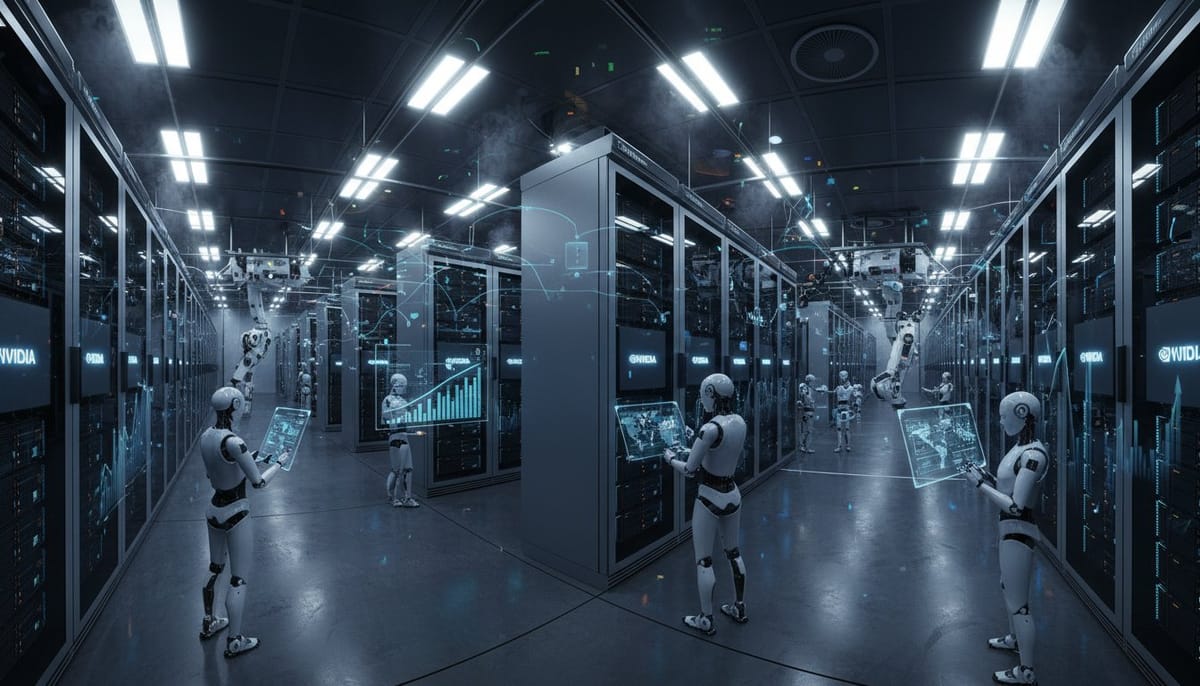
At the heart of nearly every significant Generative AI advancement lies specialized computing power. Nvidia has become synonymous with this power, and their GPUs are the workhorses of AI. Modern data centers, optimized for these powerful processors, form the backbone of the entire ecosystem.
Why Nvidia Dominates the AI Hardware Landscape
Nvidia's dominance isn't accidental; it's the result of decades of innovation in parallel processing. Their Graphics Processing Units (GPUs), particularly the A100 and H100 Tensor Core GPUs, are specifically designed to handle the massive computational demands of training and inference for large language models and other Generative AI applications. The CUDA platform further solidifies their position, offering developers a powerful, unified programming model that leverages GPU acceleration effectively.
- Practical Tip: Selecting the Right GPU: For cutting-edge Generative AI, prioritize GPUs with Tensor Cores (e.g., A100, H100) for optimal performance. Consider memory capacity (VRAM) as large models require significant memory.
- Implementation Advice: Leveraging the Ecosystem: Beyond hardware, explore Nvidia's software stack like cuDNN, NCCL, and NeMo for optimized performance and faster development cycles.
The Backbone: Modern Data Centers for Generative AI
Running Generative AI models isn't just about having powerful GPUs; it's about housing them in purpose-built data centers. These facilities require immense power density, sophisticated cooling systems (liquid cooling is becoming essential), and ultra-high-bandwidth interconnects like InfiniBand to allow thousands of GPUs to work in concert as a single, massive supercomputer. Without this specialized infrastructure, even the best GPUs would be bottlenecked.
- Practical Tip: Infrastructure Considerations: When planning for AI workloads, evaluate power availability, cooling capacity (kW per rack), network latency, and the availability of high-speed interconnects.
- Implementation Advice: Cloud vs. On-Prem: For flexibility and scalability, cloud providers (AWS, Azure, GCP) offer Nvidia GPU instances. For maximum control and potential long-term cost savings on very large, consistent workloads, consider building or co-locating specialized AI infrastructure.
Navigating Investment and Funding in Generative AI
The Generative AI boom has ignited a fervent investment landscape. Understanding where capital is flowing and how to secure funding is crucial for innovators and investors alike, especially within Finance.
Identifying Key Investment Areas
Investment in Generative AI spans several critical areas:
- Foundational Models: Companies developing or refining large language models (LLMs) and diffusion models.
- Specialized AI Applications: Startups building specific products or services on top of existing foundational models (e.g., AI-powered content creation, code generation, drug discovery). These applications often leverage advanced capabilities detailed in AI Models and Assistants: Full Features Guide.
- AI Hardware Innovation: Beyond GPUs, investment in custom AI chips (ASICs), neuromorphic computing, and quantum computing.
- MLOps and Infrastructure Tools: Solutions that help manage, deploy, and scale AI models efficiently.
Funding Strategies for AI Initiatives
Securing funding for Generative AI projects requires a clear vision and a robust execution plan.
- For Startups: Focus on demonstrating a clear problem solved, a defensible technological edge (often tied to unique data or model fine-tuning), and a viable market strategy. Target venture capitalists (VCs) and angel investors with a track record in AI.
- For Established Businesses: Allocate dedicated R&D budgets, explore strategic partnerships with AI startups or research institutions, and look into government grants for AI innovation. Clearly articulate the ROI and competitive advantage AI will bring.
The Robotic Frontier: Integrating Generative AI into Physical Systems
The ultimate application of Generative AI extends beyond digital realms, profoundly impacting physical systems through advanced robotics and Automation.
Generative AI's Role in Robotics
Generative AI is revolutionizing robotics by enabling machines to:
- Learn and Adapt: Robots can learn complex tasks from limited data, simulate scenarios, and generate novel solutions.
- Perceive and Understand: Enhanced computer vision and natural language processing allow robots to better understand their environment and human commands.
- Interact More Naturally: AI-driven natural language understanding facilitates more intuitive human-robot interaction.
- Generate Actions and Plans: Instead of being explicitly programmed for every scenario, robots can use generative models to plan and execute complex sequences of actions.
Practical Implementation: AI-Powered Robotics in Industry
The integration of Generative AI into robotics is driving efficiency and innovation across sectors:
- Manufacturing: Collaborative robots (cobots) performing assembly tasks, quality inspection using AI vision, and autonomous mobile robots (AMRs) for logistics.
- Logistics and Warehousing: AI-optimized picking and packing robots, autonomous forklifts, and drone-based inventory management.
- Healthcare: Surgical robots with enhanced precision, AI-guided diagnostic imaging, and robotic assistants for patient care.
- Practical Tip: Phased Rollout: Begin with well-defined, repetitive tasks where AI-powered robotics can demonstrate clear efficiency gains and safety improvements.
- Implementation Advice: Data Collection: Robotics heavily relies on high-quality data. Invest in robust data collection and annotation strategies to train and refine AI models for robotic applications.
Conclusion: Charting Your Course in the AI Revolution
The confluence of powerful hardware from companies like Nvidia, the sophisticated infrastructure of modern data centers, strategic investment, and the transformative potential in robotics defines the current Generative AI revolution. For anyone looking to participate, whether as a developer, investor, or business leader, a deep understanding of these interconnected pillars is essential. By focusing on practical implementation, strategic funding, and leveraging the right infrastructure, you can effectively navigate and contribute to this exciting and rapidly expanding technological frontier with a solid AI Strategy. For a more comprehensive overview of the field, consider our ultimate guide on Generative AI.