Generative AI: How Machines Create Art, Text, and More

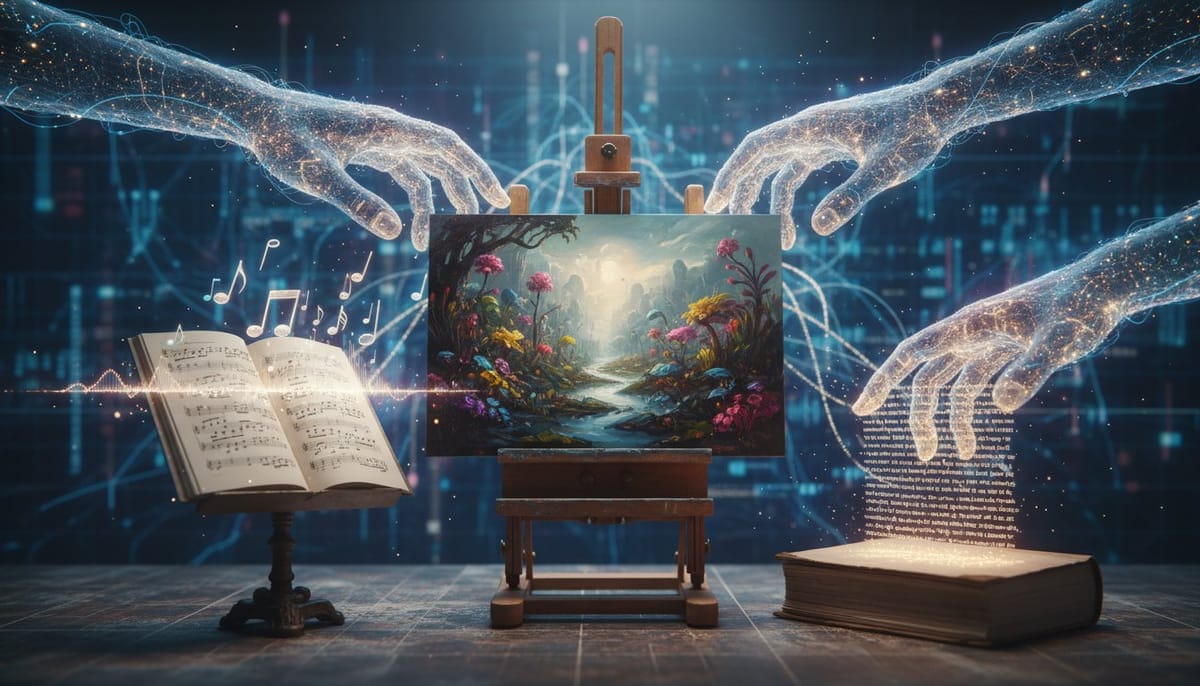
Unleashing Creativity: Understanding Generative AI's Power to Create Novel Content
In an era increasingly shaped by artificial intelligence. For a deeper understanding of the broader AI landscape, refer to our ultimate guide on AI. One of the most fascinating and rapidly evolving fields is Generative AI. Far beyond simply processing data or recognizing patterns, generative AI empowers machines to create entirely new content – from stunning visuals and compelling text (often leveraging technologies like Large Language Models (LLMs): The Foundation of Conversational AI) to original music compositions and realistic simulations (a domain where topics like Deepfakes Demystified: Understanding the Technology and Its Implications become highly relevant). This technology isn't just a futuristic concept; it's actively reshaping industries, democratizing creativity, and pushing the boundaries of what we thought computers could achieve. Key innovators, such as those discussed in The Impact of OpenAI: Driving Innovation in Artificial Intelligence, are at the forefront of this evolution. Businesses aiming to harness this power often begin with a clear AI Strategy.
Generative AI models learn the underlying patterns and structures of existing data, and then use that understanding to produce novel, yet realistic, outputs that share characteristics with the training data but are not direct copies. Imagine an artist learning different styles and techniques, and then creating a brand new masterpiece – that's akin to what generative AI does, but on a massive scale and at lightning speed.
How Generative AI Works Its Magic
At its core, generative AI relies heavily on advanced machine learning architectures, particularly deep neural networks. These networks are trained on vast datasets – millions of images, billions of text snippets (a field where our NLP Solutions are critical) or hours of audio – to understand the statistical properties and intricate relationships within the data.
- Learning Data Distributions: Instead of simply classifying or predicting, generative models aim to learn the