Deepfakes Demystified: Understanding the Technology and Its Implications

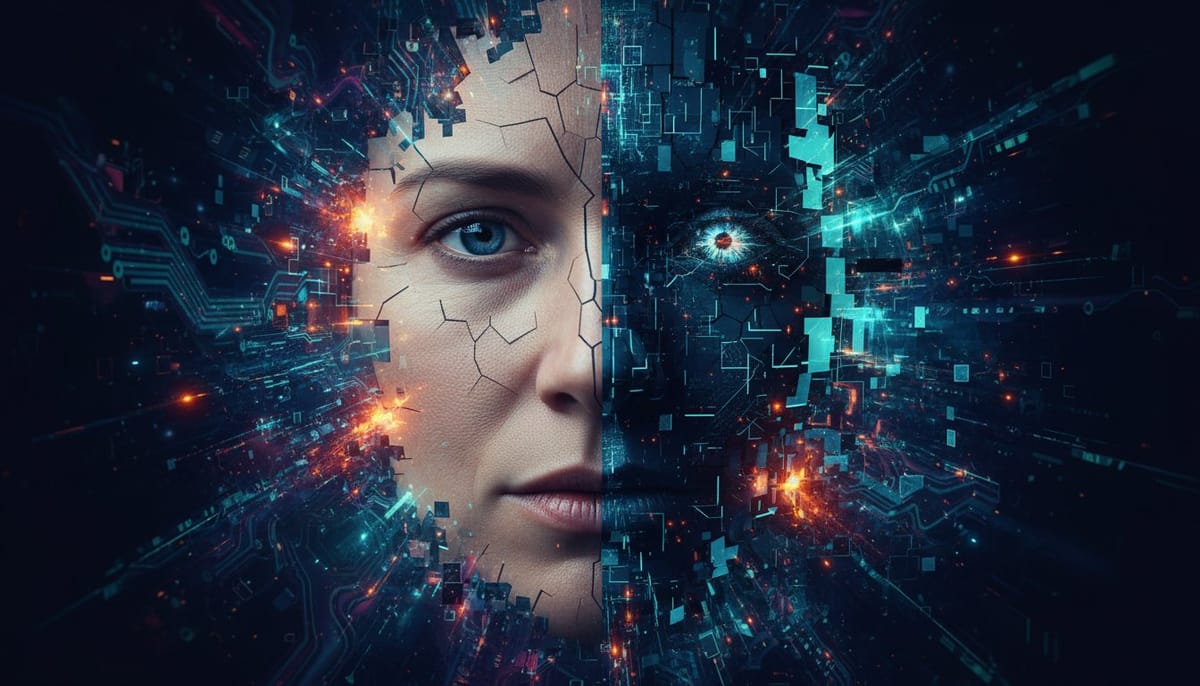
Deepfakes Demystified: Understanding the Technology and Its Implications
In an increasingly digital world, a phenomenon known as deepfakes has emerged, challenging our perceptions of reality and trust. What started as an experimental technology, reminiscent of the broader innovations detailed in The Impact of OpenAI: Driving Innovation in Artificial Intelligence, has rapidly evolved, making it possible to create highly convincing, yet entirely fabricated, images, audio, and video content. Understanding deepfakes is no longer just for tech enthusiasts; it's essential for anyone navigating the modern information landscape. This post will demystify deepfakes, exploring their underlying technology, how they're created, their diverse applications, and the profound societal implications they carry.
What Exactly Are Deepfakes?
At its core, a deepfake is synthetic media in which a person in an existing image or video is replaced with someone else's likeness. The term itself is a portmanteau of "deep learning" and "fake." Deep learning, a subset of artificial intelligence (AI), is the engine behind this technology, particularly through the use of sophisticated algorithms known as Generative Adversarial Networks (GANs).
- Generative Adversarial Networks (GANs): Imagine two AI networks battling it out. One is the Generator, which creates synthetic content (the deepfake). For more on how machines create such content, see Generative AI: How Machines Create Art, Text, and More. The other is the Discriminator, which tries to distinguish between real content and the Generator's fakes. Through this adversarial process, the Generator continuously refines its output, learning to produce increasingly realistic fakes that can fool the Discriminator, and ultimately, human observers.
- Deep Learning: This process involves training these AI models on vast datasets of real images, videos, and audio. The more data the AI is fed, the better it becomes at recognizing patterns, expressions, nuances, and vocal characteristics, enabling it to synthesize new, highly believable content.
How Are Deepfakes Created?
The creation of a deepfake typically involves several key steps:
- Data Collection: This is the foundational step. The AI needs a substantial amount of data – images, video footage, or audio recordings – of the target individual whose likeness or voice will be manipulated. The quality and quantity of this data directly impact the deepfake's realism.
- Training the AI: The collected data is fed into the deep learning model (often a GAN). The Generator attempts to create new frames or audio clips mimicking the target, while the Discriminator acts as a quality control, pointing out flaws. This iterative process can take hours, days, or even weeks, depending on the desired quality and available computing power.
- Generating the Deepfake: Once the model is sufficiently trained, it can generate new content. This could involve swapping a face onto an existing video, synthesizing new speech in a target's voice (a process sometimes involving technologies akin to Large Language Models (LLMs): The Foundation of Conversational AI), or even creating an entirely new scene featuring a synthetic persona.
Types of Deepfakes
While often associated with video, deepfakes manifest in various forms:
- Face Swapping: The most common type, where one person's face is seamlessly superimposed onto another's body in a video or image.
- Voice Cloning/Audio Deepfakes: AI learns a person's unique vocal characteristics (pitch, tone, accent, cadence) and can then generate new speech in their voice, saying anything the creator desires, a capability often enhanced by advanced NLP Solutions.
- Puppeteering/Face Re-enactment: This technique allows for real-time manipulation of a person's facial expressions and head movements in a video, driven by the movements of another person.
- Synthesized Personas: Entirely AI-generated faces or bodies that do not belong to any real person, often used in marketing or virtual assistants.
The Dual Nature: Benefits and Risks
Deepfakes, like many powerful technologies, possess a dual nature.
Potential Benefits:
- Creative Industries: Enhancing filmmaking with realistic CGI characters, re-animating historical figures for documentaries, or creating personalized entertainment.
- Education & Training: Developing immersive historical simulations or advanced training modules.
- Therapy: Helping individuals with grief by allowing interaction with digital representations of deceased loved ones, an application showcasing the potential of AI in Healthcare: Transforming Medicine and Patient Care.
- Accessibility: Translating speech into different languages while retaining the speaker's original voice.
Significant Risks and Implications:
- Misinformation & Disinformation: The most alarming risk is the creation of highly convincing fake news, political propaganda, and malicious content that can influence public opinion, incite unrest, or damage reputations.
- Reputational Damage & Harassment: Individuals, particularly public figures, are vulnerable to having their images or voices used to create defamatory or explicit content without their consent.
- Fraud & Scams: Deepfake audio can be used in sophisticated phishing attacks, mimicking a CEO's voice to authorize fraudulent transactions, underscoring the critical need for robust AI Security measures.
- Erosion of Trust: The widespread proliferation of deepfakes threatens to undermine our ability to trust visual and auditory evidence, leading to a general skepticism towards media and news.
- National Security & Geopolitics: Deepfakes could be weaponized by state actors to spread propaganda, create false flag operations, or sow discord, highlighting challenges addressed by our Government AI solutions.
Detecting Deepfakes
As deepfake technology advances, so too do detection methods. While perfect detection remains a challenge, several red flags can help identify synthetic media:
- Visual Inconsistencies: Look for unnatural blinking patterns, blurry edges around faces, inconsistent lighting or shadows, mismatched skin tones, or abnormal head and body movements.
- Audio Anomalies: Listen for unnatural cadence, robotic tones, lack of emotional inflection, or inconsistent background noise.
- Technological Tools: Researchers and tech companies are developing AI-powered detection software that analyzes forensic patterns embedded in deepfakes. Digital watermarking and blockchain-based provenance tracking are also emerging solutions.
- Critical Thinking: Always question the source, context, and motivation behind controversial or sensational media. If something seems too outlandish or perfectly aligned with a particular agenda, exercise caution.
The Future of Deepfakes and Our Response
The arms race between deepfake creators and detectors is ongoing. As deepfake technology becomes more accessible and sophisticated, driven by continuous innovation and The Business of AI: Key Trends in AI Funding and Investment, the line between real and fake will blur further. This necessitates a multi-faceted response: continued investment in detection technology, robust media literacy education for the public, and thoughtful legislative and ethical frameworks to govern the creation and dissemination of synthetic media. Deepfakes challenge us to be more critical consumers of information and to demand greater transparency in the digital realm.
Conclusion
Deepfakes represent a significant technological advancement with both promising applications and perilous implications. From revolutionizing creative industries to threatening the very fabric of truth and trust, their impact is undeniable. By understanding the technology behind deepfakes, recognizing their various forms, and being vigilant in identifying them, we can better navigate the complex digital landscape and protect ourselves and our societies from potential misuse.