Deepfakes Explained: The Technology, Ethics, and Impact of AI-Generated Content

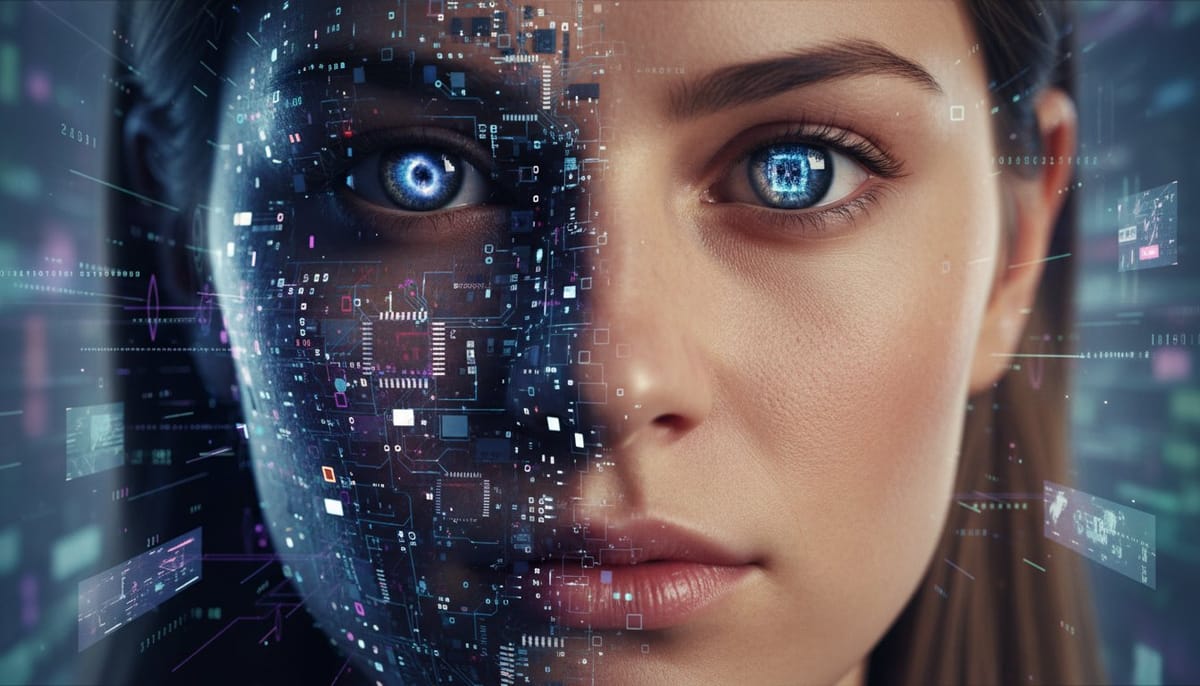
Understanding Deepfakes: The Blurring Lines of Reality
In an age increasingly dominated by digital interactions, the concept of truth and authenticity has become more fluid than ever before. Central to this evolving landscape are deepfakes – a sophisticated form of artificial intelligence-generated media that has the power to create incredibly realistic but entirely fabricated videos, audio, and images. Once a niche technological marvel, deepfakes have rapidly moved into mainstream discourse, challenging our perception of reality and raising profound questions about ethics, trust, and the future of information. For a comprehensive overview of this transformative field, explore our ultimate guide on AI.
What Exactly Are Deepfakes?
At their core, deepfakes are synthetic media generated or manipulated using advanced AI techniques, primarily Machine Learning. The term itself is a portmanteau of "deep learning" and "fake." Unlike traditional video editing, which relies on manual manipulation, deepfakes leverage complex algorithms to learn patterns from vast datasets of existing media, exemplifying the power of advanced Automation. This allows them to seamlessly superimpose one person's face onto another's body, alter their speech, or even generate entirely new human likenesses and voices that are indistinguishable from real ones.
How Deepfakes Are Created: A Glimpse into the Technology
The most common method for creating deepfakes involves a type of artificial neural network called a Generative Adversarial Network (GAN). A GAN consists of two competing neural networks:
- Generator: This network creates new data (e.g., a synthetic image or video frame).
- Discriminator: This network tries to determine if the data it receives is real (from a training dataset) or fake (generated by the Generator).
These two networks are trained simultaneously in a competitive loop. The Generator continuously tries to fool the Discriminator, while the Discriminator gets better at identifying fakes. This iterative process leads to increasingly realistic outputs from the Generator. Such model advancements are a hallmark of the innovation from Major Players in AI: A Deep Dive into OpenAI, Gemini, and Leading AI Models. Another prominent technique involves autoencoders, which are neural networks designed to learn efficient data codings (encodings) and then reconstruct the original input (decoding). Such complex operations are powered by advanced hardware; learn more about The Power Behind AI: Understanding Artificial Intelligence Chips. When used for deepfakes, an autoencoder can learn to encode one person's facial features and then decode them onto another person's facial structure, creating a seamless swap.
The Evolution and Growing Sophistication of Deepfakes
Deepfakes began as relatively crude face-swaps on online forums, often noticeable due to artifacts or inconsistencies. However, the technology has advanced at an astonishing pace. Today, deepfake algorithms can:
- Replicate subtle facial expressions: Beyond just swapping faces, modern deepfakes can accurately mimic the target person's expressions, eye movements, and head gestures.
- Clone voices with uncanny accuracy: With just a few seconds of audio, AI can generate new speech in a target person's voice, including their specific inflections and intonations, a capability often leveraged in advanced NLP Solutions.
- Synthesize full-body movements: Research is ongoing into creating deepfake videos where an entire body's movement can be transferred from one person to another, opening doors for even more realistic and complex fabrications, similar to how AI is applied in fields like How AI is Revolutionizing Robotics: From Industrial Bots to Humanoids.
This rapid evolution means that distinguishing a deepfake from genuine media is becoming increasingly challenging, even for trained eyes.
Applications: The Dual-Edged Sword of Deepfake Technology
Like many powerful technologies, deepfakes present both incredible opportunities and significant threats.
Positive and Beneficial Uses
- Entertainment Industry: Deepfakes can bring deceased actors back to life for film roles, de-age performers, or even allow for highly personalized cinematic experiences.
- Education and Historical Reenactment: Imagine interactive history lessons where students can "interview" historical figures brought to life by deepfake technology.
- Accessibility: Deepfake technology could create personalized avatars for individuals with communication difficulties or translate content into different languages with a speaker's actual voice.
- Marketing and Advertising: Creating highly personalized ads or virtual influencers, reflecting the growing commercialization and investment in AI technology, as detailed in The Business of AI: Understanding Funding Rounds and Valuation in Artificial Intelligence.
Concerning and Malicious Applications
- Misinformation and Disinformation: Perhaps the most alarming use, deepfakes can create compelling fake news, political propaganda, or fabricated evidence to sway public opinion or spread false narratives.
- Fraud and Impersonation: Deepfake audio can be used to impersonate individuals for financial fraud (e.g., faking a CEO's voice to authorize a fraudulent wire transfer), highlighting a critical need for vigilance within Finance.
- Reputation Damage and Blackmail: Fabricated compromising videos or audio can be used to defame, harass, or blackmail individuals, leading to severe personal and professional repercussions.
- Non-Consensual Intimate Imagery: A particularly egregious and widespread misuse involves creating fake pornographic content featuring non-consenting individuals, primarily women.
Ethical Considerations and Societal Impact
The proliferation of deepfakes introduces a host of complex ethical dilemmas and societal challenges:
- Erosion of Trust: When visual and auditory evidence can no longer be trusted, the foundation of journalism, legal systems, and democratic processes is undermined. Addressing these profound threats demands robust AI Security measures. The "liar's dividend" occurs when genuine but inconvenient truths are dismissed as deepfakes.
- Consent and Privacy: The ability to manipulate someone's likeness or voice without their permission raises serious privacy concerns and questions about digital identity ownership.
- Impact on Elections and Public Discourse: Deepfake political advertisements or speeches could profoundly influence voter behavior and destabilize political environments, making Government and public sector AI solutions essential for stability.
- Legal and Regulatory Challenges: Legislatures worldwide are grappling with how to regulate deepfakes, balance free speech with protection against harm, and assign liability for their creation and dissemination.
Detecting and Combating Deepfakes
Efforts to detect and combat deepfakes are advancing as quickly as the creation technology. Researchers are developing AI models specifically designed to spot the subtle inconsistencies, digital artifacts, or physiological irregularities (like lack of blinking or unnatural head movements) that deepfakes often exhibit. This sophisticated detection relies heavily on Data Analytics to identify anomalous patterns. Furthermore, initiatives like content provenance standards (e.g., C2PA) and digital watermarking aim to establish verifiable origins and tamper-proof histories for digital media. For broader insights into safeguarding AI systems, explore Protecting the Future: Essential Strategies for AI Security.
Beyond technological solutions, fostering media literacy and critical thinking skills among the general public is crucial. Educating individuals to question suspicious content, verify sources, and understand the capabilities of AI-generated media is a vital defense against the spread of harmful deepfakes.
The Future Landscape of Deepfakes
Deepfakes represent a transformative technology with the power to reshape how we interact with media, perceive reality, and trust information. While their potential for harm is undeniable, ongoing research into detection, coupled with robust ethical frameworks and increased public awareness, offers a path forward. The challenge lies in harnessing the positive aspects of this technology while effectively mitigating its risks, ensuring that truth and authenticity remain cornerstones of our digital society. For organizations navigating these complexities, expert guidance in AI Strategy is crucial.