Consumer AI: How Artificial Intelligence is Changing Your Daily Life and Products

The Ubiquitous Intelligence: How Consumer AI is Redefining Daily Life
Artificial Intelligence, once a concept confined to science fiction, has now seamlessly integrated into the fabric of our daily lives, transforming how we interact with technology, manage our homes, and even care for our health. This pervasive presence is what we refer to as Consumer AI – the application of AI technologies directly in products and services used by the general public. For a deeper dive into the foundational concepts, explore our ultimate guide on AI. From the moment we wake up to the time we go to bed, AI is working silently in the background, making our lives more convenient, efficient, and personalized.
Understanding Consumer AI isn't just about recognizing a smart speaker; it's about grasping the underlying intelligence that powers countless devices and services, a capability often underpinned by advanced hardware, as explored in The Core of AI: Understanding AI Chips and Nvidia's Dominance in Hardware, fundamentally reshaping our expectations of technology.
AI in Smart Homes: Orchestrating Your Environment
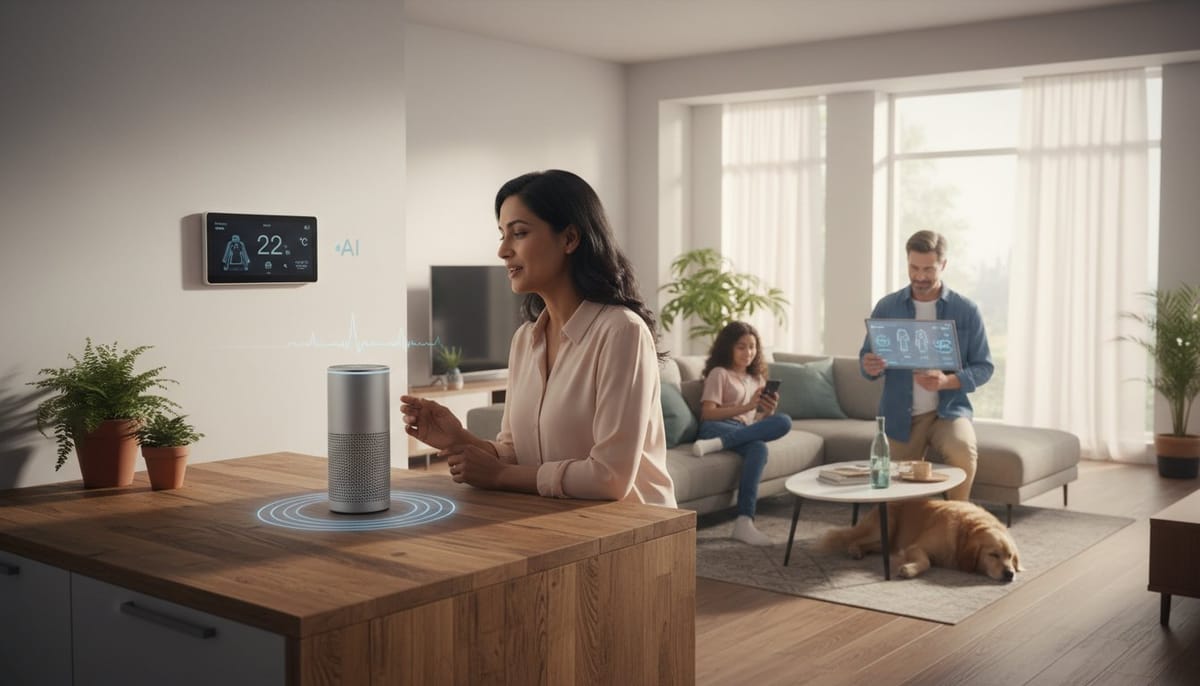
Perhaps one of the most tangible examples of Consumer AI is found within the smart home ecosystem. AI-powered devices are no longer just novelties; they are central to creating interconnected, responsive living spaces.
- Smart Speakers and Assistants: Devices like Amazon Echo and Google Home utilize advanced natural language processing (NLP) to understand voice commands, answer questions, play music, and control other smart devices. They learn user preferences, anticipate needs, and can even differentiate between voices, providing personalized responses. These advanced capabilities often draw on the principles discussed in Large Language Models (LLMs) Explained: The Power Behind Generative AI.
- Smart Thermostats: Products such as Nest learn your heating and cooling preferences over time, adjusting temperatures automatically to save energy and enhance comfort. This intelligent adaptation relies on advanced Machine Learning algorithms. They can detect when you're away and modify settings accordingly, reducing utility bills without manual intervention, effectively demonstrating the power of Automation.
- Intelligent Lighting Systems: AI-driven lighting can adapt to the time of day, your activity, or even your mood. Some systems integrate with sleep trackers, gently dimming lights in the evening and slowly brightening them in the morning to support natural sleep cycles.
- Robotic Vacuums: Modern robot vacuums employ AI to map your home, navigate around obstacles, and optimize cleaning paths. Some can even identify dirtier areas and spend more time there, ensuring a thorough clean with minimal human oversight.
Personal Devices: AI in Your Pocket and on Your Wrist
Your smartphone is arguably the most powerful AI device you own, packed with intelligence that enhances almost every interaction.
- Smartphones: AI powers facial recognition for unlocking, predictive text and keyboard suggestions, sophisticated camera features that optimize photos based on scene recognition, and personalized recommendations for apps, news, and media. Virtual assistants like Siri and Google Assistant are constantly learning from your usage patterns to provide more relevant and timely information.
- Wearables: Smartwatches and fitness trackers use AI to analyze biometric data, providing insights into your health, sleep patterns, and fitness levels. They can detect anomalies, offer personalized coaching, and even alert you to potential health issues based on continuous monitoring.
Entertainment and Media: Curating Your World
AI has revolutionized how we consume entertainment, moving beyond simple recommendations to deeply personalized experiences.
- Streaming Services: Platforms like Netflix, Spotify, and YouTube employ advanced AI algorithms to analyze your viewing and listening habits, offering highly accurate recommendations for movies, music, and videos you're likely to enjoy. This personalization keeps users engaged and introduces them to new content they might not have otherwise discovered.
- Gaming: AI creates more challenging and adaptive opponents in video games, generates realistic non-player characters (NPCs) with believable behaviors, and even personalizes game narratives based on player choices, leading to more immersive and dynamic experiences.
- Content Creation: AI tools are emerging to assist in content creation, from generating music and art to helping writers overcome creative blocks by suggesting plot points or refining prose.
Health and Wellness: A Personalized Approach to Well-being
Consumer AI is making significant strides in empowering individuals to take a more proactive role in managing their health.
- Mental Wellness Apps: AI-powered applications offer guided meditation, stress reduction techniques, and even cognitive behavioral therapy exercises, adapting their content and pace to the user's progress and reported mood.
- Personalized Nutrition: Apps that track diet and exercise can use AI to offer tailored nutritional advice, suggest meal plans, and provide real-time feedback on dietary choices based on individual health goals and preferences.
- Diagnostic Support: While not replacing medical professionals, some consumer-level AI tools can analyze symptoms (based on user input) and suggest potential conditions, helping users decide when to seek professional medical advice.
The Future of Consumer AI: Smarter, Seamless, and Ethical
The trajectory of Consumer AI points towards an even more integrated and intuitive future. We can anticipate AI becoming more proactive, anticipating needs before they are explicitly stated, and operating with even greater autonomy.
However, this evolution also brings important considerations regarding data privacy, security, and algorithmic bias. As AI becomes more deeply embedded in our lives, ensuring that these systems are transparent, fair, and respectful of individual privacy will be paramount. The goal is not just to make technology smarter, but to make it smarter in a way that truly enhances human well-being and empowers users.
In conclusion, Consumer AI is not a fleeting trend but a fundamental shift in how we interact with the digital world. This widespread adoption also drives significant market interest and investment, a topic further explored in AI Funding: Navigating the Investment Landscape and Trends in Artificial Intelligence. It's an intelligent layer enriching our smart homes, personal devices, entertainment, and health, promising a future that is more connected, personalized, and effortlessly efficient.