The Complete Guide to Artificial Intelligence: Understanding AI's Impact and Future

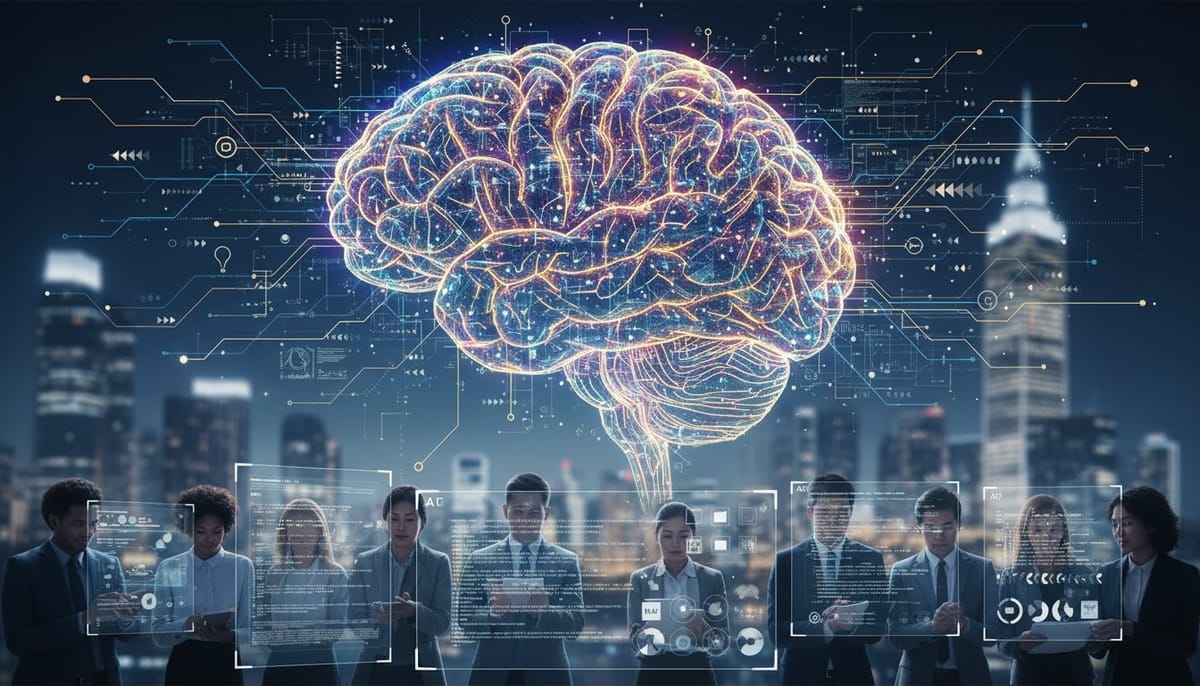
Introduction: Unlocking the Power of Artificial Intelligence
Welcome to The Complete Guide to Artificial Intelligence, your definitive resource for understanding one of the most transformative technologies of our time. Artificial Intelligence, or AI, is no longer a concept confined to science fiction; it is a pervasive force reshaping industries, economies, and societies worldwide. From the algorithms that recommend your next movie to the complex systems driving autonomous vehicles, AI is at the heart of innovation, promising unparalleled efficiency, insights, and capabilities.
But what exactly is AI? At its core, AI refers to the simulation of human intelligence processes by machines, especially computer systems. These processes include learning (the acquisition of information and rules for using the information), reasoning (using rules to reach approximate or definite conclusions), and self-correction. The goal of AI is to enable machines to perform tasks that typically require human intelligence, often with greater speed and accuracy.
This comprehensive guide will demystify AI, exploring its foundational principles, its fascinating history, its diverse applications across various sectors, and its profound impact on our daily lives. We will delve into the cutting-edge advancements that are propelling AI forward, examine the ethical considerations that come with such powerful technology, and peer into the future to understand where AI is headed. Whether you are a curious beginner, a seasoned professional, or simply interested in how AI is changing the world, this guide will provide you with a robust understanding of this pivotal technology. Prepare to embark on a journey through the intricate landscape of Artificial Intelligence.
The Storied History of AI: From Concept to Reality
The journey of Artificial Intelligence is a long and fascinating one, stretching back far before the advent of modern computers. Understanding its history is crucial to appreciating where AI stands today and where it might go tomorrow.
Early Philosophical Roots and Mathematical Foundations
The concept of intelligent machines dates back to ancient myths and philosophical inquiries into the nature of thought and consciousness. However, the true intellectual foundations for modern AI began to solidify in the mid-20th century. Visionaries like Alan Turing, with his groundbreaking paper “Computing Machinery and Intelligence” (1950) and the introduction of the Turing Test, laid theoretical groundwork for assessing machine intelligence. Mathematicians and logicians like George Boole and Alonzo Church also contributed vital tools for logical reasoning and computation, which are indispensable to AI systems.
The Birth of AI: Dartmouth Workshop and Symbolic AI
The term “Artificial Intelligence” itself was coined in 1956 at a seminal workshop held at Dartmouth College. Organized by John McCarthy, Marvin Minsky, Nathaniel Rochester, and Claude Shannon, this conference brought together leading researchers and is widely regarded as the birth of AI as a distinct academic field. Early AI research focused heavily on “symbolic AI” or “Good Old-Fashioned AI (GOFAI).” This approach emphasized logic, problem-solving through symbolic manipulation, and expert systems. Researchers aimed to encode human knowledge into rules and logical frameworks, allowing computers to reason and make decisions based on these explicit representations. Programs like ELIZA and SHRDLU demonstrated early capabilities in natural language understanding and interaction within limited domains.
The AI Winters and Re-evaluation
Despite initial optimism, AI research faced significant hurdles. The complexity of real-world problems proved far greater than early researchers anticipated, and the limitations of symbolic AI became apparent. Funding dried up, and public interest waned, leading to periods known as the “AI winters” in the 1970s and late 1980s. These challenging times forced a re-evaluation of AI methodologies and encouraged a shift towards more robust and adaptive approaches.
The Resurgence: Machine Learning and Big Data Era
The turn of the 21st century heralded a dramatic resurgence for AI, fueled by several key developments. The explosion of computational power, the availability of vast datasets (Big Data), and the development of new algorithms, particularly in machine learning, revolutionized the field. This resurgence was fundamentally driven by The Foundation of AI: Nvidia, Semiconductors, and the Hardware Powering the Future. Researchers moved away from purely symbolic approaches and embraced statistical methods, pattern recognition, and algorithms that could learn from data. This shift paved the way for the modern AI era, characterized by rapid advancements and widespread application across countless domains. Today, AI is thriving, propelled by continuous innovation and an ever-increasing understanding of how machines can learn and adapt.
Core Concepts and Types of AI
To truly grasp the essence of AI, it’s essential to understand its foundational concepts and the various specialized branches that fall under its vast umbrella. These areas often overlap and integrate to create sophisticated AI systems.
Machine Learning (ML): The Heart of Modern AI
**Machine Learning** is arguably the most significant driver of the current AI revolution. Instead of explicitly programming a computer to perform a task, ML algorithms enable systems to learn from data, identify patterns, and make decisions or predictions without being explicitly programmed for every scenario. This adaptive capability is what makes ML so powerful.
- Supervised Learning: This is the most common type of ML. Algorithms are trained on labeled datasets, meaning each input example is paired with the correct output. The goal is for the model to learn a mapping function from inputs to outputs, which it can then use to predict outputs for new, unseen data. Examples include image classification (identifying objects in pictures) and spam detection.
- Unsupervised Learning: In contrast to supervised learning, unsupervised learning deals with unlabeled data. The algorithms are tasked with finding hidden patterns, structures, or relationships within the data on their own. Clustering (grouping similar data points) and dimensionality reduction are prime examples, often used for market segmentation or anomaly detection.
- Reinforcement Learning: This type of learning involves an agent interacting with an environment to achieve a goal. The agent learns through trial and error, receiving rewards for desirable actions and penalties for undesirable ones. It’s akin to how humans or animals learn. DeepMind’s AlphaGo, which beat the world champion Go player, is a famous example of successful reinforcement learning.
Deep Learning (DL): Unlocking Complex Patterns
Deep Learning is a specialized subfield of machine learning inspired by the structure and function of the human brain. It uses artificial neural networks with multiple layers (hence “deep”) to learn representations of data with multiple levels of abstraction. These deep neural networks can automatically learn intricate patterns from raw data, such as images, sound, and text, often outperforming traditional ML methods on complex tasks.
- Neural Networks: At the core of deep learning are neural networks, composed of interconnected nodes (neurons) organized in layers. Each connection has a weight, which is adjusted during training. As data passes through the network, these weights are optimized to minimize errors in predictions, allowing the network to learn progressively more complex features.
- Generative AI: A rapidly evolving area within deep learning, Generative AI focuses on creating new content, rather than just classifying or predicting. Models like Generative Adversarial Networks (GANs) and Transformers (e.g., GPT models) can generate realistic images, text, audio, and even video that are indistinguishable from human-created content. This branch holds immense potential for creativity, design, and content generation.
Natural Language Processing (NLP): Machines Understanding Language
NLP Solutions are a branch of AI that enables computers to understand, interpret, and generate human language in a valuable way. It bridges the gap between human communication and computer comprehension. Key applications include:
- Sentiment Analysis: Determining the emotional tone behind a piece of text (positive, negative, neutral).
- Machine Translation: Automatically translating text or speech from one language to another (e.g., Google Translate).
- Chatbots and Virtual Assistants: Interacting with users in natural language to answer questions or perform tasks (e.g., Siri, Alexa).
- Text Summarization: Automatically generating concise summaries of longer documents.
Computer Vision (CV): Teaching Machines to See
Computer Vision is an AI field that trains computers to “see” and interpret visual information from images and videos, much like the human visual system. This involves tasks such as:
- Object Recognition: Identifying and locating objects within an image or video.
- Facial Recognition: Identifying individuals based on their unique facial features.
- Image Segmentation: Dividing an image into multiple segments to simplify or change the representation of an image into something more meaningful and easier to analyze.
- Autonomous Driving: Enabling vehicles to perceive their surroundings and navigate safely.
Robotics: Intelligent Machines in the Physical World
While often associated with physical machines, Robotics intersects significantly with AI. AI empowers robots with intelligence, allowing them to perceive their environment, make decisions, learn from experience, and adapt their behavior. This goes beyond simple automation to create truly intelligent robots capable of performing complex tasks in unpredictable environments, from manufacturing to surgery to space exploration.
Real-World Applications of AI: Transforming Industries
Artificial Intelligence is no longer confined to research labs; it is actively reshaping nearly every sector of the global economy, delivering unprecedented efficiency, innovation, and value. Here's a glimpse into how AI is being applied across various industries:
Healthcare: Enhancing Diagnosis, Treatment, and Research
AI is revolutionizing healthcare by assisting medical professionals in countless ways, a topic further explored in AI in Healthcare: Revolutionizing Medicine and Patient Care. It powers diagnostic tools that can analyze medical images (X-rays, MRIs, CT scans) with greater accuracy and speed than human radiologists, detecting subtle anomalies that might otherwise be missed. AI algorithms are also used for personalized medicine, predicting patient responses to specific treatments based on genetic data and medical history. Furthermore, AI accelerates drug discovery by analyzing vast chemical libraries and predicting molecular interactions, significantly reducing the time and cost associated with developing new medications. Predictive analytics helps hospitals manage patient flow, optimize resource allocation, and even forecast disease outbreaks, making healthcare more proactive and efficient.
Finance: Fraud Detection, Trading, and Customer Service
The financial sector has embraced AI to enhance security, optimize trading strategies, and improve customer experiences. Learn more about our specialized Finance solutions. AI-driven systems excel at fraud detection, rapidly analyzing millions of transactions to identify suspicious patterns in real-time, preventing financial losses. In algorithmic trading, AI models can execute trades at speeds and scales impossible for humans, capitalizing on market inefficiencies. For customers, AI powers chatbots and virtual assistants that provide instant support, answer queries, and offer personalized financial advice. Risk assessment for loan applications and credit scoring are also significantly improved by AI's ability to process and interpret complex data points.
Transportation: Autonomous Vehicles and Logistics Optimization
Perhaps one of the most visible applications of AI is in the realm of autonomous transportation. Self-driving cars and trucks, powered by sophisticated AI, use computer vision, sensor fusion, and machine learning to perceive their environment, navigate, and make real-time driving decisions. Beyond self-driving vehicles, AI optimizes logistics and supply chains by predicting demand, optimizing delivery routes, and managing warehouse operations, leading to reduced costs and faster delivery times with our specialized Logistics solutions. Air traffic control and even drone operations are also benefiting from AI for improved safety and efficiency.
Retail and E-commerce: Personalization and Inventory Management
AI has fundamentally transformed how we shop. E-commerce giants leverage AI for highly personalized product recommendations, analyzing browsing history, purchase patterns, and even real-time behavior to suggest items a customer is likely to buy, a capability often enhanced by our Retail solutions. This enhances the shopping experience and boosts sales. AI also plays a crucial role in inventory management, predicting demand fluctuations to optimize stock levels, minimize waste, and prevent stockouts. Chatbots assist customers with inquiries, while visual search tools allow users to find products by simply uploading an image.
Manufacturing and Industry 4.0: Predictive Maintenance and Quality Control
In manufacturing, AI is a cornerstone of Industry 4.0, driving smart factories. It enables predictive maintenance, where sensors on machinery feed data to AI algorithms that anticipate equipment failures before they occur, allowing for proactive repairs and minimizing costly downtime. AI-powered computer vision systems perform rigorous quality control checks on production lines, identifying defects with greater speed and consistency than human inspection. Robotic process automation (RPA) also leverages AI to automate repetitive tasks, improving efficiency and safety on the factory floor, a key aspect of modern Automation.
Education: Adaptive Learning and Administrative Efficiency
AI is beginning to revolutionize education by creating more personalized and efficient learning experiences. Adaptive learning platforms use AI to tailor curricula and teaching methods to individual student needs, identifying areas where a student struggles and providing targeted resources. AI can automate grading for certain types of assignments, freeing up educators' time. Furthermore, AI-powered tools can provide virtual tutoring, language learning support, and even assist with administrative tasks, making educational institutions more efficient and effective.
Entertainment and Media: Content Creation and Recommendation
From streaming services to game development, AI is deeply embedded in the entertainment industry. Recommendation engines, powered by sophisticated AI algorithms, suggest movies, music, and shows based on user preferences, significantly enhancing user engagement. Generative AI is now being used to create music, write scripts, animate characters, and even design video game levels, opening new avenues for creative expression and content production. AI also plays a role in content moderation, helping to filter inappropriate material on online platforms.
Cybersecurity: Threat Detection and Response
In the constant battle against cyber threats, AI is an indispensable ally. Our comprehensive AI Security solutions offer proactive defense. AI-driven security systems can analyze vast amounts of network traffic and log data, utilizing powerful Data Analytics, to detect anomalies and identify emerging threats (malware, phishing attacks, insider threats) far faster than human analysts. Machine learning algorithms learn from past attacks to improve their detection capabilities and can even automate responses to neutralize threats, providing a more robust and proactive defense against cyberattacks. This continuous learning capability is crucial in an evolving threat landscape.
The Impact of AI on Society: Navigating a New Era
The widespread adoption of Artificial Intelligence is not merely a technological shift; it represents a profound societal transformation. Its impact ripples through economies, labor markets, ethics, and the very fabric of human interaction.
Economic Transformation and Growth
AI is poised to be a major driver of global economic growth. By automating routine tasks, optimizing processes, and generating new insights from data, AI significantly boosts productivity across industries. It fosters innovation, leading to the creation of new products, services, and business models. Understanding the landscape of innovators is key, as explored in Leading the AI Race: Deep Dive into OpenAI, Anthropic, and Microsoft's Strategies. Countries and companies that effectively leverage AI stand to gain a competitive advantage, contributing to economic expansion. This competitive dynamic is particularly visible in areas such as China's AI Ambitions: The Geopolitical Race for Artificial Intelligence Dominance. However, this transformation also raises questions about wealth distribution and the potential for increased economic inequality if benefits are not broadly shared.
Job Market Evolution and the Future of Work
One of the most debated impacts of AI is its effect on the job market. While AI will undoubtedly automate many tasks currently performed by humans, leading to job displacement in some sectors, it is also expected to create new jobs and roles that require human-AI collaboration. The nature of work will evolve, emphasizing skills like creativity, critical thinking, emotional intelligence, and complex problem-solving – areas where humans currently have an advantage. There will be a significant demand for skills in AI development, maintenance, and ethical oversight. The key challenge lies in upskilling and reskilling the workforce to adapt to these changes, ensuring a smooth transition and minimizing social disruption.
Ethical Considerations and Responsible AI
The power of AI comes with significant ethical responsibilities. As AI systems become more autonomous and influential, addressing these concerns is paramount to ensuring AI benefits all of humanity.
- Bias and Fairness: AI systems learn from data, and if that data reflects existing societal biases (e.g., historical discrimination), the AI can perpetuate or even amplify these biases. This can lead to unfair outcomes in areas like hiring, loan approvals, or criminal justice. Ensuring fairness and mitigating bias in AI algorithms and datasets is a critical ethical challenge.
- Privacy and Data Security: AI thrives on data, often personal data. The collection, storage, and processing of this data raise significant privacy concerns. Protecting sensitive information from misuse, ensuring data anonymization where appropriate, and establishing robust security measures are essential for maintaining public trust in AI technologies.
- Accountability and Transparency: When an AI system makes a critical decision (e.g., in healthcare or autonomous driving), who is accountable if something goes wrong? The developers, the users, or the AI itself? Furthermore, many advanced AI models, particularly deep learning networks, are often described as “black boxes” because their decision-making processes are not easily interpretable. Achieving transparency and explainability in AI is crucial for trust, regulation, and ethical oversight.
- Control and Safety: As AI systems become more capable and autonomous, ensuring human control and guaranteeing safety becomes increasingly important. Preventing unintended consequences, establishing robust safeguards, and designing fail-safe mechanisms are vital engineering and ethical challenges.
Societal Benefits and Challenges
Beyond economics and ethics, AI offers immense potential to address some of the world's most pressing challenges. It can contribute to solving climate change through optimized energy grids and climate modeling – key areas for our Energy solutions – enhance disaster prediction and response, improve access to education, and foster scientific discovery at an unprecedented pace. However, it also presents challenges such as the potential for misuse in surveillance, autonomous weaponry, and the propagation of misinformation, as highlighted by The Rise of Deepfakes: Understanding AI's Ethical Challenges and Misinformation. Balancing the transformative benefits with the potential risks requires thoughtful governance, international cooperation, and ongoing public discourse.
The Future of AI: Beyond the Horizon
The field of Artificial Intelligence is dynamic, with researchers constantly pushing the boundaries of what machines can do. Looking ahead, several trends and aspirations define the future trajectory of AI.
Advanced AI Research and Development
Research continues unabated in areas such as more efficient learning algorithms (requiring less data), improved interpretability of complex models, and the development of AI that can reason and generalize more effectively across diverse tasks. Quantum computing, while still nascent, holds the potential to dramatically accelerate certain AI computations, unlocking new possibilities for highly complex simulations and problem-solving. Advances in neuro-inspired AI, drawing more directly from brain science, could lead to even more intelligent and energy-efficient systems.
Artificial General Intelligence (AGI): The Grand Challenge
Currently, most AI systems are examples of “Narrow AI” or “Weak AI,” meaning they are designed and trained for specific tasks (e.g., playing chess, facial recognition). The long-term goal for many AI researchers is to achieve Artificial General Intelligence (AGI), sometimes referred to as “Strong AI.” AGI would possess human-level cognitive abilities, capable of understanding, learning, and applying intelligence across a wide range of tasks, much like a human being. It would have common sense, creativity, and the ability to generalize knowledge to novel situations. Achieving AGI remains one of the grandest challenges in computer science, and estimates for its arrival vary widely, from decades to centuries away, if ever.
Superintelligence: Beyond Human Capabilities
If AGI were to be achieved and then rapidly improve itself, it could potentially lead to Superintelligence – an intellect that is vastly smarter than the best human brains in virtually every field, including scientific creativity, general wisdom, and social skills. This concept, explored by thinkers like Nick Bostrom, raises profound questions about humanity's future, the potential for an intelligence explosion, and the need for careful alignment of superintelligent goals with human values. The discussion around superintelligence emphasizes the critical importance of ethical AI development even at early stages.
Human-AI Collaboration and Augmentation
The future is likely to be characterized not by AI replacing humans entirely, but by increasingly sophisticated human-AI collaboration. AI will augment human capabilities, acting as intelligent assistants that enhance our decision-making, creativity, and problem-solving skills. From co-piloting complex systems to generating creative content, AI will be a powerful tool that amplifies human potential, creating new synergies between human intuition and machine efficiency. This symbiotic relationship holds the key to unlocking unprecedented levels of innovation and productivity.
The Evolving Regulatory Landscape
As AI becomes more powerful and pervasive, Government and international bodies are grappling with how to regulate it effectively. The future will see the development of more comprehensive legal and ethical frameworks to govern AI's development and deployment. This includes regulations around data privacy, algorithmic transparency, accountability for AI decisions, and even standards for AI safety. The goal is to foster innovation while ensuring responsible use of AI and protecting societal values.
Challenges and Opportunities in the AI Era
The journey into the AI era is fraught with both formidable challenges and unparalleled opportunities that will shape the world for generations to come.
Technological Hurdles
Despite rapid advancements, AI still faces significant technological hurdles. Current AI systems often require vast amounts of data and computational power, leading to high energy consumption. Research is ongoing into developing more data-efficient, energy-efficient, and robust AI models. The challenge of making AI systems truly understand context, common sense, and human nuances remains a complex problem that requires breakthroughs in fundamental research.
Talent Gap and Education
A persistent challenge is the global talent gap in AI. There is a high demand for skilled AI researchers, engineers, and data scientists, often outstripping the supply. Addressing this requires significant investment in education and training programs at all levels, from universities to vocational schools, crucial for understanding the AI Funding Landscape: Where the Billions are Flowing in Artificial Intelligence, to equip the workforce with the necessary skills for the AI-driven economy.
Ethical Governance and Public Trust
Establishing robust ethical governance frameworks for AI is crucial. This involves not only regulations but also industry best practices, international cooperation, and public engagement. Building and maintaining public trust in AI technologies is paramount. If people do not trust AI, its adoption and potential benefits will be severely limited. Open dialogue about the risks and benefits, transparency, and accountability are key to fostering this trust.
Innovation and Unprecedented Growth
Despite the challenges, the opportunities presented by AI are immense. AI is a powerful engine for innovation, capable of solving problems previously thought intractable. It can drive scientific discovery, create new industries, improve quality of life, and address global grand challenges such as climate change, disease, and poverty. Countries and organizations that strategically invest in AI research, development, and responsible deployment will be at the forefront of this new wave of progress, unlocking unprecedented growth and societal benefit.
Conclusion: Embracing the Future with AI
Artificial Intelligence stands as one of humanity's most profound inventions, a testament to our ingenuity and our relentless pursuit of knowledge. From its humble philosophical beginnings to the cutting-edge deep learning systems of today, AI has evolved into a powerful and ubiquitous technology that is redefining every facet of our lives. We've explored its core concepts, its transformative applications across industries, and its far-reaching societal impacts, from reshaping job markets to raising critical ethical questions.
The future of AI promises even greater advancements, with the pursuit of Artificial General Intelligence and the vision of human-AI collaboration shaping the horizon. While challenges such as ethical governance, technological hurdles, and the need for a skilled workforce persist, the opportunities that AI presents for innovation, economic growth, and solving global problems are truly boundless. Embracing AI means not just understanding its technical complexities, but also engaging in a thoughtful, proactive dialogue about its responsible development and deployment, often guided by effective AI Strategy.
As AI continues to evolve at an astounding pace, it is imperative that we, as individuals and as a society, remain informed, adaptable, and ethically conscious. The complete guide to Artificial Intelligence is an ongoing journey, and by understanding its power and potential, we can collectively shape a future where AI serves as a tool for progress, empowerment, and the betterment of all humanity. The era of AI is not just coming; it is here, and it is ours to navigate and build, together.