AI in Robotics: How Artificial Intelligence is Transforming Automation and Human-Robot Interaction

The Symbiotic Evolution: AI's Pivotal Role in Modern Robotics
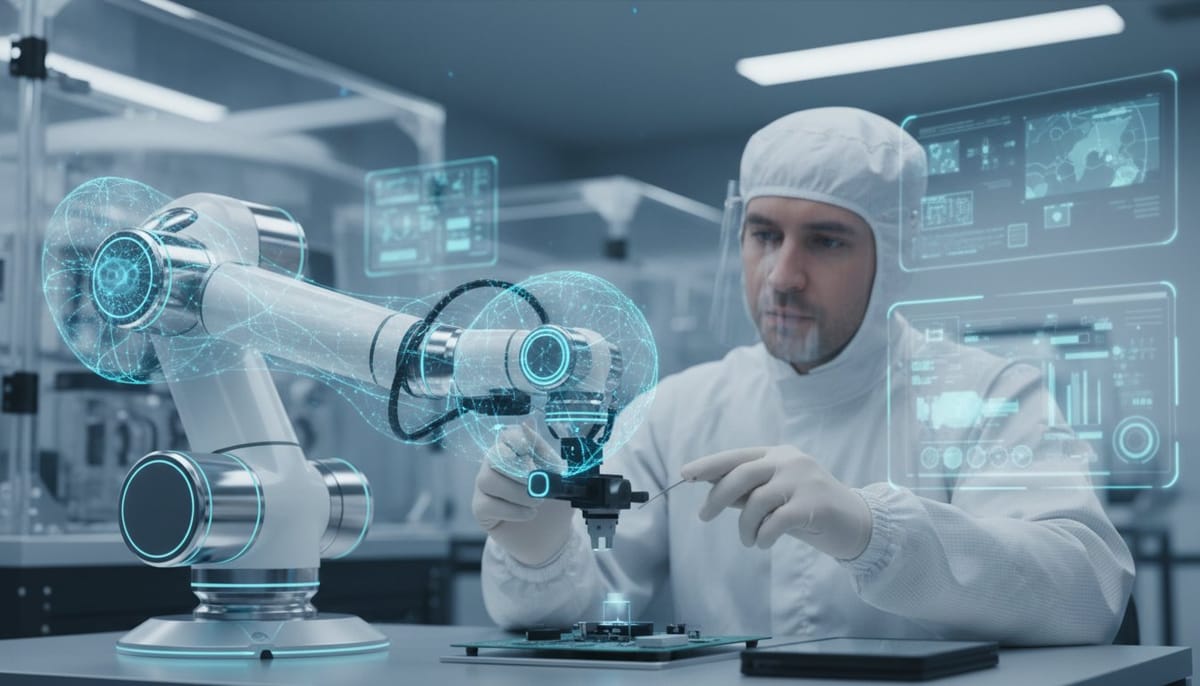
The landscape of robotics has undergone a profound transformation, evolving from rigid, pre-programmed machines into intelligent, adaptable systems. At the heart of this revolution lies Artificial Intelligence (AI). AI is no longer a peripheral technology; it is the central nervous system that empowers robots with perception, cognition, and the ability to learn and interact. For a deeper understanding, check out our ultimate guide on AI. This synergy is pushing the boundaries of what robots can achieve, enabling them to tackle complex tasks, operate in dynamic environments, and collaborate seamlessly with humans.
Understanding the deep integration of AI in robotics is crucial for anyone looking to grasp the future of automation. This post will delve into how AI enhances every facet of robotic operation, from advanced perception to intuitive human-robot interaction, offering practical insights into its real-world impact.
Revolutionizing Robot Capabilities with AI
AI provides robots with the 'brainpower' they need to move beyond simple, repetitive tasks, opening up possibilities for more sophisticated and versatile applications. The creative potential of AI, often seen in concepts like Generative AI, is now extending into robotics. The following areas highlight AI's most significant contributions:
Advanced Perception and Vision Systems
Traditionally, robots operated in highly structured environments, relying on precise coordinates. AI, particularly deep learning and computer vision, has shattered these limitations. Modern robots can now:
- Interpret Complex Environments: AI algorithms enable robots to process vast amounts of visual data from cameras and sensors, recognizing objects, identifying their properties, and understanding spatial relationships even in cluttered or dynamic settings. This is vital for tasks like object picking in warehouses, where items vary in size, shape, and orientation.
- Navigate Autonomously: With AI, robots can build detailed maps of their surroundings, detect obstacles, and plan optimal paths in real-time. This capability is fundamental for autonomous mobile robots (AMRs) in logistics and self-driving vehicles, allowing them to adapt to changing conditions without human intervention.
- Recognize and Track: From identifying specific tools on an assembly line to tracking patient movements in a hospital, AI-powered vision systems provide robots with a keen 'sight' that vastly improves their operational accuracy and safety.
Intelligent Decision-Making and Learning
Beyond perceiving the world, AI empowers robots to make smart decisions and learn from experience, a capability that was once confined to science fiction.
- Real-time Adaptability: AI algorithms, particularly those based on reinforcement learning, allow robots to assess situations dynamically and choose the best course of action. If a robot encounters an unexpected obstacle or a slight deviation in a manufacturing process, AI enables it to adjust its movements or strategy on the fly, minimizing downtime and errors.
- Continuous Improvement: Through machine learning, robots can analyze their own performance data, identify patterns, and refine their actions over time. This means a robot performing a complex assembly task will become more efficient and precise with each iteration, much like a human learning a new skill.
- Predictive Maintenance: AI can monitor robot health and operational parameters, predicting potential failures before they occur. This allows for proactive maintenance, significantly extending the lifespan of machinery and preventing costly disruptions, a capability enhanced by robust Data Analytics.
Enhanced Manipulation and Dexterity
AI is also critical in refining the physical interaction of robots with their environment.
- Precision Grasping: AI helps robots develop sophisticated grasp planning, allowing them to pick up objects of varying shapes, sizes, and fragility with appropriate force and orientation. This is vital in fields like e-commerce fulfillment and delicate surgical procedures.
- Fine Motor Control: For tasks requiring high dexterity, such as micro-assembly or intricate surgical operations, AI provides the algorithms necessary for robots to execute incredibly precise and smooth movements, often surpassing human capabilities.
Transforming Human-Robot Interaction (HRI)
One of the most exciting frontiers in robotics is how AI is facilitating more natural and effective interaction between humans and machines.
Natural Language Processing for Intuitive Communication
AI's advancements in Natural Language Processing (NLP) solutions are breaking down communication barriers. Robots can now:
- Understand Spoken Commands: Service robots, collaborative robots (cobots), and even industrial arms can be programmed or trained to respond to spoken instructions, making their operation more intuitive and accessible to a wider range of users without specialized programming knowledge.
- Interpret Gestures and Intent: Beyond voice, AI can analyze human gestures and body language to infer intent, allowing robots to anticipate needs or react safely in shared workspaces.
Adaptive and Collaborative Robots (Cobots)
AI is the bedrock of collaborative robotics (cobots), enabling robots to work safely and effectively alongside humans without protective caging. Cobots powered by AI can:
- Sense Human Presence: Utilize proximity sensors and AI vision to detect humans in their workspace and adjust their speed or halt operations to prevent collisions.
- Learn from Demonstration: Instead of complex programming, AI allows cobots to learn tasks by observing a human perform them, drastically reducing setup times and making automation accessible for smaller batches and diverse tasks.
- Share Workspaces: AI facilitates dynamic task allocation and coordination, allowing humans and robots to collaboratively achieve a common goal, boosting productivity and ergonomic safety.
Personalization and Emotional Intelligence
In social and service robotics, AI is pushing towards more personalized and empathetic interactions. This drive for advanced social AI aligns with broader visions for AI-powered platforms, like those discussed in Grok AI and X. While still nascent, AI can enable robots to:
- Learn User Preferences: Over time, a service robot might learn an individual's routines, preferences, and even mood indicators, tailoring its responses and services accordingly.
- Display Adaptive Behavior: In educational or care settings, robots can adjust their communication style or assistance level based on the user's responses, making interactions more engaging and effective.
Real-World Impact and Applications of AI in Robotics
The fusion of AI and robotics is not just a theoretical concept; it's driving tangible benefits across numerous sectors:
- Manufacturing and Logistics: Smart factories leverage AI for adaptive assembly, quality control, and predictive maintenance. Autonomous mobile robots (AMRs) optimize warehouse operations, sorting, and delivery, directly benefiting from our Logistics AI solutions.
- Healthcare: AI-powered surgical robots enhance precision in complex procedures, leading to faster recovery times. Robotics also assist in patient rehabilitation, drug discovery, and diagnostics, all areas where our Healthcare AI solutions are making a difference.
- Agriculture: AI-driven robots are performing precision planting, targeted harvesting, and crop monitoring, improving yields and reducing waste.
- Service and Exploration: From customer service robots to autonomous underwater vehicles for oceanographic research and drones for hazardous environment inspection, AI extends robotic capabilities into new frontiers.
Challenges and the Road Ahead
While the advancements are breathtaking, the journey of AI in robotics also presents challenges:
Ethical Considerations and Trust
Questions surrounding data privacy, algorithmic bias, job displacement, and accountability for autonomous decisions require careful consideration as robots become more integrated into society. Understanding the ethical implications, similar to those explored in discussions around the rise of Deepfakes, is paramount. Building human trust in these intelligent machines is paramount.
Data Requirements and Computational Power
AI algorithms, especially deep learning, demand vast amounts of high-quality data and significant computational resources. The hardware advancements that underpin this, often spearheaded by companies like Nvidia, are critical for robust AI models. Discover more about Nvidia's AI Dominance. Developing efficient and robust AI models that can operate effectively with limited data or in real-time, resource-constrained environments remains a focus.
The Future of Robotics
The future promises even more sophisticated integration. We can anticipate more dexterous, perceptive, and socially intelligent robots. Emphasis will be placed on explainable AI (XAI) to ensure transparency in robotic decision-making and on creating increasingly intuitive human-robot collaboration paradigms, moving towards a world where intelligent machines are truly partners in progress. To see who's driving this evolution, read Leading the Charge: A Deep Dive into OpenAI, Anthropic, and the Frontier of AI Research.
Conclusion
The convergence of Artificial Intelligence and robotics marks a pivotal era, fundamentally reshaping industries and our daily lives. AI is the driving force behind the next generation of robots – machines that are not just automated but intelligent, capable of perception, learning, and meaningful interaction. As AI continues to evolve, so too will the capabilities of robots, promising a future of unprecedented automation, collaboration, and innovation across every sector of human endeavor. The symbiotic relationship between AI and robotics is not merely an advancement; it is a revolution, continuously redefining the boundaries of what is possible. Navigating this new era effectively requires a clear AI Strategy.