How AI is Revolutionizing Robotics: From Industrial Bots to Humanoids

The Dawn of Intelligent Machines: How AI is Revolutionizing Robotics
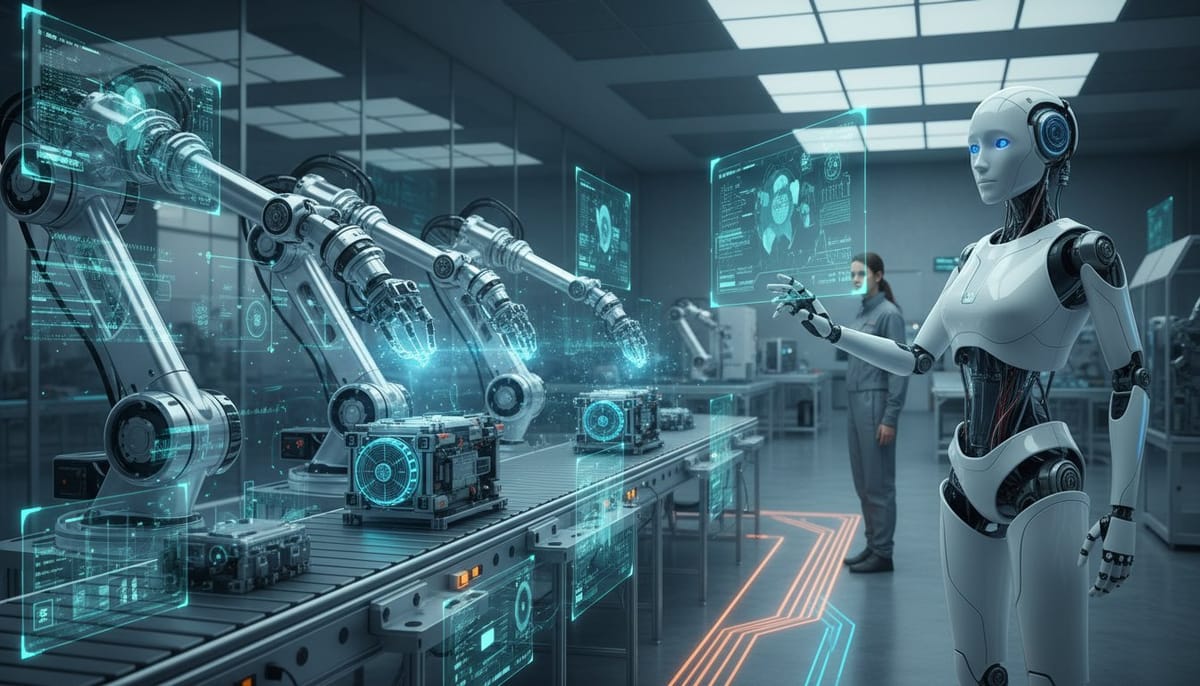
The field of Robotics is experiencing an unprecedented revolution, largely driven by the exponential advancements in Artificial Intelligence (AI). Gone are the days when robots were merely sophisticated machines executing pre-programmed tasks with rigid precision. Today, AI is transforming them into intelligent, adaptable, and autonomous entities, capable of learning, problem-solving, and interacting with their environment in increasingly sophisticated ways. For a look at the companies leading these advancements, refer to Major Players in AI: A Deep Dive into OpenAI, Gemini, and Leading AI Models. This paradigm shift is not only enhancing the capabilities of industrial robots but also paving the way for the development of highly advanced humanoids, pushing the boundaries of what machines can achieve.
From Pre-Programmed to Perceptive: The Core Transformation
Historically, robots operated on a strict set of instructions, excelling in repetitive, high-volume tasks within controlled environments. Any deviation required manual reprogramming, limiting their flexibility. AI changes this fundamental aspect. Machine learning, deep learning, and computer vision algorithms now enable robots to perceive their surroundings, interpret data, and make decisions in real-time. This newfound perceptual and cognitive ability is the cornerstone of the modern Robotics revolution, allowing robots to perform complex tasks, adapt to unforeseen circumstances, and even learn from experience, continuously improving their performance. For a deeper understanding of the hardware that enables these advancements, explore The Power Behind AI: Understanding Artificial Intelligence Chips.
Enhancing Industrial Robotics with AI: Smarter Automation
Industrial Robotics has long been a backbone of manufacturing and logistics. AI integration is now catapulting these workhorses into a new era of efficiency, safety, and versatility, enabling smarter automation.
Machine Vision and Quality Control
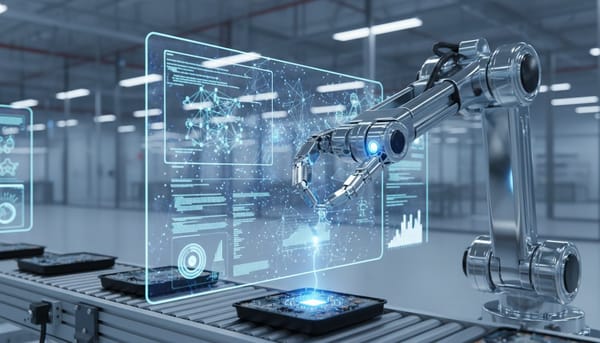
AI-powered machine vision systems are dramatically improving quality control in manufacturing. Robots equipped with high-resolution cameras and deep learning algorithms can identify minuscule defects on production lines faster and more accurately than human inspectors. They can analyze complex patterns, verify assembly, and ensure product integrity with unparalleled consistency, significantly reducing waste and improving product reliability. This precision extends to tasks like intricate sorting, picking items from unstructured bins, and even guiding welding operations with pinpoint accuracy.
Predictive Maintenance and Operational Efficiency
AI algorithms analyze sensor data from robotic components to predict potential failures before they occur. This proactive approach, known as predictive maintenance, minimizes downtime, extends the lifespan of robotic systems, and optimizes maintenance schedules. Furthermore, AI can dynamically optimize robot paths and task assignments in a factory, leading to more efficient resource utilization, faster cycle times, and reduced energy consumption across an entire fleet of industrial robots.
Collaborative Robots (Cobots) and Human-Robot Interaction
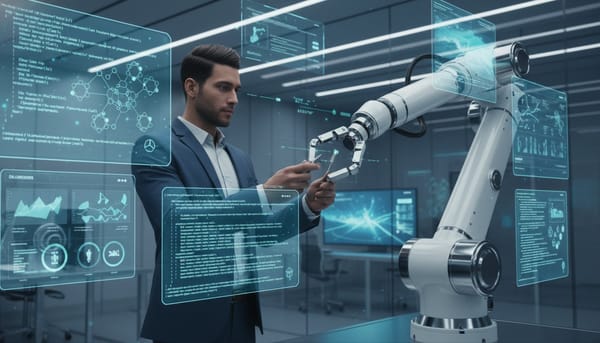
One of the most significant advancements is the rise of collaborative robots, or cobots. Designed to work alongside human employees, these robots leverage AI for enhanced safety and interaction. AI enables cobots to perceive human presence, predict movements, and adapt their operations to avoid collisions. This allows for seamless collaboration on shared tasks, blending human dexterity and problem-solving with robotic strength and precision, revolutionizing assembly lines and other manual processes.
AI's Role in Advancing Humanoid Robotics: Bridging the Gap
While industrial robots focus on specific tasks, humanoid Robotics aims to create machines that can mimic human form and function, often operating in human-centric environments. AI is indispensable in making this vision a reality.
Natural Language Processing and Human Interaction
For humanoids to effectively interact with people, they need to understand and respond to human communication. AI's natural language processing (NLP) capabilities allow humanoids to comprehend spoken commands, engage in natural conversations, and even interpret emotional cues. This is crucial for applications in service industries, healthcare, and personal assistance, where intuitive communication is paramount for fostering trust and effectiveness.
Advanced Mobility, Dexterity, and Navigation
Developing humanoids that can walk, balance, and manipulate objects with human-like grace is an immense challenge. AI, particularly reinforcement learning, is enabling robots to learn complex motor skills through trial and error, adapting to varied terrains and performing delicate manipulations. AI-driven navigation systems allow humanoids to map unfamiliar environments, avoid obstacles, and plan optimal routes, making them increasingly capable of operating autonomously in dynamic, unpredictable settings like homes or public spaces.
Learning and Adaptation in Real-World Scenarios
The ultimate goal for humanoid Robotics is true autonomy and generalized intelligence. AI is facilitating this through continuous learning from experience and interaction. Humanoids can use AI to understand and adapt to new situations, learn new tasks by observing humans, and even improve their social interactions over time. This adaptive capacity is vital for robots to seamlessly integrate into our complex world, performing a wide array of functions beyond their initial programming.
The Future Landscape of AI in Robotics
The synergy between AI and Robotics is rapidly expanding the capabilities of machines across every sector. From enhancing productivity and safety in factories to enabling more sophisticated personal assistance and exploration in dangerous environments, AI is the driving force. To understand the economic forces behind this revolution, read The Business of AI: Understanding Funding Rounds and Valuation in Artificial Intelligence. As AI continues to evolve, we can anticipate robots that are not only smarter and more adaptable but also more intuitive, safer, and integrated into the fabric of our daily lives. The revolution is well underway, promising a future where intelligent machines work hand-in-hand with humanity to solve some of the world's most pressing challenges.