AI Infrastructure: Data Centers, Chips, and Funding Essentials

The Backbone of AI: Mastering Data Centers for Advanced Computing
In the rapidly evolving landscape of artificial intelligence, the true workhorse enabling groundbreaking innovations isn't just the algorithms or the data – it's the physical infrastructure that houses and powers them. At the heart of this infrastructure are Data Centers, specialized facilities engineered to meet the extraordinary demands of AI workloads. This guide will walk you through the practical considerations, design principles, and operational essentials for building and managing the data centers that fuel the AI revolution.
Understanding the Core: What Makes an AI Data Center Different?
Traditional data centers are designed for general-purpose computing, often prioritizing CPU-centric tasks. AI, however, introduces a new paradigm, demanding a fundamental shift in infrastructure design. Here's what sets an AI-ready data center apart:
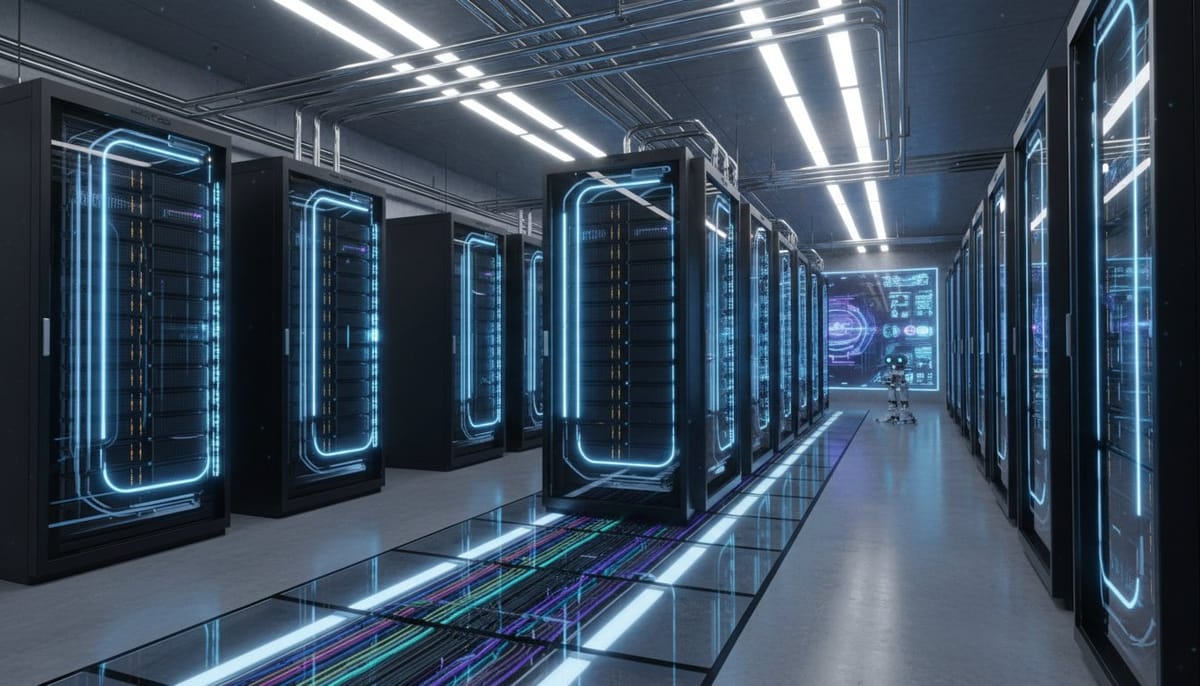
- High-Density Computing with GPUs and Accelerators: Unlike CPUs, Graphics Processing Units (GPUs) and other AI accelerators (like TPUs or custom ASICs) are optimized for parallel processing, making them indispensable for training and inference of complex AI models. An AI data center must accommodate racks packed with these powerful, heat-generating components.
- Extreme Power Requirements: A single rack of AI servers can draw significantly more power than a standard server rack. This necessitates robust power delivery systems, including high-capacity Power Distribution Units (PDUs), uninterruptible power supplies (UPS), and massive generator backups. Planning for megawatts, not just kilowatts, is crucial.
- Advanced Cooling Solutions: The immense heat generated by dense GPU clusters can quickly overwhelm traditional air-cooling systems. Modern AI data centers increasingly employ advanced liquid cooling techniques, such as direct-to-chip liquid cooling, rear-door heat exchangers, or even full immersion cooling, to maintain optimal operating temperatures and efficiency.
- Ultra-High Network Bandwidth: AI models often require massive datasets to be moved rapidly between storage, memory, and processing units. This demands an extremely fast, low-latency network fabric, typically leveraging technologies like InfiniBand or high-speed Ethernet (e.g., 400GbE) to prevent bottlenecks and ensure efficient data flow between thousands of GPUs.
Designing Your AI Data Center: Key Considerations
Building an AI data center isn't just about packing in more hardware; it's about strategic planning from the ground up.
- Location Strategy: When selecting a site, prioritize proximity to reliable and affordable power grids, major fiber optic networks for connectivity, and potentially natural cooling sources (like cold climates or large bodies of water). Land availability for future expansion is also a critical factor.
- Scalability Planning: AI demands are constantly growing. Design for modular expansion, allowing you to add capacity (power, cooling, compute) without disrupting existing operations. Think in terms of