AI Infrastructure & Advanced Applications: Data Centers, Robotics, and Frontier Tech

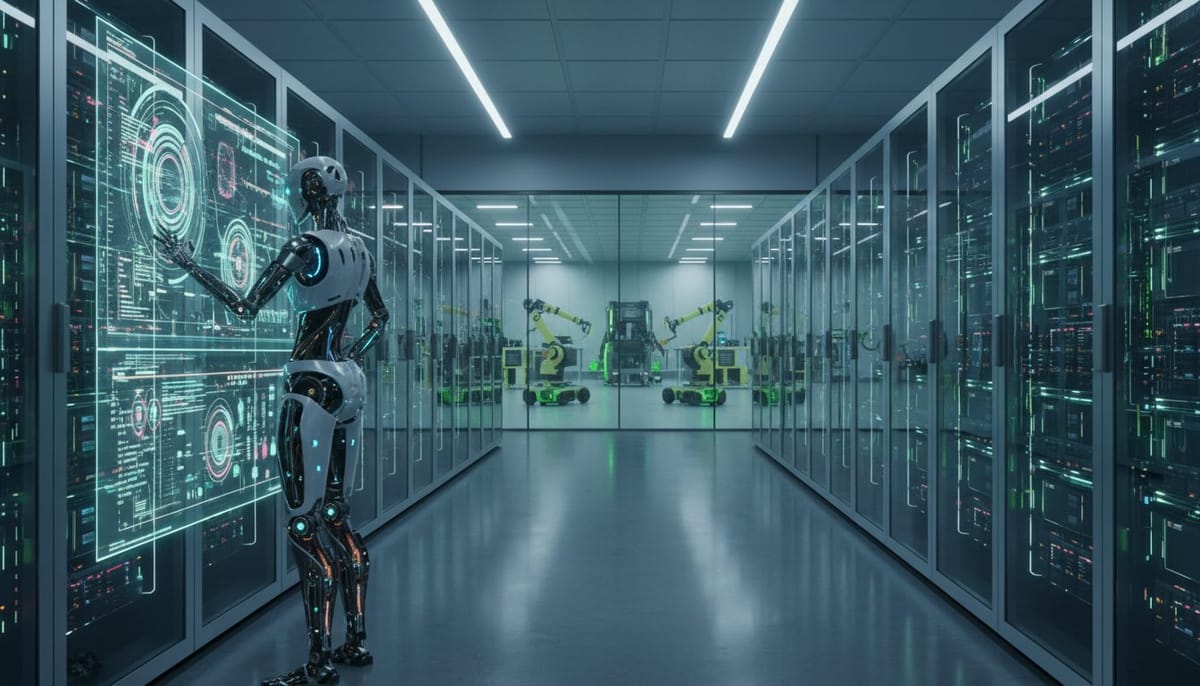
Understanding the Core: The AI Infrastructure Landscape
The rapid evolution of Artificial Intelligence isn't just about groundbreaking algorithms; it's fundamentally powered by a robust and sophisticated infrastructure. For businesses and innovators looking to harness the full potential of AI, understanding and strategically building out this infrastructure is paramount. Consider leveraging expert AI Strategy to guide your foundational decisions. This guide will walk you through the practical considerations of establishing and leveraging AI infrastructure, from the foundational data centers to the cutting-edge applications in robotics and frontier technologies.
Establishing Your AI Foundation: Data Centers and Compute Power
At the heart of any serious AI endeavor lies the data center. These aren't just generic server farms; they are highly specialized environments engineered for the unique demands of AI workloads.
- Specialized Hardware: Unlike traditional computing, AI (especially deep learning) relies heavily on parallel processing. This means a significant investment in Graphics Processing Units (GPUs), Tensor Processing Units (TPUs), and increasingly, Application-Specific Integrated Circuits (ASICs) tailored for AI. When planning, assess your model training requirements: large language models or complex computer vision tasks will demand far more compute than simpler predictive analytics.
- High-Bandwidth Networking: AI models are data-hungry. Training often involves moving massive datasets between storage, memory, and processors. Implementing high-speed interconnects like InfiniBand or 100 Gigabit Ethernet within your data center is crucial to prevent bottlenecks and ensure efficient data flow.
- Advanced Cooling and Power: GPUs and other AI accelerators generate substantial heat. Traditional cooling systems may be insufficient. Consider liquid cooling solutions, advanced CRAC units, or even immersion cooling for optimal performance and energy efficiency. Power delivery must also be robust and redundant to handle peak loads.
- Optimized Storage Solutions: AI workloads require fast access to large datasets. A tiered storage strategy often works best: ultra-fast NVMe SSDs for active training data, high-capacity parallel file systems (like Lustre or BeeGFS) for larger datasets, and object storage for archival and less frequently accessed data.
Practical Tip: Before committing to on-premise infrastructure, evaluate cloud-based AI services (AWS SageMaker, Google AI Platform, Azure Machine Learning). These offer scalable, pre-configured environments that can significantly reduce upfront costs and management overhead, especially for initial projects or variable workloads. For more insights into leading platforms, see Exploring Key AI Platforms: OpenAI, Anthropic, and Microsoft Copilot Explained.
Advanced Applications: Integrating AI into Robotics and Automation
Once your AI compute foundation is solid, the real-world applications become accessible. Robotics is one of the most transformative fields leveraging advanced AI infrastructure.
Designing AI-Powered Robotic Systems
Integrating AI into robotics moves beyond simple programmed automation to intelligent, adaptive systems.
- Perception and Sensing: Robots need to understand their environment. This involves integrating AI models for computer vision (object detection, scene understanding), natural language processing (for voice commands or interaction), and sensor fusion (combining data from LiDAR, radar, cameras, etc.). Your AI infrastructure must support the real-time inference demands of these perception models.
- Decision-Making and Control: AI algorithms enable robots to make complex decisions, navigate dynamic environments, and perform intricate tasks. Reinforcement learning, path planning algorithms, and predictive control systems are key here. The infrastructure must provide the processing power for these AI brains to operate with low latency.
- Human-Robot Collaboration (HRC): For applications like collaborative manufacturing or service robotics, AI allows robots to safely and intuitively interact with humans. This requires AI for gesture recognition, intent prediction, and adaptive response.
Implementation Tips:
- Simulation First: Develop and test AI models for robotics in simulation environments (e.g., Gazebo, NVIDIA Isaac Sim) before deploying to physical hardware. This is cost-effective and safer.
- Edge AI Deployment: For real-time robotic operations, push AI inference to the edge. Utilize embedded AI processors (NVIDIA Jetson, Intel Movidius) directly on the robot to minimize latency and dependency on central data centers.
- Data Collection Strategy: Robots generate vast amounts of sensor data. Establish a robust data collection, labeling, and management pipeline to continuously improve your AI models.
Frontier Tech: Pushing the Boundaries of AI Infrastructure
Beyond traditional data centers and robotics, AI infrastructure is evolving to support truly frontier applications.
Exploring Edge AI, Distributed AI, and Quantum Computing
- Edge AI and Distributed Computing: As AI permeates more devices, the need for processing closer to the data source grows. Edge AI involves deploying smaller, optimized AI models directly on devices like IoT sensors, smart cameras, and autonomous vehicles. Distributed AI leverages federated learning and decentralized networks to train models across multiple nodes without centralizing raw data, crucial for privacy and scalability.
- AI for Scientific Discovery: AI infrastructure is becoming a critical tool in accelerating scientific research, from drug discovery and materials science to climate modeling and astrophysics. This involves massive-scale simulations, high-performance computing (HPC) clusters augmented with AI accelerators, and advanced data analytics platforms.
- Quantum AI (Future Outlook): While still nascent, quantum computing holds the promise of solving certain computational problems intractable for classical computers. Future AI infrastructure may integrate quantum processors (QPUs) for specific tasks like optimization problems, complex simulations, or breaking cryptographic algorithms, though practical applications are still years away.
Strategic Consideration: When planning for frontier tech, focus on modularity and interoperability. The ability to integrate new hardware, software stacks, and distributed paradigms will be key to adapting to rapid technological advancements.
Building Your AI Infrastructure: A Practical Roadmap
Embarking on AI infrastructure development requires a structured approach.
- Phase 1: Needs Assessment and Pilot Project: Define your specific AI goals. What problems are you trying to solve? Start with a small pilot project to understand compute, data, and software requirements. This informs your infrastructure design.
- Phase 2: Design and Procurement/Cloud Selection: Based on your pilot, design your infrastructure. Decide between on-premise (control, security) and cloud (flexibility, scalability) or a hybrid approach. Procure hardware or subscribe to cloud services.
- Phase 3: Deployment and Optimization: Set up your hardware and software stack. Implement robust monitoring tools for performance, power consumption, and cooling. Continuously optimize your infrastructure for cost-efficiency and performance.
- Phase 4: Scalability and Future-Proofing: Design for growth. How will you scale compute, storage, and networking as your AI demands increase? Invest in open standards and flexible architectures to adapt to future technological shifts.
The journey into AI infrastructure and advanced applications is complex but incredibly rewarding. By strategically planning and implementing a robust foundation, businesses can unlock unprecedented capabilities, driving innovation across every sector. To delve deeper into the broader AI ecosystem, explore our ultimate guide on AI.