Powering AI: The Critical Role of Data Centers in the Age of Artificial Intelligence

Introduction: The Unseen Engines of Artificial Intelligence
Artificial Intelligence (AI) has transcended science fiction to become a pivotal force in modern technology, reshaping industries from healthcare to finance. Yet, behind every groundbreaking AI model, every insightful recommendation, and every autonomous system lies a colossal, often unseen infrastructure: the AI Data Centers. These are not your everyday server farms; they are highly specialized, purpose-built facilities engineered to meet the extraordinary demands of AI workloads. Understanding their critical role is paramount to grasping the true potential and future trajectory of artificial intelligence. For a comprehensive overview, consider reading our ultimate guide on AI.
What Exactly Are AI Data Centers?
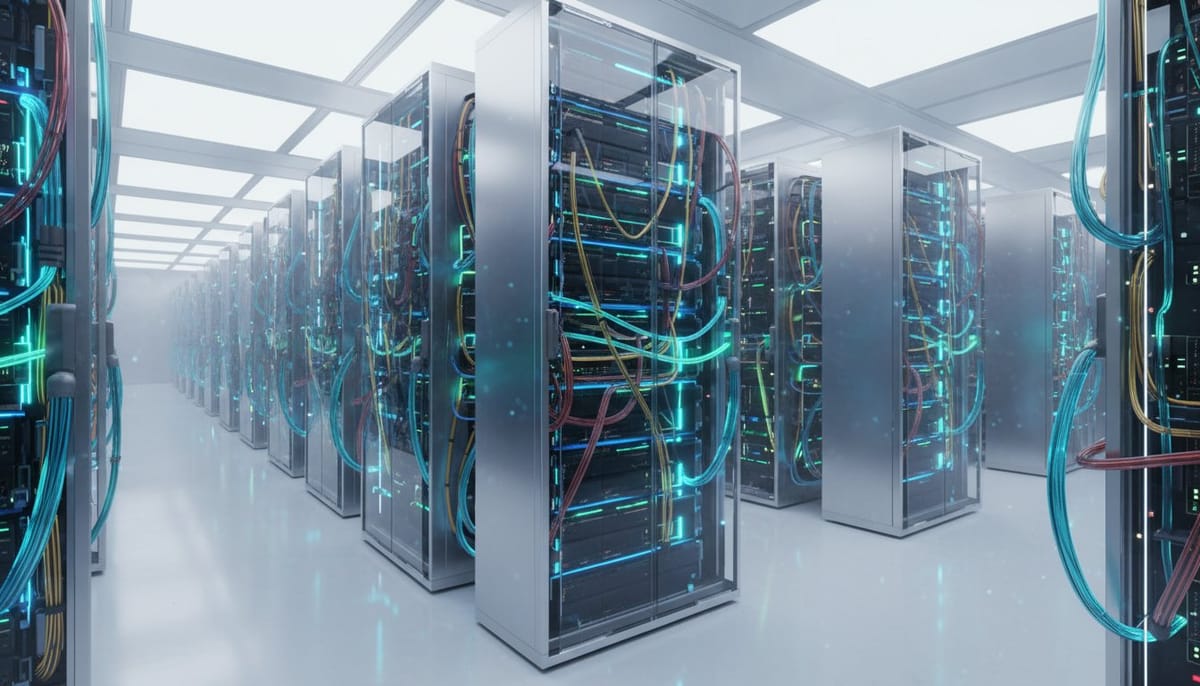
An AI data center is a highly optimized computing infrastructure designed to accelerate the development, training, and deployment of artificial intelligence models. Our expertise in Machine Learning can help leverage these advanced infrastructures. Unlike traditional data centers, which are typically optimized for general-purpose computing, web hosting, or enterprise applications, AI data centers are tailored to handle the unique characteristics of AI algorithms, particularly their computational intensity and massive data throughput requirements.
Beyond Traditional Servers: The Need for Specialized Hardware
The distinction begins at the hardware level. While traditional data centers rely heavily on Central Processing Units (CPUs) for sequential processing, AI workloads, especially deep learning, thrive on parallel processing. This necessitates a significant shift towards Graphics Processing Units (GPUs), Tensor Processing Units (TPUs), and Field-Programmable Gate Arrays (FPGAs). These specialized accelerators can perform thousands of operations simultaneously, dramatically speeding up complex matrix multiplications and tensor operations that are fundamental to AI model training.
High-Performance Networking and Storage
The sheer volume of data involved in training large AI models – often petabytes or even exabytes – demands equally sophisticated networking and storage solutions. AI data centers feature ultra-high-bandwidth, low-latency interconnects (like InfiniBand or specialized Ethernet) to ensure rapid data movement between processing units and storage arrays. Storage systems are often comprised of NVMe Solid State Drives (SSDs) to provide the lightning-fast read/write speeds necessary to feed data to hungry AI accelerators without bottlenecks.
The Core Components of an AI Data Center
Building an AI data center involves more than just swapping out CPUs for GPUs. It's a holistic architectural approach focused on maximizing performance, efficiency, and scalability.
- Specialized Processing Units: As mentioned, GPUs from NVIDIA (e.g., H100, A100), TPUs from Google, central to Google's AI Strategy: Exploring Gemini and Its Role in the AI Ecosystem, and FPGAs are the workhorses. These accelerators are often deployed in densely packed clusters, forming powerful supercomputers within the data center.
- Advanced Cooling Systems: AI accelerators consume immense power and generate prodigious amounts of heat. Traditional air-cooling methods are often insufficient. AI data centers frequently employ advanced liquid cooling solutions, such as direct-to-chip cooling or immersion cooling, to maintain optimal operating temperatures and prevent thermal throttling.
- High-Bandwidth Interconnects: Internal network fabrics capable of terabits per second are essential. Technologies like NVLink (NVIDIA), NVSwitch, and high-speed Ethernet (e.g., 400GbE) ensure that data can flow freely and quickly between GPUs, preventing bottlenecks that would otherwise cripple performance.
- Massive, High-Speed Storage: AI models require constant access to vast datasets for training. Petabyte-scale storage arrays, leveraging all-flash NVMe systems and parallel file systems (e.g., Lustre, BeeGFS), are common to deliver the necessary I/O performance.
- Robust Power Infrastructure: The power consumption of an AI data center can be staggering. Redundant, high-capacity power supplies, often backed by uninterruptible power supplies (UPS) and generators, are critical to ensure continuous operation.
Why AI Demands Specialized Data Centers
The computational intensity of AI workloads fundamentally differentiates them from most traditional computing tasks. Training a large language model, for instance, can involve trillions of parameters and require weeks or months of continuous computation on thousands of GPUs. To learn more about how such models create new content, delve into Understanding Generative AI: How AI Creates New Content and Its Impact. This isn't just about raw processing power; it's about optimizing every aspect of the infrastructure to sustain that power efficiently.
Computational Intensity and Data Throughput
From deep learning for image recognition to complex simulations for scientific research, AI tasks are inherently parallel and data-hungry. AI data centers are designed to ingest, process, and output massive quantities of data at incredible speeds, making them indispensable for iterating on models quickly and achieving breakthroughs.
Latency Sensitivity for Real-time AI
While training can be an offline process, many AI applications require real-time inference with minimal latency. Think autonomous vehicles, real-time fraud detection, or personalized recommendations. AI data centers are engineered to provide the low-latency environments necessary for these applications to perform effectively and reliably.
Challenges and Innovations in AI Data Center Design
The rapid evolution of AI technology presents ongoing challenges for data center architects. Energy efficiency, scalability, and security are paramount concerns.
Energy Efficiency and Sustainability
The immense power consumption of AI data centers is a major concern. Innovations in hardware design, more efficient cooling techniques (like adiabatic cooling or waste heat recapture), and the adoption of renewable energy sources are critical for reducing their environmental footprint.
Scalability and Modularity
AI models are constantly growing in complexity and size. Data centers must be designed with modularity and scalability in mind, allowing for easy expansion and upgrades to accommodate future computational demands without significant downtime.
Security and Data Integrity
AI models are valuable intellectual property, and the data used to train them can be highly sensitive. Robust physical and cybersecurity measures are essential to protect against theft, tampering, and breaches, a core component of effective AI Security. For insights into the financial landscape of AI, explore The AI Economy: Decoding Funding Rounds, Valuations, and Investment Trends.
The Future of AI Data Centers
The trajectory of AI data centers points towards even greater specialization and distributed architectures. Edge AI deployments, where inference happens closer to the data source (e.g., in smart factories or autonomous vehicles), will complement centralized training facilities. These scenarios often involve Specialized AI Applications: Advancements in Robotics and Voice AI Technology. Furthermore, advancements in photonics for data transfer, quantum computing integration, and increasingly sophisticated cooling technologies promise to push the boundaries of what these powerful engines can achieve. As AI continues its rapid ascent, the role of these specialized data centers will only grow in importance, solidifying their position as the foundational infrastructure of the AI age. Learn more about a leading force in AI development with OpenAI Explained: From ChatGPT to DALL-E and the Future of AI Development.