Powering the Future: The Rise of AI Chips and Nvidia's Dominance in AI Hardware

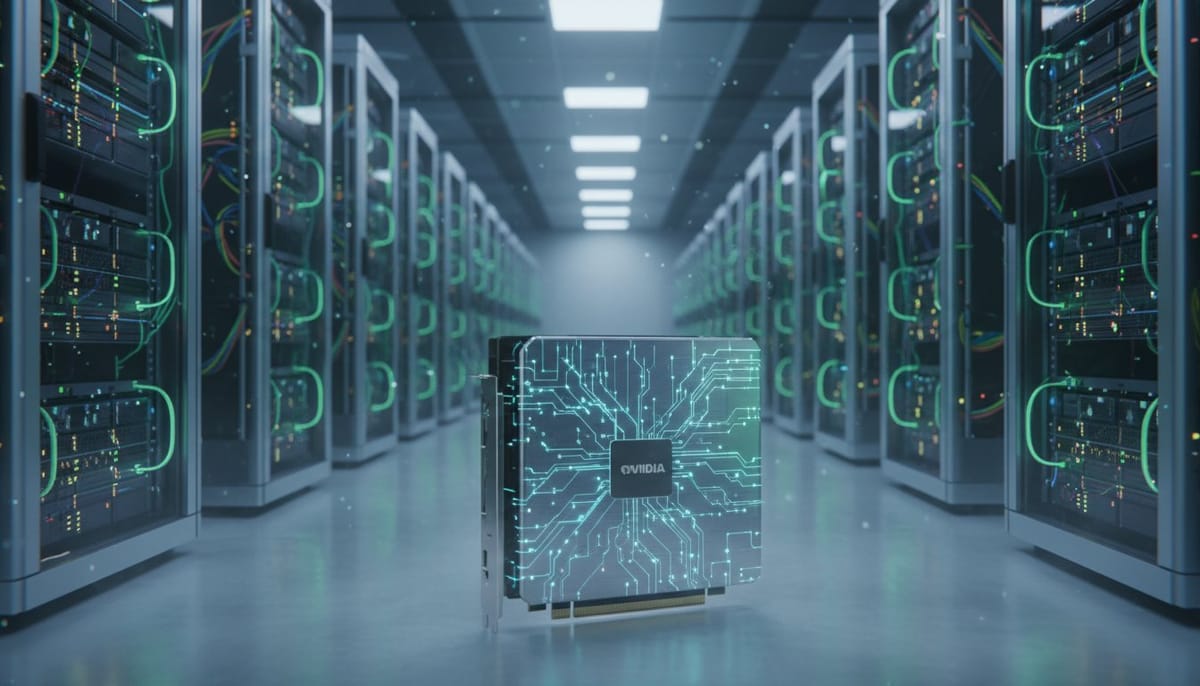
Powering Intelligence: Understanding AI Chips and Nvidia's Unrivaled Position
In the rapidly accelerating world of artificial intelligence, the unsung heroes operating beneath the surface are specialized processors known as AI chips. These aren't just faster versions of traditional CPUs; they are architecturally unique, designed from the ground up to handle the immense computational demands of machine learning and deep learning algorithms. As AI permeates every industry, from healthcare, experiencing significant shifts like AI in Healthcare: Transforming Medicine, Diagnostics, and Patient Care, to finance, the demand for sophisticated AI hardware skyrockets, and one company has emerged as the undisputed leader: Nvidia. This deep dive explores the critical role of AI chips and how Nvidia has strategically positioned itself at the forefront of this technological revolution. For a comprehensive overview, read our ultimate guide on AI.
What Exactly Are AI Chips?
At their core, AI chips are semiconductor devices optimized for AI workloads. Unlike general-purpose CPUs (Central Processing Units) that excel at sequential processing and task switching, AI chips are built for parallel processing – performing many calculations simultaneously. This capability is crucial for AI models, especially deep neural networks, which involve vast numbers of matrix multiplications and linear algebra operations. While various types of AI accelerators exist, including ASICs (Application-Specific Integrated Circuits) and FPGAs (Field-Programmable Gate Arrays), GPUs (Graphics Processing Units) have become synonymous with AI processing, largely due to Nvidia's pioneering efforts.
The Architectural Advantage: Why GPUs Dominate AI
The journey of GPUs from rendering video game graphics to powering AI began with their inherent design. GPUs are designed with thousands of smaller, more efficient cores optimized for parallel processing, making them perfectly suited for the repetitive, highly parallel computations characteristic of deep learning. Consider training a neural network: it involves feeding massive datasets through layers of interconnected 'neurons,' each requiring simultaneous calculations. A CPU would struggle to manage this efficiently, but a GPU thrives on it.
- Parallel Processing: GPUs can handle thousands of operations concurrently, a fundamental requirement for training and inference in AI models.
- Memory Bandwidth: High-bandwidth memory (HBM) integrated into modern AI GPUs allows for rapid data transfer, preventing bottlenecks.
- Specialized Cores: Nvidia's Tensor Cores, for instance, are specifically designed to accelerate matrix operations, the bedrock of deep learning.
Nvidia's Strategic Ascent: From Graphics to AI Gold Standard
Nvidia’s dominance in the AI chip market is no accident; it's the result of decades of strategic foresight and continuous innovation. While other companies focused on traditional computing, Nvidia saw the untapped potential of its GPUs beyond graphics.
CUDA: The Software Ecosystem Advantage
A pivotal moment was the introduction of CUDA (Compute Unified Device Architecture) in 2006. CUDA is a parallel computing platform and programming model that allows developers to use Nvidia GPUs for general-purpose computing, not just graphics. This was a game-changer. By providing a robust, user-friendly software stack, Nvidia empowered researchers and developers to easily harness the power of their GPUs for scientific computing, and eventually, for AI. This early investment in a comprehensive software ecosystem created a powerful network effect, locking in developers and making it challenging for competitors to catch up.
Relentless Hardware Innovation
Nvidia has consistently pushed the boundaries of hardware design, releasing generations of GPUs specifically tailored for AI workloads. From the Pascal and Volta architectures to the more recent Ampere, Hopper, and now Blackwell architectures, each iteration has brought significant leaps in performance, efficiency, and specialized AI capabilities (like Tensor Cores). Products like the A100 and H100 GPUs have become the workhorses of AI data centers globally, powering everything from large language models to complex scientific simulations.
Nvidia's Unrivaled Market Position and Future Outlook
Today, Nvidia holds an estimated 80-90% market share in data center AI chips, a testament to its technological leadership and ecosystem lock-in. Its GPUs are the foundation of most major cloud AI platforms (AWS, Azure, GCP) and countless enterprise AI initiatives. The synergy between Nvidia's cutting-edge hardware and its mature CUDA software platform creates a formidable barrier to entry for competitors.
However, the landscape is evolving. Competitors like AMD and Intel are investing heavily in their own AI accelerators, and many tech giants (Google, Amazon, Microsoft) are developing custom ASICs for specific in-house AI tasks. This competition reflects the broader landscape of Key Players in AI: OpenAI, Anthropic, Microsoft, and the Battle for AI Dominance. While these efforts pose challenges, particularly in the context of The Global AI Race: China's Ambition and Impact on the Future of Artificial Intelligence, Nvidia continues to innovate, expanding its offerings into interconnect technologies (like NVLink and InfiniBand via Mellanox acquisition) and full-stack AI platforms, further cementing its position.
The Impact of AI Chips and Nvidia's Legacy
The rise of powerful AI chips, spearheaded by Nvidia, has fundamentally reshaped the technological landscape. These processors are not just making AI possible; they are driving its rapid advancement, which is also reflected in The AI Funding Frenzy: Investment Trends, Venture Capital, and the Future of AI Startups, enabling breakthroughs in areas like natural language processing, computer vision, drug discovery, and autonomous systems. Nvidia's foresight in recognizing the potential of its GPUs for general-purpose computing and its unwavering commitment to building a comprehensive AI ecosystem has established it as the indispensable backbone of the AI revolution. As AI continues to evolve, alongside the need to address concerns like Deepfakes and Beyond: Navigating the Ethical Challenges and Risks of AI, so too will the demand for more powerful, efficient, and specialized AI hardware, with Nvidia poised to lead the charge into the intelligent future.