The Power Behind AI: Understanding Artificial Intelligence Chips

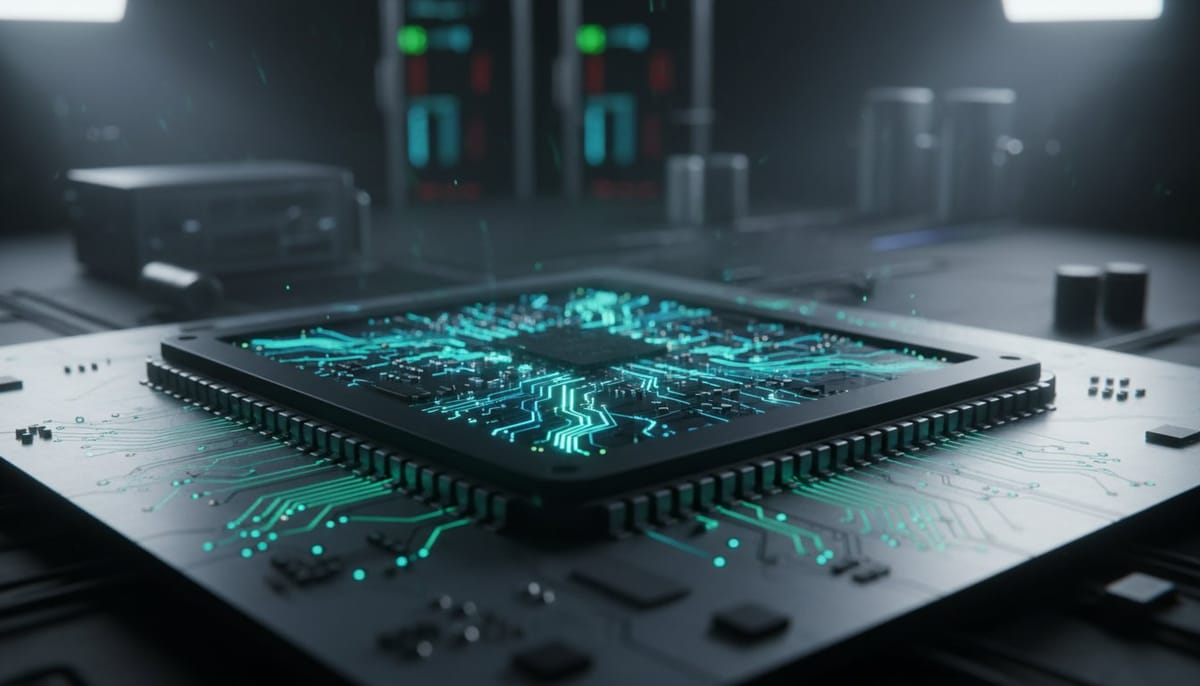
The Foundation of Modern AI: What are AI Chips?
In the rapidly evolving landscape of artificial intelligence, the true power behind groundbreaking innovations isn't just in sophisticated algorithms or vast datasets; it's fundamentally rooted in specialized hardware. Specifically, we're talking about AI chips – the purpose-built integrated circuits designed to accelerate the incredibly complex computational demands of artificial intelligence. Unlike general-purpose processors, AI chips are engineered from the ground up to handle the unique mathematical operations inherent in machine learning, deep learning, and neural networks, such as matrix multiplications and convolutions, with unparalleled efficiency. They are the silent, yet mighty, engines driving everything from natural language processing and computer vision to autonomous vehicles and advanced scientific research. Understanding these specialized processors is key to grasping the true potential and limitations of AI today.
Different Flavors of Processing Power: Types of AI Chips
The world of AI chips is diverse, with various architectures optimized for different aspects of AI workloads. Each type brings its own set of advantages and is deployed in specific scenarios.
GPUs: The Unsung Heroes of Deep Learning
Originally designed for rendering complex graphics in video games, Graphics Processing Units (GPUs) have serendipitously become the backbone of modern deep learning. Their architecture, comprising thousands of smaller, efficient cores, is ideally suited for parallel processing – executing many computations simultaneously. This massive parallelism is precisely what neural networks require for training, as they involve performing the same operations across vast amounts of data. Companies like NVIDIA, key among Major Players in AI: A Deep Dive into OpenAI, Gemini, and Leading AI Models, have heavily invested in optimizing their GPUs and software ecosystems (e.g., CUDA) for AI, making them the dominant choice for training large AI models in data centers and cloud environments.
ASICs: Tailor-Made for AI Tasks
Application-Specific Integrated Circuits (ASICs) are custom-designed chips built for one specific purpose. In the AI realm, this means they are hardwired to execute AI computations with extreme efficiency. The most famous example is Google's Tensor Processing Unit (TPU), an ASIC specifically engineered to accelerate TensorFlow workloads, particularly matrix operations critical for neural networks. ASICs offer significant advantages in terms of performance and energy efficiency for their intended tasks, far surpassing general-purpose CPUs or even GPUs in certain benchmarks. However, their high development cost, a significant factor in The Business of AI: Understanding Funding Rounds and Valuation in Artificial Intelligence, and lack of flexibility mean they are typically deployed at scale by large organizations for specific, high-volume AI applications.
FPGAs: The Adaptable Workhorses
Field-Programmable Gate Arrays (FPGAs) occupy a middle ground between general-purpose processors and ASICs. Unlike ASICs, FPGAs are reconfigurable after manufacturing, allowing developers to customize their internal circuitry to optimize for specific algorithms or data types. This flexibility makes them ideal for scenarios where AI models might evolve rapidly or where unique low-latency requirements exist. FPGAs are often found in edge computing devices, industrial control systems, and specific cloud workloads where customization and lower power consumption are critical without the prohibitive cost of ASIC development.
Neuromorphic Chips: Mimicking the Brain
Representing a more futuristic approach, neuromorphic chips aim to directly mimic the structure and function of the human brain. Instead of traditional von Neumann architectures, which separate processing and memory, neuromorphic chips integrate these functions, much like biological neurons and synapses. This design promises ultra-low power consumption and exceptional efficiency for tasks like pattern recognition and real-time learning. While still largely in the research and development phase, chips like IBM's TrueNorth and Intel's Loihi offer a glimpse into a potential paradigm shift in AI hardware, especially for edge AI applications where energy constraints are paramount.
The Secret Sauce: Key Characteristics of High-Performance AI Chips
What makes an AI chip powerful? Several key characteristics differentiate these specialized processors from their general-purpose counterparts:
- Massive Parallelism: The ability to perform many calculations simultaneously is fundamental, given the inherently parallel nature of neural network operations.
- High Memory Bandwidth: AI models require constant access to vast amounts of data and model parameters. High bandwidth ensures this data can be fed to the processing units quickly, underpinning effective Data Analytics capabilities.
- Energy Efficiency: Performing billions of operations per second can consume immense power. AI chips are designed to optimize calculations per watt, crucial for both large data centers and battery-powered edge devices, and a focus of our Energy AI solutions.
- Specialized Instruction Sets: Many AI chips include custom instructions optimized for common AI operations like dot products and convolutions, accelerating these critical computations beyond what general-purpose CPUs can achieve.
AI Chips in Action: Powering Real-World AI
AI chips are the unsung heroes behind countless applications that define our modern technological landscape, from powering self-driving cars to driving How AI is Revolutionizing Robotics: From Industrial Bots to Humanoids.
Training AI Models: The Computational Gauntlet
The process of training an AI model involves feeding it vast datasets and iteratively adjusting its internal parameters (weights and biases) to minimize errors. This is an incredibly compute-intensive process, often taking days or weeks on even the most powerful hardware. AI chips, especially GPUs and ASICs in cloud data centers, accelerate this gauntlet, allowing researchers and developers to iterate on models faster and develop more sophisticated AI.
Inference: AI in the Wild
Once an AI model is trained, it needs to make predictions or decisions in real-time – a process known as inference. This occurs everywhere: on your smartphone identifying faces, in smart speakers responding to commands, or in self-driving cars navigating complex environments. AI chips optimized for inference prioritize energy efficiency and low latency, enabling immediate responses even on resource-constrained edge devices.
Diverse Applications: From Cloud to Edge
- Autonomous Vehicles: Rapidly processing sensor data for navigation and decision-making, a critical aspect of modern Logistics and supply chain management.
- Medical Imaging: Analyzing X-rays, MRIs, and CT scans for disease detection, a key area for Healthcare AI solutions.
- Natural Language Processing: Powering virtual assistants, translation services, and sentiment analysis, and enabling advancements in areas such as Deepfakes Explained: The Technology, Ethics, and Impact of AI-Generated Content.
- Recommendation Systems: Personalizing content on streaming platforms and e-commerce sites.
- Scientific Research: Accelerating simulations and data analysis in fields like genomics and particle physics.
Looking Ahead: Challenges and the Future of AI Chips
Despite their incredible advancements, AI chips face ongoing challenges. Power consumption, cooling, and the sheer cost of development are significant hurdles, particularly for cutting-edge ASICs. Beyond these, ensuring Protecting the Future: Essential Strategies for AI Security is another critical area as AI systems become more pervasive. Furthermore, the rapid pace of AI innovation means that chip architectures must constantly evolve to keep up with new model types and computational demands.
The future promises even more specialized and efficient AI chips. We can expect continued innovation in domain-specific architectures, tighter integration of memory and processing, and potentially new paradigms like optical computing or even early forms of quantum computing tailored for AI tasks. The relentless pursuit of faster, smaller, and more energy-efficient AI hardware will continue to unlock new possibilities for artificial intelligence, pushing the boundaries of what machines can achieve, guiding our AI Strategy for the future.
Conclusion
AI chips are far more than just silicon and wires; they are the literal foundation upon which the entire edifice of modern artificial intelligence is built. From the general-purpose parallelism of GPUs to the hyper-efficiency of ASICs and the adaptive nature of FPGAs, these specialized processors have made complex AI models not just feasible, but practical. As AI continues to permeate every aspect of our lives, the ongoing innovation in AI chip technology will remain a critical determinant of how intelligent and capable our future machines will become.